Liver specialist reveals battle with alcohol addiction
A hepatobiliary-pancreatic surgeon shares his struggle with high-functioning alcohol addiction on 'You Quiz on the Block,' finding empathy with Yoo Jae Suk.
A hepatobiliary-pancreatic surgeon has revealed his personal experience with alcohol addiction. Despite being a doctor who directly observed patients' livers on the operating table, it took him nine years to admit his own drinking problem. Lee June-seo, who has spent two years sober, shared an experience that highlighted how the boundary between "a heavy drinker" and "someone trapped in alcohol dependence" is blurrier than one might think.
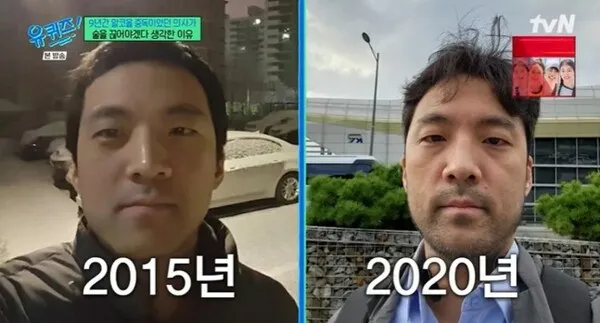
In the 359th episode of tvN's 'You Quiz on the Block' aired on the 9th, Lee June-seo appeared, introduced as "the doctor who parted ways with alcohol." tvN also introduced the broadcast as "the decision of a doctor who was too close to alcohol," focusing on his journey toward sobriety.
Lee introduced himself as someone who fought alcohol addiction for nine years. He explained that he was frequently exposed to alcohol while participating in a rock band during his college years; while he initially felt intoxicated after only half a bottle of soju, he felt his tolerance increasing as he drank repeatedly. However, he noted that this was not so much "becoming stronger against alcohol" as it was a process where both the amount consumed and the level of dependency rose together.
The most shocking incident occurred during his medical school years. After a dinner gathering with professors, he lost consciousness, and when he came to, he was lying in an unfamiliar hospital bed. The police had contacted his father to inform him that "his son was found in a semi-nude state in the restroom of Incheon Station." Lee recalled that at the time, he could not even perceive this incident as a serious problem.
Rather, he pointed out that there was an atmosphere at the time where people around him consumed such incidents as humorous anecdotes from drinking sessions. He suggested that a culture of lightly brushing off mistakes and accidents caused by intoxication—treating them as things "anyone could do when drunk"—can act as a veil that hides the warning signs of drinking problems.
The situation did not change even after he became a doctor. The high intensity of labor and burnout experienced in the medical field served as a catalyst that deepened his alcohol dependency. He revealed that he himself experienced what is known as "high-functioning alcohol addiction," where one maintains professional functionality on the surface while relying on alcohol.
This type is dangerous because the addiction is not easily revealed to the outside world. Just because someone goes to work, performs their duties, and maintains social relationships does not mean they do not have a drinking problem. Lee also failed to take his condition seriously for a long time, even as he experienced repeated verbal slips or physical injuries from falling during drinking sessions.
His explanation regarding the "difference between a lover of alcohol and an addict" was particularly impressive. He explained that just as one feels happy seeing a beautiful flower but is not distressed the next day because the flower is gone, the important signal of dependency can be the psychological difficulty of being without alcohol, rather than the act of drinking itself.
His professional experience as a hepatobiliary-pancreatic surgeon added a unique weight to his story. Mentioning the shape of the liver observed during surgery, he explained that a normal liver and the liver of a patient with chronic drinking problems can look different. He emphasized the importance of accurately communicating drinking habits to medical staff, noting that when asked about their actual consumption, many patients only report about half of what they truly drink.
The irony lies in the fact that the doctor who told patients to quit drinking had himself failed at sobriety multiple times. His experience is even more realistic in that simply knowing medical knowledge does not automatically allow one to escape addiction.
During this process, Yoo Jae Suk also shared his own experience. He mentioned that it has been nearly 20 years since he quit smoking, noting that in the past, he tried to reduce his smoking by saying, "Let's just smoke a few cigarettes a day," but ultimately failed, eventually choosing the method of quitting completely at some point. He formed a sense of empathy by overlapping Lee's experience of sobriety with his own experience of smoking cessation.
However, quitting smoking and quitting drinking are not medically identical processes. Especially in the case of those with severe alcohol dependence, sudden cessation can trigger withdrawal symptoms, so medical evaluation and treatment are necessary depending on the individual's condition. This is why Lee's experience should not be accepted as a single formula for sobriety applicable to everyone.
Nevertheless, the way he emphasized remembering the "after the first glass" makes one reflect on the psychology of addictive behavior. When trying to quit drinking, people often only remember the pleasure or sense of liberation from the first glass, but if one considers the entire process—including the mistakes, regrets, physical damage, and the discomfort of the following day—one can view the desire for alcohol differently.
He also cited the "empty time" that comes during the sobriety process as a problem. When the time slots previously occupied by drinking suddenly become vacant, that void itself can stimulate the urge to drink again. He advised filling that time with new daily activities, such as walking or reading. Ultimately, overcoming addiction is more than just resisting a single drink; it is the work of restructuring the very life that alcohol once occupied.
The changes Lee has felt two years after quitting drinking are unexpectedly subtle. He said his emotional fluctuations have decreased and he feels more peaceful. While he still experiences sudden cravings for alcohol, he explained that he can now view them as something closer to a passing memory rather than the intense cravings of the past.
Yoo shared a similar experience. During the early stages of quitting smoking, he would crave it just by seeing others smoke, but over time, he grew to dislike the smell of cigarettes itself. This demonstrates that the process of recovering from addiction is not merely a matter of willpower, but is intertwined with changes in time, environment, and repetitive lifestyle habits.
Most importantly, this appearance is noteworthy because it shows the often-ignored reality that "even doctors can be addicted." Professional knowledge does not erase human vulnerability. The fact that a doctor, who had long rationalized his own issues as a normal part of life, shared his experience directly, makes his confession meaningful for both patients and medical professionals.
Lee's story also raises questions about the familiar landscape of Korean society regarding alcohol. In a society where drinking is deeply embedded in daily life under the guise of company dinners, social gatherings, and stress relief, perhaps what is as important as "how much one drinks" is "what place alcohol occupies in one's life." The reason a doctor who fought alcohol for nine years revealed his failures and recovery lies in that very question.
Related articles