Park Soo Hong family flight delay sparks security controversy
A controversy is brewing over a 1-hour flight delay involving Park Soo Hong's family and the complexities of voluntary disembarkation protocols.
A controversy is spreading following claims that the family of broadcaster Park Soo Hong requested a voluntary disembarkation on a Korean Air flight bound for Guam, only to re-board, causing a flight delay of approximately one hour. The dispute has expanded beyond the simple issue of a parent getting off a plane because a child was crying, evolving into a debate over how "voluntary disembarkation"—which involves critical aviation security and operational procedures—is handled.
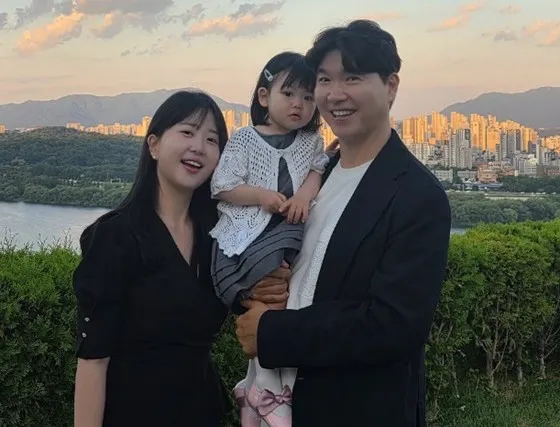
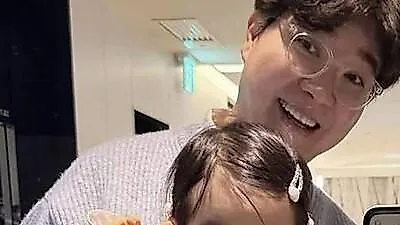
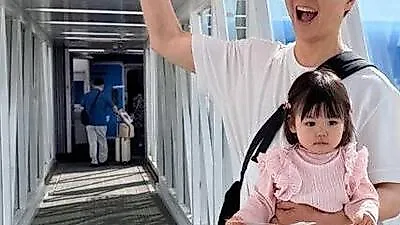
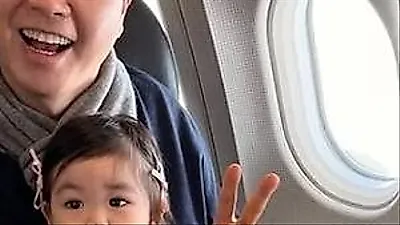
Recently, a passenger who boarded Korean Air flight KE415 from Incheon International Airport to Guam on the 23rd posted a claim on an online community. The author alleged that after Park Soo Hong's family boarded the aircraft, their 22-month-old daughter continued to cry, leading the family to express their intention to disembark. This reportedly triggered the process of removing checked baggage from the aircraft.
The issue arose with the subsequent turn of events. According to the author, once the child stopped crying, Park Soo Hong's family expressed their intention to re-board. As the airline accepted this, the process of reloading the previously unloaded baggage took place. The core of the post is that the aircraft's departure was delayed by about one hour during this process.
However, the information confirmed so far is based solely on the claims of an online community user. It remains necessary to verify the actual procedures that took place inside the aircraft and the exact cause and scale of the delay through official explanations from the parties involved and the airline.
A crucial concept in this matter is "voluntary disembarkation." This refers to a situation where a passenger, having completed departure formalities and boarding procedures, chooses to give up the flight and leave the aircraft. While it can be requested for various reasons, such as health issues or lost items, the act of disembarking after boarding is not handled as simply as exiting a bus or a train.
This is because aircraft operations function as a single integrated system involving numerous passengers, crew members, baggage, and security protocols. When a passenger disembarks, it is not only necessary to verify the passenger's identity and the reason for leaving, but additional procedures such as security screening and baggage verification may follow.
According to previous official guidance from Korean Air, if a boarded passenger voluntarily disembarks, the airline must explain the impact on other passengers, guide them through subsequent procedures, and relay the relevant details to the airport operations center and control authorities. Depending on the situation, aircraft operations may be temporarily suspended to carry out additional security measures.
This is because voluntary disembarkation is not merely a matter of a personal change of mind. Until takeoff, the boarding status of passengers and baggage must match exactly. If changes occur in the passenger list or actual boarding status, the relevant agencies and the airline must re-verify all data.
In particular, if a passenger requests to disembark while checked baggage has already been loaded, the task of retrieving that baggage is required. Because the connection between the passenger and the baggage must be confirmed, the procedure does not end simply by letting the passenger off.
Korean Air has previously stated that voluntary disembarkation must be handled strictly in terms of aviation security. In some cases, situations may arise where all passengers must disembark the aircraft before re-boarding, or where all baggage must be re-verified.
For this reason, a voluntary disembarkation carries a high possibility of delaying the aircraft's departure. Additional disruptions may occur for passengers using connecting flights, and the airline bears the temporal and economic burden of ground handling, baggage processing, and flight schedule adjustments.
This is why the controversy is being perceived so sensitively. One cannot unconditionally criticize parents for deciding to get off a plane because a child has been crying for a long time. If they judged there was an issue with the infant's health or psychological state, prioritizing safety is a choice that can be fully understood.
However, if the disembarkation took place, the baggage was unloaded, and re-boarding occurred shortly thereafter, the situation changes. An individual's change of judgment can impact the entire aircraft's security procedures and flight schedule.
Ultimately, the core of this matter is not whether the child should have been forced to stop crying. While a parent may choose to forgo a flight due to a child's condition, the critical issue is how the re-boarding was permitted after the voluntary disembarkation was initiated, and how the one-hour delay actually occurred.
Another point of contention is whether there was a difference in how procedures were applied to celebrities versus general passengers. Aviation security and operational protocols must, in principle, be applied equally regardless of a passenger's social status. Therefore, whether Park Soo Hong's family received any special accommodations is a matter that requires factual verification.
While photos posted online appear to show the handling of the family's baggage, it is difficult to determine the full context or the airline's decision-making process from images alone. It remains to be confirmed exactly why the delay occurred and what security protocols were applied during the re-boarding process.
Park Soo Hong and his wife, Kim Da Ye, have not yet released an official statement regarding the controversy. The couple has frequently shared their daily life with their daughter through YouTube.
The resolution of this matter will depend on the explanations provided by those involved. Rather than an emotional judgment regarding the child's crying, the focus remains on the specific reasons for the disembarkation request, the re-boarding process, the airline's official handling, and the circumstances surrounding the one-hour delay.
A passenger's choice on an aircraft affects an entire flight system connected to hundreds of others, unlike a personal schedule change on the ground. This is why the controversy is expanding beyond a simple dispute into a broader discussion regarding aviation security, passenger responsibility, and rational decision-making in exceptional circumstances.
Related articles