
BTS Sweeps World No. 1 While All Complete Military Service—Controversy Over Fairness of Asian Games Gold Medal Military Exemptions
The conclusion of the Aichi-Nagoya 2026 Asian Games has reignited a debate over the fairness of military service exemptions, as gold medalists in soccer and baseball qualify for exemptions while global icons like BTS served their full terms.
As the Aichi-Nagoya 2026 Asian Games drew to a close, an unexpected debate has resurfaced. While the Korean national soccer and baseball teams both secured gold medals, resulting in athletes becoming eligible for military service exemptions, the remarks and actions of some athletes immediately following their gold medal wins have sparked controversy. The debate has quickly expanded beyond individual behavior to a question of whether the current system for Arts and Sports Personnel—where the criteria for military duty application change depending on "who brought glory to the nation"—needs to be re-examined.
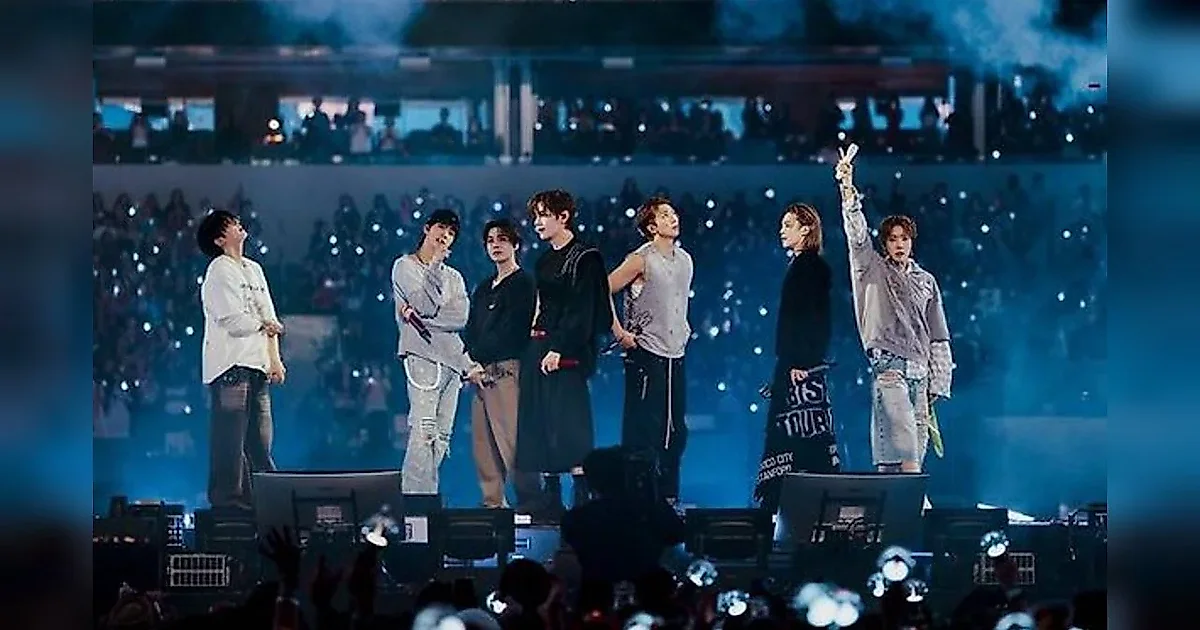
One of the names most frequently invoked in this process is BTS. BTS has been evaluated as a representative case that raised the status of Korean music in the global popular music market, such as reaching the top of the Billboard Hot 100. The symbolism held by BTS was significant in the process of K-pop establishing itself as a global industry beyond a trend in specific Asian markets. However, despite their global achievements, they served according to the existing military system rather than receiving military exemptions. Starting with Jin, j-hope, RM, Jimin, V, and Jung Kook served as active-duty soldiers in turn, and SUGA also fulfilled his military duty as a social service agent, meaning all seven have completed their military procedures.
Therefore, this controversy goes beyond the simple question of "who goes to the military." It stems from the fact that clear achievements in international competitions, such as an Asian Games gold medal, are granted military benefits, whereas achievements such as ranking number one on global music charts or success in the global performance and content markets are not subject to the same criteria. Of course, whether the achievements of sports and popular culture can be evaluated by the same standard is itself a subject of debate. This is because international sporting events take place within a clear institutional framework of national representatives, whereas achievements in popular culture occur within private industries and markets.
The current system is designed based on this distinction. According to the Military Manpower Administration, the criteria for inclusion as Sports Personnel include those who place 3rd or higher in the Olympic Games and those who place 1st in the Asian Games. Arts Personnel can also be included only if they meet certain criteria, such as winning awards in international or domestic art competitions designated by the Military Manpower Administration or completing training for national intangible heritage.
While often referred to as "military exemption," it is not exactly a method by which the duty of military service disappears. If one is included as Arts or Sports Personnel, they fulfill their designated service obligations while continuing to work in their respective fields. The Military Manpower Administration also separately regulates the service fields for Arts and Sports Personnel; in the case of Sports Personnel, activities such as athlete or coach roles are included in the forms of service.
An analysis suggests that the controversy grew large during this Asian Games not because of the existence of the system itself, but because the social sentiment surrounding it has changed from the past. Criticism spread after some soccer players made remarks that seemed to emphasize their military benefits or posted photos wearing "discharge caps" immediately after winning gold medals, leading to situations where the parties involved eventually apologized. However, some in politics argued that the focus of the problem should be placed on the system itself rather than the words and actions of individual athletes. Na Kyung-won of the People Power Party also expressed a position on the 4th that fundamental discussions regarding the reform of the Arts and Sports military exemption system should begin.
Here, the social significance of the BTS case becomes even clearer. BTS did not demand military exemptions and eventually, all members fulfilled their military duties. This fact can paradoxically serve as an opportunity to ask how fragmented the standard of "enhancing national prestige" is in an anachronistic way. In the past, when Korea's international recognition was lower than it is now, winning medals in the Olympic Games or Asian Games was a representative means of promoting the national image. On the other hand, the way Korea informs the world today is not limited to sports stadiums. K-pop, dramas, movies, games, webtoons, semiconductors, and automobiles—the entirety of culture and industry—form the national image.
In fact, Na Kyung-won also raised the argument in this debate that while international sporting achievements were an important means of national promotion in the past, various industries including K-pop and K-dramas are now promoting Korea to the world. Regardless of whether this is the claim of a specific politician, it is a point that demonstrates how much the national environment at the time the military exemption system was created has changed compared to present-day Korean society.
Of course, this does not mean one can jump directly to the conclusion that the same military exemptions granted to athletes should be immediately given to popular culture artists like BTS. Rather, the more fundamental question lies in "what objective criteria will be used to measure 'enhancing national prestige'?" It is not easy to decide whether the standard should be a Billboard No. 1 ranking, Grammy Awards nominations, global tour audience numbers, overseas sales, or the ripple effect on the cultural industry. The moment the popularity and national contribution of a specific singer or actor are quantified by law, there is a high possibility that new controversies regarding fairness will arise.
Ultimately, the core of this controversy is closer to the question of whether society can explain why some international achievements are linked to military benefits while others are not, rather than the fact itself that special treatment was not given to BTS. Since military service is a national duty, if exceptions are to be recognized, those criteria must also be clear enough for anyone to accept. This is why discussions must be held on how to set the boundaries between sports, arts, and popular culture, to what extent the status of a national representative should be recognized, and how to redefine the abstract concept of "enhancing national prestige" to fit modern society.
This Asian Games, separate from the joy of gold medals, has brought this old question back to the surface. And in the middle of that question stands BTS, who reached the top of the world music market yet had all seven members fulfill their military duties. Rather than ending the debate by criticizing specific individual athletes or providing new privileges to popular culture artists, the greatest institutional task left by this controversy is to re-examine the purpose and criteria of military exemptions themselves, as the era has changed.
Lee Chang-seok is the CEO and editor of Mediafine and writes for Mediafine Global, mainly covering K-Variety and also writing on K-pop, Celebrity and K-drama.



Comments 0
Comments are currently disabled.