
Burger Five Minutes Before a Bout: Oh Sang-uk's Unfazed Road to Two Asian Games Golds
Fencer Oh Sang-uk revealed on MBC's Omniscient Interfering View that he ate past-date salted long-arm octopus before matches at the Aichi-Nagoya 2026 Asian Games, then boiled four packs of ramen after returning home and went straight back to training.

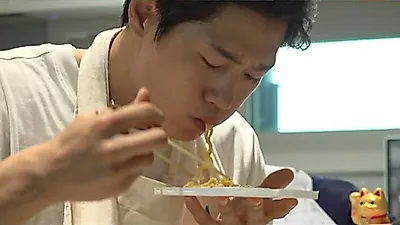
Fencer Oh Sang-uk says he has eaten a burger five minutes before a match. At the Aichi-Nagoya 2026 Asian Games, where he won two gold medals, he also carried salted long-arm octopus whose consumption date, as seen on air, had already passed.
Rice and salted octopus, not ramen
Oh did not bring Korean ramen to Japan. Asked whether he had gone without it there, he answered on MBC's Omniscient Interfering View: "I didn't take any ramen there. I figured the food would suit me because it was Japan, so I didn't bring any at all." The explanation was that he expected to adapt to local food.
What fed him instead was a tub of salted long-arm octopus found in his suitcase. "If I have salted seafood, I can just eat rice with it before a match and keep it simple, so I carry it around," he explained. It was his own way of replacing a complicated diet with a simple meal of rice and salted seafood.
Calm under pressure, in the arena and at the table
Asked about the team final against Japan, Oh recalled the dramatic comeback. With the opponent one point from taking the gold medal, he said, "I wasn't shaking at all." He was in a state of intense concentration at the time, according to his explanation. Asked how he stayed calm, he joked, "I'm from Chungcheong, so I guess it's in my character." Yang Se-hyung said that Oh seemed to have done well because he went into the match relaxed, and he admired his mental strength.
Oh's coach, who appeared on the programme, described him as a player not tied to special routines or superstitions. He has eaten a burger just five minutes before a match, and once put on his mask while chewing gimbap. Most athletes watch what they eat before competing for fear of feeling heavy, but Oh goes the other way. "I eat to overcome that kind of thing," he said.
The date on the octopus, which the cast noticed with alarm while Oh stayed unmoved, was Sept. 20, so it was already past its consumption deadline during the Asian Games. Food past that date can vary in safety depending on how it is stored and what it is, so it should not be treated as an ordinary way to eat or imitated.
Home from Japan: laundry, parcels and four packs of ramen
The episode, broadcast on the 17th, followed Oh's daily life after he returned with the two golds. The morning after flying home from Japan, he began by sorting the luggage piled in his living room, looking remarkably calm for someone who had competed internationally the day before. He sniffed each item of laundry to sort it and opened parcels he had ordered while in Japan.
The boxes held three cartons of ramen. Known for his big appetite, Oh boiled four packs at once, as if to mark his return. He had previously polished off seven packs of spicy mixed ramen and a whole pizza, and his appetite was unchanged.
Straight back to training, with the National Sports Festival two weeks away
After a short rest, Oh went out, stopping at a bakery before heading to the fencing club run by his older brother. Although the Asian Games had only just ended, the National Sports Festival was scheduled for about two weeks later, so he had to begin recovery training right away. Do Gyeong-dong and Park Sang-won, key members of the Asian Games team gold in fencing, trained with him. There was no time to savour the title before preparing for the next competition.
With his expired salted octopus and his four packs of ramen before heading back to the training hall, Oh showed both a gold medalist's focus and unexpected simplicity. Even more striking than his eating habits was his tireless drive to prepare for the next event as soon as the international tournament ended. Viewers took an interest in the contrast between the cool competitor at the venue and the ramen-loving big eater in daily life.
Meals at the athletes' village
The broadcast also renewed attention to athletes' dining conditions at international events. During the Asian Games, Thailand's team posted a video on social media complaining that the athletes' village canteen served too little food and that its serving system made it hard to take as much as they wanted, which sparked controversy. That is why some argue that, beyond training and conditioning, athletes need a stable eating environment to perform at their best.
Oh Seo-yoon reports for Mediafine Global, mainly covering K-Variety and also writing on K-drama, K-pop and K-movie.
Related Articles
Oh Sang-uk’s pre-match hamburger habit features on Omniscient Interfering View

ALLDAY PROJECT TARZZAN: "During non-active periods, I live in a studio apartment filled only with clothes"

Comments 0
Comments are currently disabled.