
Police end Yoo Hae-jin’s protection at his request amid film controversy
Police have ended safety measures for Yoo Hae-jin at his request following protests outside his home and threatening online remarks amid controversy over The Assassin(s). Police denied giving him preferential treatment, while his account of requesting script changes before accepting the role has drawn renewed attention.
Police have ended protective measures for actor Yoo Hae-jin at his request after controversy over alleged historical distortion in The Assassin(s) extended to concerns about his safety. Protests outside his home and threatening remarks online had prompted the measures, which police defended against suggestions that a prominent actor was receiving preferential treatment.
Ko Beom-seok, commissioner of the Seoul Metropolitan Police Agency, disclosed the decision on the 15th during the National Assembly Public Administration and Security Committee’s parliamentary audit of the Seoul Metropolitan Police Agency. Responding to a question from People Power Party lawmaker Kang Myeong-gu about the actor’s protection, Ko said: “He requested that it be lifted the day before yesterday, so we lifted it.” Police accepted the request from Yoo Hae-jin’s side and ended the measures.

Seongbuk Police Station in Seoul had introduced the safety measures on the 6th following a request from the actor’s agency. Officers provided a smartwatch, registered him in the 112 system and increased patrols around his home.
The decision reflected concerns about a possible threat to his safety as the dispute over The Assassin(s) intensified. Demonstrators had held a protest condemning him outside his home, and threatening remarks had appeared online.
After the protection became public, some questioned whether his celebrity status had secured him treatment beyond that available to ordinary citizens. Ko rejected that suggestion.
“We did not give him special treatment because he is an actor,” he said, explaining that police implemented the measures after reviewing the agency’s request. His explanation was that the decision rested on specific safety concerns and established procedures, rather than celebrity status itself.
The case also raises the question of how to distinguish criticism of a film from threats to an individual’s safety. Audiences and members of the public can challenge a work’s historical interpretation and presentation, but criticism that develops into threats targeting an individual, including threatening remarks or protests outside a home, presents a separate safety issue. The escalating dispute has brought the targets and methods of criticism, as well as the boundaries around personal safety, into focus.
Meanwhile, renewed attention has turned to the script discussions that preceded Yoo Hae-jin’s decision to appear in The Assassin(s).
“If they had asked me to do it exactly as the script was first delivered, I don’t think I could have appeared in it,” he said in a recent interview. His account indicated that accepting a role in a film dealing with a historical event was not an easy decision from the outset.
He said he conveyed his views on elements he felt required caution and that the director accepted them. Several revisions followed, changing the story toward a less direct approach that allowed for different interpretations.
What appealed to him was the narrative’s pursuit of the truth behind the incident. “I liked the feeling of following the truth of the incident and fitting the pieces together one by one,” he said. “I liked how densely developed the process of getting closer to whoever was behind it felt.”
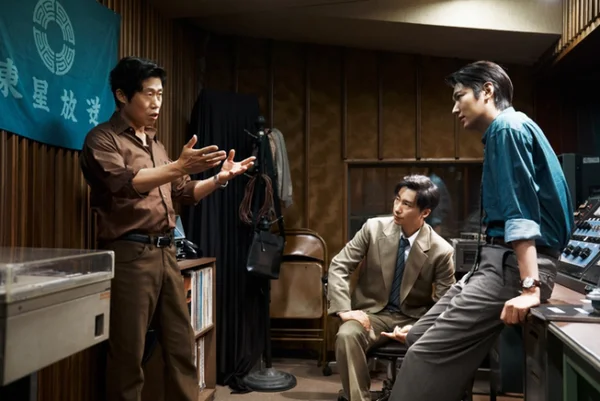
Those comments show the care he took over the script’s direction and presentation before accepting the role. His concerns and involvement in revisions, however, are separate from the question of whether the film’s historical representation is sound, leaving the work itself subject to scrutiny.
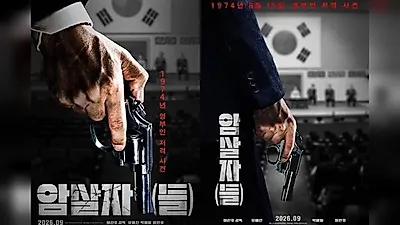
The Assassin(s) draws on the August 15, 1974, shooting of the first lady and follows suspicions surrounding the incident and those behind it. The dispute centers on which facts the film emphasizes and which interpretations it presents in reconstructing the historical event.
The end of Yoo Hae-jin’s protection does not resolve that controversy. It further underscores the need to consider his personal safety separately from criticism of the film’s historical representation.
The film’s theatrical performance is also drawing attention. As of the 12th, The Assassin(s) had surpassed 3 million cumulative admissions, attracting audiences despite the controversy. Whether it can sustain that momentum in its fourth week of release remains a focus amid the historical distortion dispute and the unusual circumstances surrounding the actor’s protection. Although the safety measures have ended, public debate and audience assessments of the film are expected to continue for the time being.
Lee Chang-seok is the CEO and editor of Mediafine and writes for Mediafine Global, mainly covering K-Variety and also writing on K-pop, Celebrity and K-drama.
Related Articles
Yoo Hae-jin's 4.5 Billion Won Seongbuk-dong House Re-examined Amid 'The Assassin(s)' Controversy
Yoo Tung "Stop Protesting in Front of Yoo Hae-jin's House," Targeting the Director
Comments 0
Comments are currently disabled.