
Yoo Tung "Stop Protesting in Front of Yoo Hae-jin's House," Targeting the Director
Actor Yoo Tung has publicly criticized the protests held in front of actor Yoo Hae-jin's residence regarding the historical distortion controversy surrounding the film 'The Assassin(s)', arguing that responsibility lies with the director and production team rather than the actors.
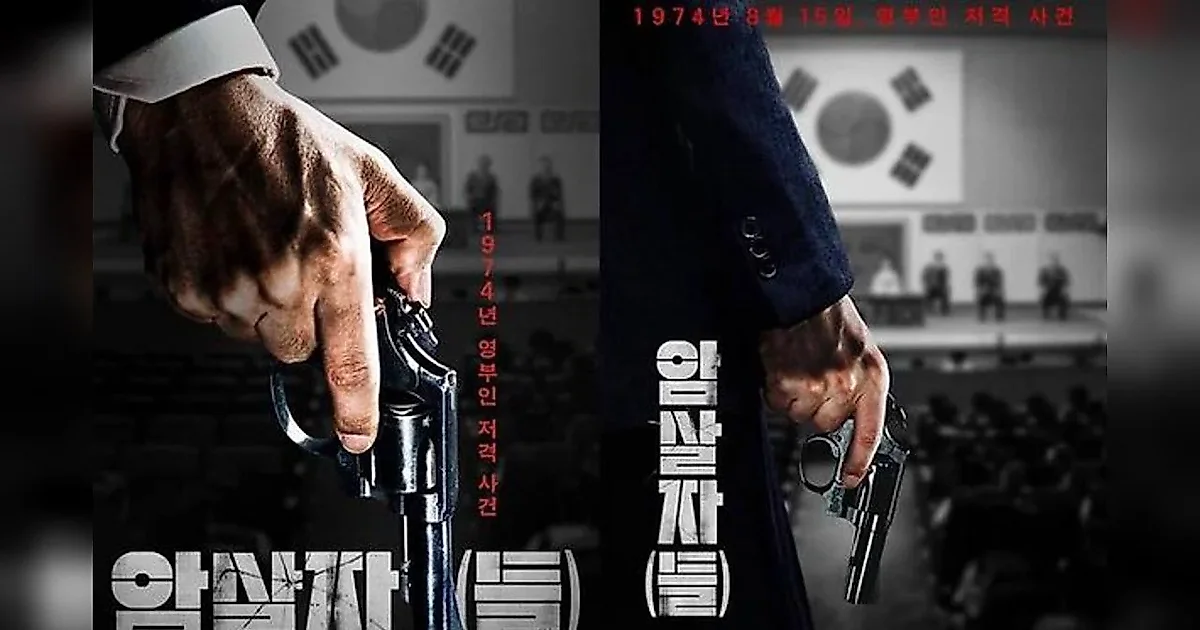
Actor Yoo Tung has publicly raised an issue regarding the fact that the controversy over the historical distortion surrounding the film 'The Assassin(s)' has spread to protests directed at the starring actors. In particular, regarding the situation where condemnation rallies are continuing in front of actor Yoo Hae-jin's residence, he voiced the sentiment that it is inappropriate to shift the responsibility of the film onto the actors, stating, "You should not grab and shake the tail."
On the 3rd, Yoo Tung released a short video titled 'Yoo Hae-jin Historical Assassin' through his personal channel 'Yoo Tung TV'. In the video, regarding the recent controversy surrounding 'The Assassin(s)', he said, "It has been very noisy lately. But what is not true is not true. You should not grab and shake the tail. You must grab the body." He continued, "If you cut the tail, another tail will grow. You must grab the head," making his clear opposition to shifting the responsibility of the controversy onto the actors.
In particular, he directly mentioned that protests are taking place in front of Yoo Hae-jin's house and appealed, "I heard they are going to Yoo Hae-jin's house to protest, and I hope they don't do that." His argument is that the actors bear no responsibility. While using somewhat rough expressions regarding the starring actors, Yoo Tung continued his remarks to the effect that actors are not in a position to make the final decision on the historical interpretation of a work.
Yoo Tung drew a line against direct criticism of the actors, saying, "Is there no one else to grab, so they are grabbing Yoo Hae-jin and the actors?" He then turned the focus to the film's screenplay and directing process by asking, "The actors are the tail. Who wrote the scenario?" Since an actor's role is to perform the character given to them, his logic is that it is inappropriate to hold the starring actors entirely responsible for the historical interpretation and message the work possesses.
He mentioned the film's screenplay and directing by directly naming director Hur Jin-ho. He argued that the issue should be raised with the production team responsible for the scenario and directing, saying, "Wasn't it Hur Jin-ho who researched and collected data for 10 years?" He also used strong expressions such as "History Destroyers" and "History Assassins" while mentioning Hur Jin-ho's previous work 'The Last Princess'. However, this is Yoo Tung's personal claim and evaluation, and it needs to be viewed separately from the debate surrounding the film's historical accuracy or the intentions of the production team.
'The Assassin(s)' is a work based on the shooting incident of the late First Lady Yuk Young-soo that occurred on August 15, 1974. In the process of cinematically reconstructing an actual historical event, controversy has flared up regarding the depiction of characters and events in the film, as well as the historical interpretation. The production team has maintained the position that the film is not intended to newly establish a specific historical conclusion or to deny or distort existing facts. As a work based on an actual historical event, the debate surrounding the boundary between creation and historical fact, and the responsibility for cinematic interpretation, continues.
The controversy has spread beyond the work itself to the starring actors. Since the 4th, condemnation rallies by conservative groups have been continuing in front of Yoo Hae-jin's residence located in Seongbuk-gu, Seoul. They are demanding the suspension of the film's screening and a public apology from the production team and actors. As the debate over historical interpretation surrounding the work leads to rallies directed at an actor's actual residential space, the nature of the controversy is becoming more intense.
Yoo Hae-jin's agency is also closely monitoring the situation surrounding the actor and has announced a strong response. Their position is to take all possible measures against acts such as the dissemination of false information, malicious personal attacks and insults, invasion of privacy and threats to personal safety, and defamation. They made it clear that criticism of the work and threats or invasion of privacy toward the individual actor are separate issues.
In fact, the Seoul Seongbuk Police Station has entered safety measures after receiving a request for personal protection from Yoo Hae-jin's side. They have provided Yoo Hae-jin with a smartwatch, registered him in the 112 system, and strengthened patrols around his residence. The police's personal protection measures show that this situation is spreading into an issue beyond simple film criticism, as such measures are taken when it is judged that there is a concern for harm, rather than meaning that actual criminal damage has occurred.
Disagreeing with the historical interpretation of a film and going to a specific actor's house to protest are issues on entirely different levels. Although Yoo Tung's way of expression was rough, in this video, he argued that the focus of the debate should be shifted to the work's screenplay, directing, and production process rather than focusing on the individual actors. Regardless of how far the historical debate surrounding 'The Assassin(s)' continues, it is expected that criticisms will also grow that criticism of a work should not spread in a way that infringes on the privacy and safety of the individual performers.
Lee Chang-seok is the CEO and editor of Mediafine and writes for Mediafine Global, mainly covering K-Variety and also writing on K-pop, Celebrity and K-drama.
Comments 0
Comments are currently disabled.