
Impact of 'The Assassin(s)' Controversy: Yoo Hae-jin to "Take All Measures for Rights and Safety"
The historical interpretation debate surrounding the film 'The Assassin(s)' has escalated into issues involving the privacy and physical safety of lead actor Yoo Hae-jin. As protests occur in front of his residence and online defamation continues, his agency has announced plans to take legal action to protect his rights and safety.
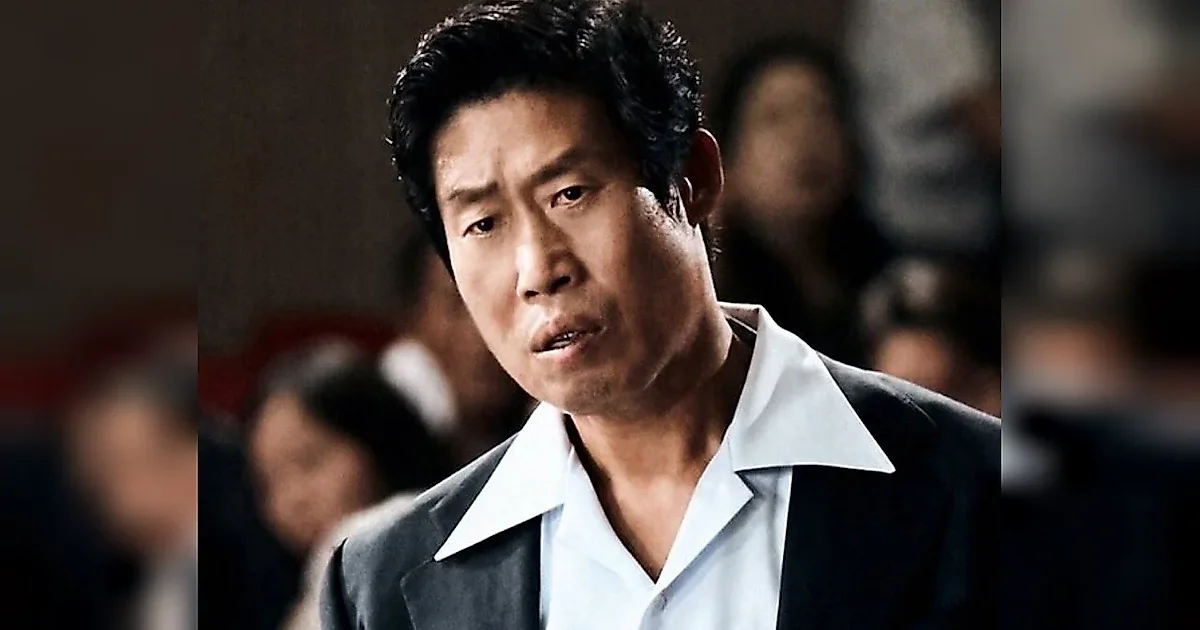
The debate over the historical interpretation surrounding the film 'The Assassin(s)' has eventually spread to the private life and physical safety of lead actor Yoo Hae-jin. Separately from the exchange of criticism and counterarguments regarding the work's historical interpretation, his agency has announced official countermeasures as protests are held in front of the actor's residence and online defamation and the spread of false information continue. As the debate over artistic works reaches a stage where it encroaches upon the daily safety of creators and performers, the debate over the boundary between freedom of expression and criticism is also growing.
VAST Entertainment, the agency for Yoo Hae-jin, released an official statement on the 5th, stating that slander and false information targeting Yoo Hae-jin are being indiscriminately spread and disseminated through online communities and SNS. The agency stated that it views all acts, including the creation and dissemination of false information as well as malicious personal attacks, insults, privacy infringement, threats to physical safety, and defamation, with great severity, and is continuously collecting related posts and materials.
Furthermore, the agency stated that it would take all possible measures to protect the rights and safety of its actor from illegal acts. Although the specific details or targets of the legal measures have not been disclosed, it is interpreted that the agency has effectively formalized a policy of strong response, given that the controversy that has been spreading primarily online has led to direct offline pressure.
In fact, on the 4th, conservative civic groups and others held a protest in front of Yoo Hae-jin's residence in Seongbuk-gu, Seoul, to condemn the production team and actors of 'The Assassin(s)'. Participants demanded the cessation of the film's screening and apologies from the production team and actors, and the police deployed a riot police unit to the scene. As the possibility of subsequent related protests was raised, a situation occurred where even the actor's residential space became a site of debate.
The starting point of the controversy is the film's historical interpretation. 'The Assassin(s)' is about tracing the suspicions and the mastermind behind the shooting incident of First Lady Yuk Young-soo that occurred at the National Liberation Day of Korea memorial ceremony on August 15, 1974. Some claim historical distortion, arguing that the film presents an interpretation different from the previously known circumstances of the incident or implies suspicions related to former President Park Chung-hee. On the other hand, the production team has explained that the film was not made to newly establish a specific historical conclusion or to deny or distort existing facts.
In the process of cinematically reconstructing historical events, the boundary between fact and interpretation, and record and imagination, constantly becomes a subject of debate. Especially if a work uses real people and political events as subject matter, it is entirely possible to raise questions about the possibility of audiences accepting cinematic hypotheses as historical facts. Criticism regarding the work's mode of expression and historical perception can be raised within the realm of public discussion and criticism.
However, criticism of a work and attacks on an individual actor are difficult to handle on the same level. An actor is merely a performer of the work and is not the entity that decides a specific historical interpretation or unilaterally determines the final narrative and directing direction of the film. Nevertheless, if one tracks an individual's private life or exerts pressure on their residence simply because they appeared in the film, the nature of the debate can change from film criticism to a threat against an individual.
This sense of problem was also voiced within the film industry. On the 5th, Filmmakers’ Solidarity issued a statement on behalf of 19 film-related organizations, expressing concern over the situation where discussions surrounding 'The Assassin(s)' go beyond the content and interpretation of the work and affect the daily lives and safety of individuals who participated in the work or expressed opinions. At the same time, they stated that for works dealing with historical events, various questions and social discussions surrounding their interpretation and expression must be possible, and the pain and awareness of the bereaved families and those who remember that era must also be respected.
In Korean society, it is not unfamiliar for debates between film and history to combine with political conflicts. This is because historical memory is not just a record of the past, but often connects to current values and political identities. Therefore, intense debates can occur over how a single film represents a specific event. The problem arises when that debate transforms into a way of pressuring the daily lives of specific individuals, going beyond the level of refuting the opponent's arguments.
In particular, because famous actors' faces and names are widely known to the public, the boundary between the work and reality can easily collapse. The moment all responsibility for the film is attributed to the appearing actor or their appearance and personal information become targets of attack, a problem arises that is different from the essence of the historical debate. In fact, in this controversy, the focus of the issue expanded as online attacks targeting Yoo Hae-jin personally, as well as protests in front of his residence, followed the content of the film itself.
The historical interpretation surrounding 'The Assassin(s)' is highly likely to be discussed in various ways in the future. Whether the questions raised by the work align with historical facts, how much the boundary between cinematic imagination and records should be allowed, and what responsibility creative works dealing with actual events should bear toward historical memory can be subjects of criticism and academic review. However, the fact that the actor's residence and safety must not turn into a battlefield of debate during that process is also becoming a clear social task.
Ultimately, the question posed by this situation does not stop at whether the interpretation of 'The Assassin(s)' is right or wrong. It is a question of how much criticism of uncomfortable films should be allowed in a democratic society, and from where the pressure exerted on an individual for participating in a work should be defined as a social threat. As the collision between historical memory and freedom of creation increases, what is needed is more sophisticated discussion rather than harsher attacks, and the announcement of a response from Yoo Hae-jin's side is read as a signal showing that the center of gravity of that debate has shifted to the issue of an individual's safety outside the work.
Lee Chang-seok is the CEO and editor of Mediafine and writes for Mediafine Global, mainly covering K-Variety and also writing on K-pop, Celebrity and K-drama.
Related Articles

Uhm Tae-woong and Yoon Hye-jin's daughter reaches 178cm at age 13, appearing to be in puberty

Seo Hyun-jin's 2.6 Billion Won Jeonse Villa in Cheongdam-dong to be Re-auctioned Amid Landlord's Bankruptcy Crisis
Comments 0
Comments are currently disabled.