Kim Ha Neul 'likes' video criticizing Nana's look in 'Snow White's Revenge'
Actress Kim Ha Neul sparks debate after liking a social media video criticizing Nana's appearance in the Netflix period drama 'Snow White's Revenge'.
Evaluations surrounding singer and actress Nana's first attempt at a historical drama are drawing significant attention. As opinions split online regarding Nana's appearance and her portrayal of a Joseon-era character in the Netflix production 'Snow White's Revenge', interest has intensified following news that actress Kim Ha Neul 'liked' a video containing the criticism. The controversy is expanding beyond simple preferences regarding appearance into a case where an actor's image clashes with the aesthetic grammar of a period drama.

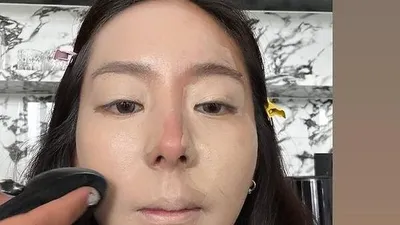
At the center of the debate is a video posted to social media on the 22nd. Shared with a title suggesting "Nana's historical drama scene where only lip fillers are visible," the video captures a scene in 'Snow White's Revenge' where Nana acts alongside Son Ye Jin. As the video spread, some netizens expressed opinions suggesting that Nana's face and lip shape do not suit the traditional atmosphere of a historical drama.
Comments included reactions such as, "She looks like a foreign daughter-in-law wearing *hanbok*," "Her look is not suitable for a historical drama," "I wasn't the only one who found it distracting," and "Did the director not think it was off while filming?" In particular, points were repeatedly made that a sense of incongruity occurred during the process of realizing the face of an actress with a strong modern aesthetic image as a character from the Joseon era.
Furthermore, the controversy spread in another direction when it was revealed that Kim Ha Neul had 'liked' the video in question. While Kim Ha Neul's intention for reacting to the post has not been publicly confirmed, various interpretations have emerged online given that the video itself critically addresses Nana's appearance in the historical drama. However, it is difficult to conclude that Kim Ha Neul agreed with the criticism of Nana's acting or appearance based solely on a single 'like.'
Nana was also aware of the controversy surrounding her. On the same day, she stated through a fan communication platform, "If my lips caused discomfort to those watching, it is my fault," adding, "I believe my personal choice was not the right choice as an actress."
Rather than simply refuting the criticism of her appearance, she showed an attitude of reflecting on how her image as an actress influenced the work and the character.
What is noteworthy in this debate is the fact that Nana has challenged herself with full-scale historical acting for the first time. Unlike modern dramas, historical dramas are a genre where an actor's appearance, speech, expressions, movements, and costumes must organically combine with the historical background. In particular, since the face is one of the key elements in visually realizing a character's era, if modern beauty trends or an actor's individual image are strongly revealed, it can be perceived by the audience as an element that hinders immersion in the period.
Of course, these evaluations are more a matter of aesthetic taste and genre expectations rather than objective facts. There is no rule that all actors must meet traditional standards of appearance just because it is a historical drama. Rather, recent period dramas often deviate from fixed stereotypes and actively utilize modern sensibilities and the individuality of the actors. Therefore, the question of whether Nana's appearance 'suits a historical drama' can ultimately vary depending on how one perceives the directing direction and character interpretation of the work.
'Snow White's Revenge' is set in the Joseon era and tells the story of the love wager between Lady Cho (Son Ye Jin) and Cho Won (Ji Chang Wook), and Hui Yeon (Nana), a young widow who becomes entangled with them. The character Hui Yeon, played by Nana, is not merely a supporting character but a figure who builds her own narrative within the main relationship network of the work. Therefore, the actress is required to go beyond simply pulling off *hanbok* and traditional makeup to convincingly realize the emotions and desires of a female character living under the constraints of the era.
Nana has shown a strong individuality in modern dramas while balancing her activities as a singer and actress. After gaining public recognition as a member of the girl group After School, she expanded her field of activity as an actress and has attempted image changes with each work. This historical drama can be seen as another inflection point in her acting career, meaning the debate over her appearance cannot be viewed merely as a cosmetic controversy.
Particularly in the current content environment where an actor's face is consumed like a 'brand,' even small physical characteristics or changes in style can easily be directly linked to the evaluation of a work. It is a frequent phenomenon where short clips and captured images are distributed independently through social media before the entire work is even seen, and a single specific scene can define an actor's entire performance or character. Nana's case exemplifies this digital content environment, where physical traits in short clips are consumed before the work itself is evaluated.
However, as Nana directly addressed the criticism regarding her appearance, stating it was "not the right choice as an actress," the controversy is expected to move beyond simple online disputes. The core of the debate lies in how an actor's personal choices and the aesthetic requirements of a period piece intersect, and to what extent viewers will accept an actor's appearance as part of the character.
Ultimately, the controversy surrounding Nana in 'Snow White's Revenge' extends beyond preferences for a single feature, raising questions about how actors should be evaluated when modern beauty standards clash with the visual grammar of traditional period dramas. While Kim Ha Neul's 'like' amplified online speculation, her specific intentions remain unconfirmed. The debate serves as a reminder that evaluations of a work should ultimately be based on a comprehensive view of character, narrative, acting, and direction, rather than isolated clips or aesthetic controversies.
 Up next
After School's Lee Joo-yeon Rejected Meeting with a Prosecutor Arranged by a Friend
More on After School