Lee Min-ho on his 17-year 'Gu Jun-pyo' legacy: 'It's so embarrassing'
Actor Lee Min-ho opens up about the lingering 'Gu Jun-pyo' persona from Boys Over Flowers and the struggle to bridge the gap between character and self.
Actor Lee Min-ho drew laughter by revealing that he still feels embarrassed by the character 'Gu Jun-pyo,' the role that instantly transformed his acting career 17 years ago. While it served as the starting signal for the birth of a youth superstar who shook Asia at the time, for the actor himself, it remains an indelible 'meme' and a piece of his dark past.
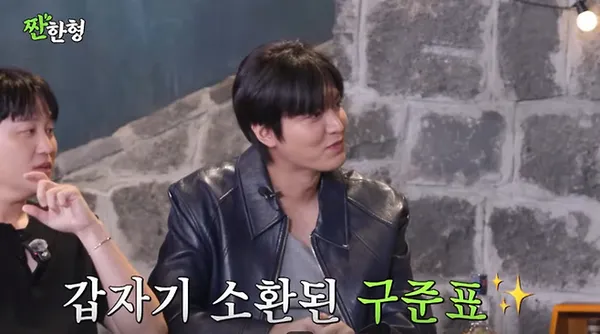
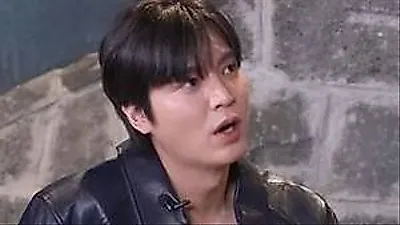
On the 14th, Lee Min-ho appeared on the YouTube channel 'Zzanbro Shin Dong-yup' in a video titled 'Gourmet Coming to Crush the Side Dishes,' where he shared stories related to his past KBS 2TV drama 'Boys Over Flowers.'
During the episode, host Jeong Ho-cheol asked Lee Min-ho, while presenting stevia tomatoes as a side dish, "Is this your first time eating this?" When Lee responded, "I've had it before," Jeong Ho-cheol's eyes widened in surprise, reacting, "I was shocked. It reminded me of Gu Jun-pyo."
Broadcast in 2009, 'Boys Over Flowers' tells the story of an ordinary high school girl, Geum Jan-di, and the F4, a group of wealthy sons. In this Korean adaptation of the Japanese manga 'Hana Yori Dango,' Lee Min-ho played Gu Jun-pyo, the leader of F4 and a second-generation chaebol. The work recorded explosive popularity at the time, instantly propelling Lee Min-ho into the ranks of stardom.
In response to Jeong Ho-cheol's remark, Lee Min-ho asked back in disbelief, "Did you assume I was eating a tomato for the first time?" Jeong Ho-cheol then mimicked the speech and behavior of Gu Jun-pyo while pretending to pick up anchovies, causing laughter to erupt in the studio.
Lee Min-ho eventually lowered his head, reacting, "Every time I see it, I'm so embarrassed I could die." Actress Ryu Hye-young, who was beside him, described it as "now being a single meme."
In reality, although nearly 17 years have passed since 'Boys Over Flowers' ended, it still holds a unique position in Korean popular culture. The exaggerated dialogue, the tropes of the second-generation chaebol characters, and the styling and acting methods of the actors have been reproduced online in the form of parodies, clips, and memes over time. Past drama scenes are being transformed beyond simple memories into material for new digital culture.
In particular, Gu Jun-pyo is a character with ambivalent meanings for Lee Min-ho. He is the decisive role that imprinted the actor's name on the public, but he is also a figure whose scenes remain intact, feeling somewhat exaggerated and cringeworthy when viewed through a modern lens. From an actor's perspective, one might want to erase past immaturity, but for the public, it becomes content that symbolizes the sentiment of that era.
Another anecdote related to 'Boys Over Flowers' appeared during the broadcast. Actor Kim Dae-myung added to the laughter by sharing his frustration from the filming of the drama 'Misaeng,' noting that he had gotten a perm hoping for a hairstyle similar to Gu Jun-pyo's, but it ended up looking like the hairstyle of boxer Jang Jeong-gu. This highlights how a character from one work remains a cultural code in the memories of fellow actors.
The trace Gu Jun-pyo left on Lee Min-ho does not stop at the level of being just a 'famous role.' Following 'Boys Over Flowers,' he secured recognition not just domestically but across Asia within just a few years, growing into a Hallyu star. Through works such as 'Personal Taste,' 'City Hunter,' 'The Heirs,' and 'Legend of the Blue Sea,' he expanded his territory as a leading actor spanning romance, action, and fantasy genres.
In that process, what Lee Min-ho had to endure was not just fame. Because 'Boys Over Flowers' was such an intense success, an image gap between the actor Lee Min-ho and the character Gu Jun-pyo followed him for a while.
Lee Min-ho also directly mentioned the psychological confusion he experienced immediately after 'Boys Over Flowers' during the broadcast. He recalled, "Suddenly, another image of myself that didn't exist was created," and "There was a huge gap between that and the person I had lived as until then." While he appeared to the public as a star completed overnight, he explained that he actually needed time to adapt to the new image.
Furthermore, there was no time to rest. Lee Min-ho said, "I needed time to adapt myself, but there was too much work to do for that." He revealed that this was the reason he focused on commercial activities for about a year after rising to stardom and did not appear in dramas or movies.
This confession makes it impossible to view Lee Min-ho's hiatus at the time as a simple matter of choosing his next project. Behind the explosive success, the actor needed time to adjust the gap between his image and the character assigned to him by the public. It is a noteworthy point that, the moment an actor's face becomes a product in the star system, tension can arise between the actor's individual ego and their public image.
Ironically, 17 years later, Gu Jun-pyo has solidified into a cultural asset, including the scenes Lee Min-ho wishes to erase. While it may be an "embarrassing" memory for the actor, for the public, it remains a symbol of the era when Korean dramas were expanding the reach of Hallyu and serves as one of the most powerful characters explaining the starting point of Lee Min-ho's career.
Ultimately, Gu Jun-pyo is both an image Lee Min-ho had to escape and the very starting point that made him who he is today. This is why, even 17 years later, he still lowers his head and laughs whenever the name is mentioned. It is a history where a past he wants to erase and a success he must acknowledge coexist within one person.
Related articles