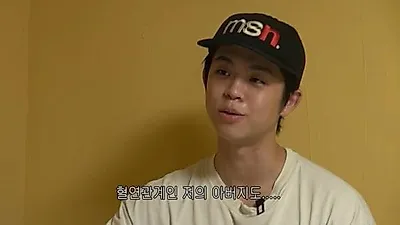
Kim GuRa reveals family owns 400,000-pyeong clan land in Pocheon
Broadcaster Kim GuRa shares a candid story about his family's massive clan land in Pocheon and how his perspective changed from his unknown days to stardom.
Broadcaster Kim GuRa revealed that the clan land held by his family in the Pocheon area amounts to approximately 400,000 pyeong. Beyond just disclosing real estate holdings, he offered a candid confession that during his years of obscurity, he hoped every day that this land would be sold, highlighting the shift in his life trajectory from a time without an economic foundation to his success as a broadcaster.

On the 14th, during the 'Kim GuRa Economic Research Institute' segment on the YouTube channel 'GreeGura,' Kim addressed a subscriber's story regarding the disposal and inheritance of regional real estate. The subscriber was contemplating whether to sell a regional building that was worth about 4 billion won ten years ago but has now dropped to the 3 billion won range. Kim advised against making a hasty decision regarding the disposal.
In this process, Kim brought up his own experience. Recalling the days when he had no work, he said, "I used to think every day, 'Isn't the clan land selling yet?'" This implies that during times when his economic income was unstable, the real estate remaining in his family felt like a sort of potential safety net.
When a real estate expert asked for the location of the land, Kim replied it is in Pocheon and stated, "It is about 400,000 pyeong." However, he clarified that the land is not real estate held under his personal name, but rather property owned by the clan. Therefore, its nature differs from typical personal real estate that an individual could arbitrarily sell or dispose of.
The area of 400,000 pyeong itself is a massive scale. When converted to square meters, it corresponds to approximately 1.32 million square meters, which, based on the area of a soccer field, would be equivalent to hundreds of fields. However, the actual economic value of the land cannot be judged by area alone, as it can vary greatly depending on the zoning, land category, road accessibility, development potential, and regulatory status.
In particular, the ownership form of 'clan land' needs to be distinguished from general private land. Since clan property is strongly characterized by being managed by members of a specific family for communal purposes, there are cases where it is difficult to proceed with actual sale or disposal through simple decision-making like private real estate. Kim also touched upon the realistic issues of disposing of clan land in the video, noting that "even if it sells, the money doesn't come immediately."
Kim also mentioned that the number of clan members is not large. Saying, "It's not bad because there aren't many descendants left," he expressed expectations for the future value of the land, which naturally drew laughter from the cast members.
An interesting point is Kim's recollection that his mother also hoped for the sale of this land in the past. Kim relayed that before he became famous, even his mother would say, "The land needs to sell a bit." However, he revealed that since he has established himself as a broadcaster, she no longer says such things, indirectly showing what real estate meant to his family.
This statement also carries Kim's characteristic realistic economic views. He is a person who has typically spoken quite freely on broadcasts about celebrities' income, consumption, real estate, and investment issues. This time, rather than boasting about grand wealth management success stories, it feels more realistic as he candidly revealed the period of great economic anxiety by saying, "When I had no work, I hoped the land would sell."
After continuing his broadcasting activities since the late 1990s, Kim has passed through long periods of obscurity and ups and downs to establish himself as a veteran broadcaster moving between various programs and YouTube content. Recently, he has been expanding his scope beyond simple variety show hosting to content dealing with real estate, stocks, and economic issues, combining his experience with his signature direct way of speaking.
In fact, 'Kim GuRa Economic Research Institute' was planned as content that unravels realistic cases using themes such as economy, real estate, stocks, and investment. His method of explaining economic issues through variety-style speech is expanding into a content genre, even reaching the level of offline talk concerts.
This time, instead of being the person receiving questions from economic experts, he provided his own family history as a case study. When real estate experts suggested going to see the clan land in Pocheon in person, Kim replied, "Let's do it as content," opening the possibility for follow-up content visiting the actual site.
However, it is not appropriate to estimate Kim's personal wealth based solely on the figure of 400,000 pyeong. This is because the land was introduced as clan property, not his personal asset. Ultimately, this story is less about 'Kim GuRa owning 400,000 pyeong of land' and more about how a long-time entertainer views the land left to his family community.
Most importantly, the psychological perspective of those looking at the same land has changed over time. The land that he hoped would be sold as quickly as possible during his days of unemployment is now viewed as a potential asset that does not need to be rushed for disposal. Economic stability has changed not only how individuals manage assets but also how they view long-held family property.
This is why Kim's mention of the '400,000 pyeong in Pocheon' is so interesting. Behind the massive number lie more practical issues than mere real estate value: who owns it, how it can be disposed of, how various stakeholders reach an agreement, and whether inheriting an asset truly translates to immediate liquid wealth.
Ultimately, the clan land Kim revealed serves as an example that owning real estate does not immediately equate to having cash. The hope of "I wish it would sell" that was so desperate during his unknown years has now become a subject for economic content, symbolically representing the changing meaning of money and real estate in his life.
Related articles