Seo Kang-joon’s perfection vs. Ahn Eun-jin’s struggle in 'A Love Other Than Yours'
A deep dive into the narrative imbalance of KBS 2TV's 'A Love Other Than Yours,' where one partner's perfection leaves the other struggling for independence.
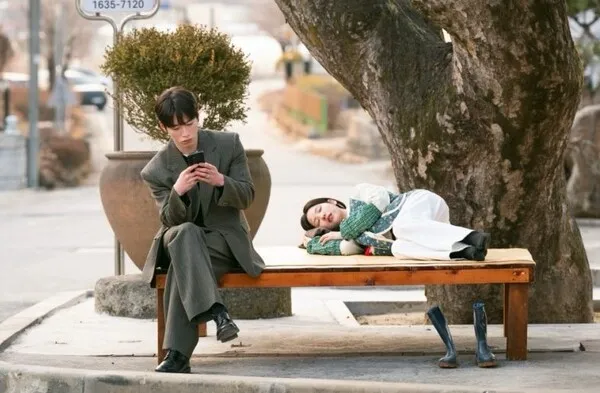
Love is inherently a shared emotional journey. The essence of a romantic relationship lies in sharing not just joy and delight, but also anxiety, deficiency, mistakes, regrets, and even a partner's immaturity. However, the early episodes of the KBS 2TV weekend drama 'A Love Other Than Yours' reveal a strange imbalance. While two people should solve the problems of love together, one constantly creates trouble while the other manages the aftermath to sustain the relationship. While the title suggests 'another kind of love,' the screen feels more like an experiment on how long one good person can endure a bad situation.
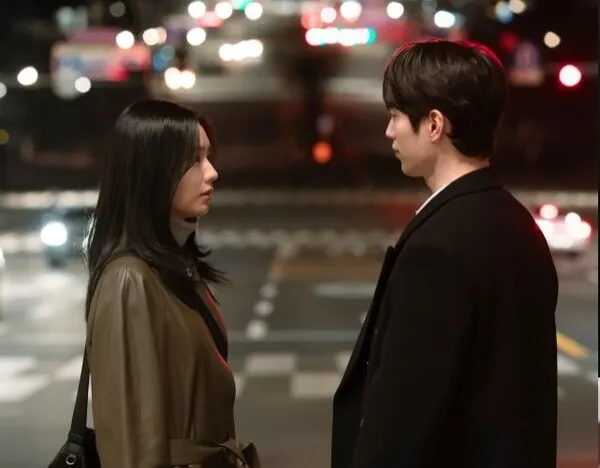
The pairing of Seo Kang-joon, who won a grand prize for 'Undercover High School,' and Ahn Eun-jin, who proved her delicate melodrama sensibilities in 'My Dearest' and 'Dynamite Kiss,' drew significant anticipation. Both actors are masters of different emotional textures: Seo is known for carving fine cracks into refined exteriors, while Ahn excels at visualizing a character's inner self through direct, physical expression. However, with viewership ratings hovering in the 2% range through episode 4, the drama has yet to achieve the expected resonance. While it is premature to judge a series by early ratings, it is necessary to examine why the narrative balance and character design have failed to create an emotional entry point for viewers.
Interestingly, the acting chemistry between the two is quite convincing. In scenes where they exchange morning calls out of habit even after a breakup, the traces of a 10-year history are palpable. Love is, ultimately, a totality of memories—a relationship that the mind declares over but the body still recognizes through a partner's speech patterns and rhythms. Seo skillfully blends fatigue and lingering affection into Namgung Ho, while Ahn expertly navigates the wide spectrum of Lee Mi-do's resentment, pride, anxiety, and affection. The premise that they have loved each other for a long time is naturally established on screen.
The problem lies beyond the chemistry. The core ingredients that could have made 'A Love Other Than Yours' compelling actually reside in Lee Mi-do. Namgung Ho possesses a stable job and economic foundation, whereas Lee Mi-do pursues a dream as a film director while facing professional setbacks and an unstable livelihood. One seeks to solidify the future through marriage, while the other fears the loss of autonomy that comes with relying on a partner. This is not a simple romantic conflict; it is the age-old dilemma of modern individuals where love and independence collide.
In modern society, economic independence is tied to self-esteem, social identity, and self-determination. Even a hand extended by a partner without malice can act as a mirror reflecting one's own perceived incompetence. It is a paradox where receiving help from a loved one feels both grateful and humiliating. Lee Mi-do had the potential to be a deeply attractive character if she were portrayed not as someone rejecting love, but as someone unable to endure being subordinate to it. Had the drama leaned into this, her choices would have carried significant psychological weight.
However, the drama fails to push this complexity. Namgung Ho is molded into an excessively perfect boyfriend: handsome, employed at a major corporation, skilled in housework, attentive to his girlfriend's family, and even offering his savings to support her dreams. He is the embodiment of the modern melodrama's 'unicorn boyfriend.'
Paradoxically, this perfection makes Lee Mi-do look pathetic rather than making Namgung Ho a multi-dimensional character. Humans acquire depth through flaws, and love is no different. When one side is excessively devoted, the other's resistance easily appears selfish. If the drama had explored the frustration, desire for control, or even the self-satisfaction hidden within Namgung Ho's goodwill, the relationship would have felt much more complex. Instead, the current narrative glorifies his devotion, diluting the tension.
Consequently, Lee Mi-do's desire for independence risks being reduced from an existential declaration to a mere act of stubbornness. Without exploring why receiving economic help is so uncomfortable, or the inferiority felt when standing beside a successful partner, her actions may be misread as simple obstinacy rather than philosophical conflict.
The difficulty is compounded by how Lee Mi-do handles conflict. Her actions—such as pouring liquor on a man's head or jamming a brick into a car windshield to spite lawyer Han Tae-seung—might be intended to show her strength against unfair treatment. However, in a realistic context, a person facing economic hardship who acts with such lack of restraint looks less like a revolutionary and more like someone driven by self-destructive impulses.
This creates the risk of the 'nuisance female lead' trope. The issue is not that a female lead should lack flaws, but rather the narrative causality surrounding those flaws. Why does she act this way? What pushed her? How does she take responsibility? Without these answers, the character fails to gain human depth. Ahn Eun-jin's powerful acting actually creates a paradoxical effect here: because she expresses emotions so vividly, the character's instability and anger are even more pronounced. When the script fails to provide sufficient context for those emotions, the actor's talent can inadvertently amplify the character's flaws.
In melodrama, acting skill does not always correlate with character likability; great acting can accurately convey even the most unpleasant traits. As Ahn builds Lee Mi-do's emotional amplitude, viewers find themselves torn between wanting to understand her and wanting to be with her. The irony is that a good actor does not always guarantee a good character.
The title's implication of 'another kind of love' also lacks momentum. Han Tae-seung, while rescuing Lee Mi-do, simultaneously holds her weakness over her and threatens Namgung Ho. In a typical melodrama triangle, a dangerous and seductive man should shake the stability of the existing relationship. So far, however, Han Tae-seung feels more like a man using any means to achieve his goals rather than a character with a fatal, magnetic charm. Furthermore, Park Su-a remains a functional device to drive the plot rather than a central figure with her own desires and values.
Ultimately, the core issue is not 'who is the good person,' but how responsibility is distributed in love. When Namgung Ho becomes the sole provider and Lee Mi-do the constant problem-maker, love shifts from a reciprocal relationship to an asymmetrical structure of caretaking. In such a dynamic, romantic conflict is reduced from a process of mutual growth to one person simply enduring the other.
'A Love Other Than Yours' could reach greater depths if it explored these modern dilemmas: how economic inequality and the pressure of self-development seep into private lives, and how love can simultaneously be a salvation and a source of mutual anxiety.
 Up next
Seo Kang-joon and Ahn Eun-jin face new variables as marriage looms
More on Ahn Eun-jin