More Than Yoo Hae-jin, Park Hae-il, and Lee Min-ho: The Surprising Casting of 'The Assassin(s)'
Beyond the leads Yoo Hae-jin, Park Hae-il, and Lee Min-ho, 'The Assassin(s)' boasts an incredible ensemble cast for its upcoming release.
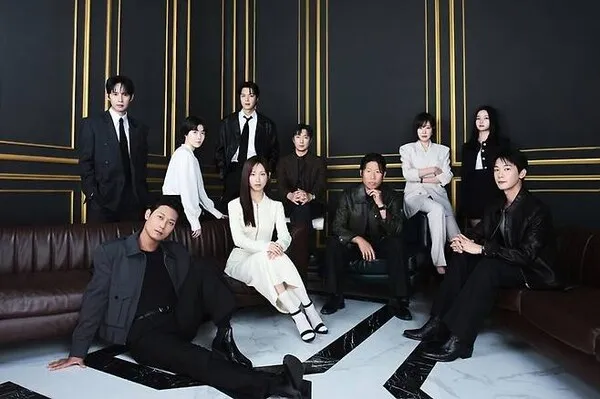
The film 'The Assassin(s)' is stimulating the curiosity of audiences ahead of its release by revealing a group pictorial featuring actors who represent the Republic of Korea's film industry. Centered around Yoo Hae-jin, Park Hae-il, and Lee Min-ho, and joined by Uhm Ji-won, Park Hoon, Ryu Hye-young, Choi Yu-ri, Park Sung-hoon, Shim Eun-kyung, and Zhang Lu, this photo is glamorous in itself. However, the actual film features a massive lineup of actors not even present in the photo, further elevating the 'pleasure of watching the cast.'
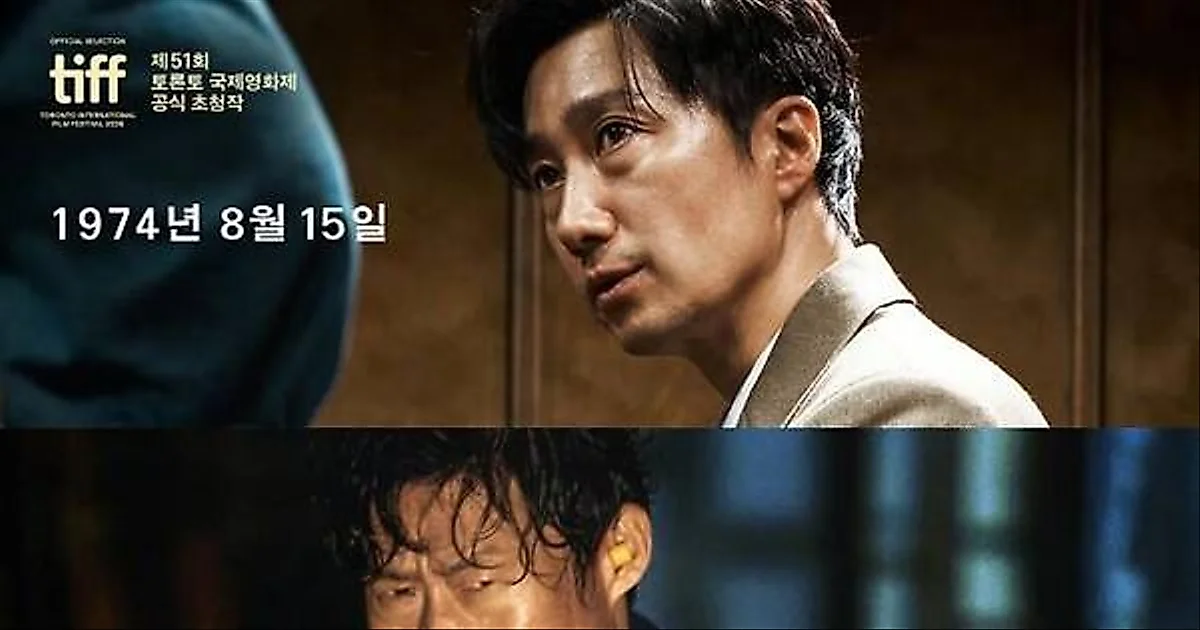
'The Assassin(s)' is a mystery that traces the mastermind behind the assassination of the First Lady at the Liberation Day ceremony on August 15, 1974, adding cinematic imagination to the records released at the time and the questions surrounding the incident. Directed by Hur Jin-ho, the film is set to be released on September 23.
In the released group photo, the most striking element is the 'gathering' of the actors themselves. Unlike the period atmosphere of the work, the actors chose sophisticated styling centered on black and white, maintaining their individual personalities while achieving a strange balance within a single frame. The fact that the actors, who play characters burdened by the weight of the incident, show relaxed expressions and natural poses in reality also creates a contrast between the film and the photo.
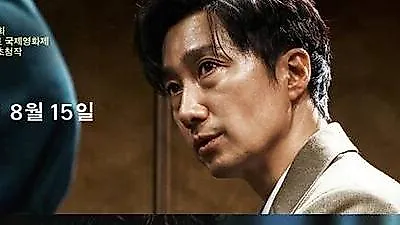
However, this photo alone is insufficient to explain the casting of 'The Assassin(s).' The central axis of the film consists of Yoo Hae-jin, Park Hae-il, and Lee Min-ho. Yoo Hae-jin plays 'Cheol-gu,' a central police station inspector in charge of security at the scene; Park Hae-il plays 'Jae-hwan,' a social affairs editor at a newspaper; and Lee Min-ho plays 'Yeong-il,' a rookie reporter covering the case, as they pursue a single incident from different positions.
The different professional positions of these three characters hold significance beyond simple character settings. Cheol-gu witnesses the incident directly at the scene and harbors doubts between the investigative agency's announcements and the reality he experiences. Jae-hwan attempts to approach the truth through the media, and Yeong-il views the incident through the eyes of a rookie reporter who has not yet been fully incorporated into the logic of the organization. It is a structure where what one sees and what one believes changes even though they are looking at the same incident.
Director Hur Jin-ho also explained that when considering the combination of the three lead actors, he placed great importance on the ensemble of different perspectives and actions through which the detective, the social affairs editor, and the rookie reporter view the case. In other words, the casting of 'The Assassin(s)' is not intended to simply place famous actors together, but is closer to a device to show a single massive mystery in fragments through characters with different information and interests.
The lineup of actors supporting the leads is equally impressive. Uhm Ji-won appears as Cheol-gu's wife 'Kim Hui-ja,' Park Hoon as the central intelligence agency agent 'Kim Sang-pil,' Ryu Hye-young as the social affairs reporter 'Seo Yun-hui,' Choi Yu-ri as a choir member 'Choi Seung-hwa,' Park Sung-hoon as the prosecutor in charge of the investigation 'Kim Hak-su,' Shim Eun-kyung as 'Lee Gang-ja' who helps Yeong-il during the reporting process in Japan, and Zhang Lu as Cheol-gu's fellow detective 'Ko Dong-bae.'
Furthermore, actors who did not appear in the group pictorial form a separate layer. Park Jung Min plays Moon Tae-gwang, a key figure in the incident, and Bae Seong-woo, Park Ji-hwan, Ryu Kyung-soo, Kim Dae-myung, Park Hae-joon, Oh Jung Se, Shin Hyun Been, Jung Woo-sung, Uhm Tae Woong, and Oh Dal-su have also joined the work in their respective roles. In particular, it has been evaluated that Jung Woo-sung, Kim Dae-myung, Shim Eun-kyung, Park Hae-joon, Oh Jung Se, and Shin Hyun Been increased the density of the film by densely filling even relatively small roles or special appearances.
The reason there are such a large number of actors is that the film stays away from a method of concentrating the incident on one or two heroic figures. Centered around the massive event of the assassination, the police, reporters, prosecutors, intelligence agency officials, family members, and witnesses become intertwined, with each character moving with different information and purposes.
In particular, Moon Tae-gwang, played by Park Jung Min, is mentioned as an important axis constituting the film's mystery. In evaluations released after the press screening, it was noted that Park Jung Min expressed the character's suspicious aspects through gaze and facial expressions rather than relying on dialogue. It is a way in which the actor's presence increases the tension of the incident even in small scenes.
Jung Woo-sung's appearance is also noteworthy. He appears as Yeong-il's older brother and the chairman of Geukdong Trading Company, playing a capitalist who moves between personal interest and the pretext of national development. He holds significance beyond a simple star cameo, as he is a character who expands the power structure and economic interests of the era the film deals with.
The historical background of the work is as heavy as the casting. The assassination of the First Lady at the Liberation Day celebration on August 15, 1974, is a real incident that shook the society of the Republic of Korea at the time. Rather than merely recreating this incident, 'The Assassin(s)' reconstructs it into a mystery by combining cinematic imagination based on the remaining records and the questions that continue to this day.
Because of this, the core of the film is not reduced to the simple deduction of 'who is the culprit.' The process of chasing what is the truth and what has been concealed, as official announcements surrounding the incident, individual testimonies, media coverage, and the interests of power institutions collide, acts as the narrative tension. This is why it is a period piece that is also an investigative drama, and a mystery using a political event as material that simultaneously looks into the relationship between the media and power.
For Director Hur Jin-ho, this film is read as a challenge that shows a different texture from his existing representative works. The director, who has delicately captured the emotions and relationships of characters in works like 'Christmas in August' and 'One Fine Spring Day,' shows a prominent directorial variation by putting the genre grammar of historical events and pursuit dramas at the forefront. Following 'Dangerous Liaisons' and 'A Normal Family,' Hur has also been invited to the Toronto International Film Festival for the third time.
At the press screening held on September 8, the lead actors and Director Hur Jin-ho attended to share stories about the work, and the film was officially invited to the Gala Presentation section of the 51st Toronto International Film Festival. The schedule of meeting domestic audiences after being revealed first at major North American film festivals shows that the work aims not just to be a typical Chuseok commercial film, but also targets historical subject matter and genre perfection.
In the Chuseok theater market, the greatest weapon of 'The Assassin(s)' is ultimately not the number of actors, but how those actors create different faces within a single incident. Yoo Hae-jin's detective, Park Hae-il's reporter, and Lee Min-ho's rookie reporter pass through the center of the incident, while numerous actors such as Park Jung Min, Uhm Ji-won, Park Hoon, Shim Eun-kyung, Jung Woo-sung, and Oh Jung Se densely surround them.
A single group photo only shows a part of that massive ensemble. Rather, after confirming the actors and characters hidden outside the photo, curiosity grows even more as to why the title 'The Assassin(s)' carries a plural nuance, and through what perspective the film looks back at a certain incident from 1974.
 Up next
‘The Assassin(s)’ leads Korean film reservations ahead of release
Related articles