Baek Ji Young discards trendy toys for daughter over safety concerns
Singer Baek Ji Young reveals she threw away all 'Wax-ppuball' toys purchased for her daughter after reports of harmful substances in the products.
Singer Baek Ji Young revealed that she discarded all the 'Wax-ppuball'—a trendy toy she had personally purchased for her daughter. As the toy, which had gained immense popularity among young children, became embroiled in safety controversies, she disposed of the significant quantity she had purchased without hesitation. This reflects a facet of today's kidult and character product market, where the joy of consumption intersects with parental anxiety over safety.
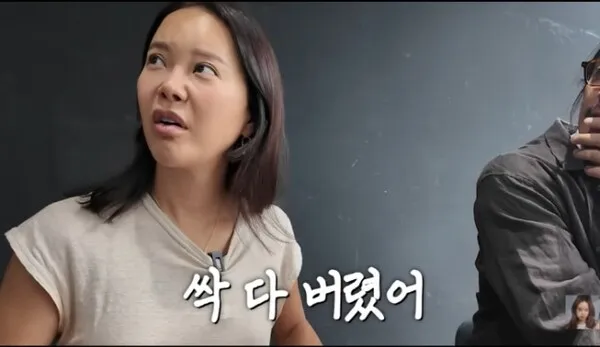
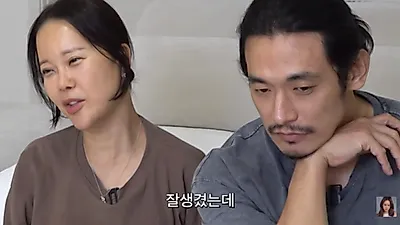
In a video released on her YouTube channel on the 8th, Baek shared daily stories about her daughter while enjoying a meal and dessert with her husband, Jung Seokwon. The video was titled 'Jung Seokwon falls for MZ desserts and Baek Ji Young's legendary mukbang war despite fighting enteritis (Jung Seokwon's favorite cafe).'
The couple visited a spicy beef noodle soup (Yukgaejang Kalguksu) restaurant known as a hotspot for entertainer Choi Ja and rapper Swings. However, Baek was not feeling well that day due to enteritis.
Jung expressed concern for his wife, saying, "She said she woke up in the early morning and vomited," and Baek replied, "That's why I'm planning to eat lightly today."
However, the situation changed once the food arrived. Upon seeing the rich broth of the Yukgaejang and the visual appeal of the Kalguksu, Baek began eating, saying, "I have to eat this. This looks unbelievable," subsequently unleashing her signature mukbang instincts.
Although Jung repeatedly worried, saying, "Don't eat too much," Baek countered, "This isn't polite. It's not polite to the food," as she continued her meal. The contrast between the husband worrying about her health and Baek refusing to back down in front of food drew laughter.
After finishing the meal, the couple went in search of so-called 'MZ desserts,' which have recently gained interest among the younger consumer base. During the process, the production crew asked Baek if she knew about 'Wax-ppu,' and she shared an unexpected personal experience.
Baek revealed that she had purchased many Wax-ppuballs for her daughter, saying, "Of course. I even went all the way to Changsin-dong to buy a lot, but then an article came out."
She continued, "They said the ones made in China contained harmful substances, so I threw them all away."
Wax-ppuball is known to be a toy in the form of a ball made of clay coated with wax on the surface. Recently, it has become a hot topic among online users and young consumers as products reinterpreting its unique shape, texture, and color into salt bread-shaped desserts have emerged.
In particular, such products demonstrate the characteristics of recent consumption culture by providing 'the fun of watching,' 'the fun of filming,' and 'the fun of sharing' simultaneously, going beyond the functional category of simple toys or food. It is a representative case of so-called experience-oriented consumption, where the unique shape, scarcity, and online buzz drive consumption rather than the utility of the product itself.
However, as children's consumer goods become trendy, another problem arises for parents: safety.
Since children find it difficult to judge the ingredients, manufacturing processes, or the presence of harmful substances themselves, parents effectively become the final judges of safety. Especially in an environment where specific products spread rapidly through SNS and online communities, the speed of a product's trend can sometimes outpace the verification of its safety.
Baek also personally sought out the items considering her daughter's tastes, but once safety concerns were raised, she immediately rescinded her previous consumption decision.
This involves the typical risk-aversion psychology of parents regarding their children. Even an issue that an adult might merely 'ponder whether to use' becomes subject to much stricter judgment when it concerns the health of a young child. The fact that money has already been paid or that significant time and effort were spent to obtain it is easily neutralized in the face of safety concerns.
The part where Baek said, "I even went all the way to Changsin-dong to buy a lot," clearly illustrates this paradox of consumption. Although she invested time and cost to make her child happy, what the parent ultimately chose was 'disposal' rather than 'storage.'
This is a scene that symbolically shows the decision-making of parents who prioritize their child's safety over so-called 'sunk costs.' Even if the money and effort already spent are regrettable, they stop consumption if they judge there is even a slight possibility of danger.
However, separate verification is required to determine specifically what the 'harmful substances' mentioned by Baek are, whether the issue applies to the entire product line, or if it is limited to specific products or manufacturing processes. Toy safety cannot be judged by the country of origin alone; one must comprehensively examine safety standards, inspection results, materials used, and distribution channels.
Regardless, this story draws interest because a toy that was once a child's most joyful gift can suddenly become something a parent must dispose of first.
Trends are fast and consumption is immediate. The time it takes for a product to emerge as a 'must-have' via SNS is very short. However, information regarding safety does not accumulate and verify as quickly as the trend itself disappears.
Baek's Wax-ppuball episode carries meaning beyond a simple family anecdote. It captures the intersection of a parent's desire to satisfy a child's wishes, the consumption fever created by SNS, and the underlying anxiety regarding safety.
In the video, Baek showed her honest and cheerful daily life, tasting Yukgaejang Kalguksu and desserts even while feeling unwell from enteritis. Her playful banter with Jung added to the video's charm.
Ultimately, for Baek, the Wax-ppuball was more than just a toy. It was something she sought out to bring joy to her daughter, and simultaneously, a consumer good she had to decisively abandon once safety concerns arose.
In an era where 'what is liked' and 'what is safe' do not always align, Baek's brief confession shows that parental consumption is no longer decided by taste alone. She chose protection over possession and safety over trends.
 Up next
Baek Ji Young on past feud with Seo In-young: “I don't even remember why I hated her”
More on Baek Ji Young