Baek Ji-young and Jung Suk-won seek medical advice for daughter's rapid growth
Singer Baek Ji-young and actor Jung Suk-won consult a specialist regarding their daughter Haim's rapid growth and early physical changes.
Singer Baek Ji-young and actor Jung Suk-won visited a hospital regarding the noticeably rapid growth and secondary sexual characteristics of their daughter, who is currently in the third grade of elementary school. With her height being much taller than her peers, combined with the appearance of body hair and other physical changes, the parents were deeply concerned that she might have precocious puberty. However, a specialist explained her current state as being within the "fast but normal range" and determined that she is not a candidate for growth suppression treatment.
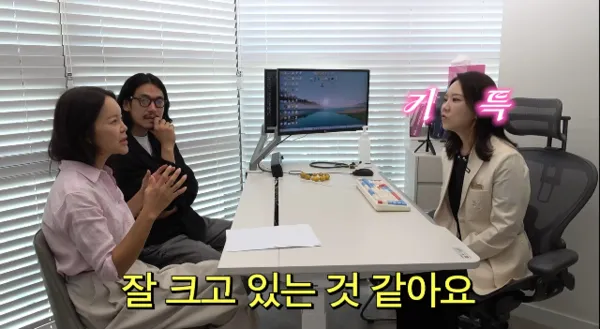
On the 19th, a video titled "First Reveal of the Secret Behind Baek Ji-young's Daughter's Stormy Growth, Growing 1cm Every Month" was released on Baek Ji-young's YouTube channel. In the video, Baek Ji-young and Jung Suk-won visited a pediatric clinic to consult with a specialist to more accurately check the growth status of their daughter, Haim.
Baek Ji-young explained that her daughter, currently in the third grade, has reached a height of 154cm, stating, "Her growth is incredibly fast compared to her peers." Beyond simple curiosity about her height, they visited the hospital to confirm whether her growth rate was excessively fast or if her puberty was starting earlier than her peers.
"I was curious about the reason for her rapid growth, and I heard there is a diagnosis called precocious puberty, so I was very curious," she said. "When I searched the internet, there were too many rumors. So I came to find a doctor who could confirm it for sure."
Jung Suk-won also expressed concern by directly mentioning his daughter's physical changes. He said, "Haim is growing fast. She has grown a lot of hair. I wonder if it is okay."
From a parental perspective, the more important issue was not just the fact that she was growing faster than her peers, but whether the physical changes occurring in that process fell within the normal range of puberty or required medical observation and treatment.
Baek Ji-young explained her daughter's growth process in detail to the specialist. She pointed out the timing of the rapid growth, saying, "She started growing 1cm every month from the beginning of age 7." She added, "Not only is her height increasing, but secondary sexual characteristics have started to become visible since six months ago," and noted, "Her foot size is 240."
While an increase in growth rate can occur naturally during a child's physical development, it is necessary to differentiate for precocious puberty if signs of puberty appear at a significantly earlier time than peers. The specialist explained that in the case of girls, precocious puberty can be suspected if signs of puberty appear, such as breast development starting before age 8, and that the actual diagnosis process involves a comprehensive check of physical development status, growth rate, growth plate condition, and hormone tests.
One of the reasons for diagnosing and treating precocious puberty is that if puberty progresses too quickly, the growth plates may close earlier than expected, potentially affecting final adult height. Experts generally explain that rather than parents feeling relieved simply because a child is "taller than peers" or conversely worrying excessively, they should comprehensively examine the growth rate, bone age, and the progression of secondary sexual characteristics.
However, the part Baek Ji-young was most worried about that day was not the final height. She confessed, "I don't worry much about her height. But I am worried about her first menstruation."
While she judged that the height itself is sufficient for now, as a parent, she was more concerned about the possibility of her leading to excessively early menstruation.
Jung Suk-won also expressed concern regarding the pain his daughter experiences during the growth process. He shared that she "breaks down crying about 3 to 4 times a week," and that she describes the pain as being "worse than COVID."
Baek Ji-young also mentioned, "There were times when she cried for 40 minutes," and said she massages the child's legs and whole body when she is in pain.
Leg pain occurring during a child's rapid growth period is commonly called "growing pains," but not all pain can be simply concluded as a phenomenon occurring during the growth process. The frequency, intensity, location of the pain, and its connection to activities must be examined, and if continuous or abnormal patterns appear, medical evaluation is required. Baek Ji-young and Jung Suk-won focused on reducing uncertainty by directly confirming not only the daughter's growth rate but also the pain issues with a specialist.
The specialist's explanation differed somewhat from the parents' concerns. While Haim appears to have entered a rapid growth phase, it was stated that she is not in a situation where treatment to suppress growth itself is necessary.
The specialist explained, "She is not a candidate for growth suppression," and advised that maintaining basic lifestyle habits such as a balanced diet, moderate exercise, and sufficient sleep is important. He added, "She seems to be growing well. It is a fast but normal range. Please do not focus on the 'fast' part, but rather focus on the fact that it is normal." This can be interpreted as a distinction between being "faster than peers" and being "abnormally fast" from a medical standpoint. Since growth rates vary greatly between individuals, a condition cannot be immediately classified as a disease simply because a child is tall or shows early signs of puberty; it is crucial to monitor the temporal progression of growth and physical development patterns.
After the consultation, Baek Ji-young appeared much more relieved. "I feel like my worries have been eased," she said, noting that the hospital visit helped resolve much of her vague anxiety. She added, "I feel like it is not precocious puberty," reflecting her change in mindset following the specialist's consultation.
This case highlights the importance of parents seeking professional evaluations to confirm a child's actual growth status rather than relying on fragmented internet information or anecdotal experiences when a child's growth rate is faster than their peers. Precocious puberty is not a condition determined solely by the phenomenon of "growing quickly"; it requires a comprehensive assessment of when puberty signs began, growth rate, bone age, and hormone levels.
While Baek Ji-young and Jung Suk-won's concerns began with vague anxieties regarding their daughter's growth, the specialist's explanation confirmed that being "fast" and being "abnormal" are two different matters. This case serves as a reminder to parents of growing children that rather than fueling anxiety with fragmented information, it is essential to accurately track a child's individual growth trajectory and seek timely medical judgment when necessary.
 Up next
Baek Ji-young worried about daughter's precocious puberty
Related articles