KATSEYE hits No. 1 on Billboard 200, signaling K-pop's evolution
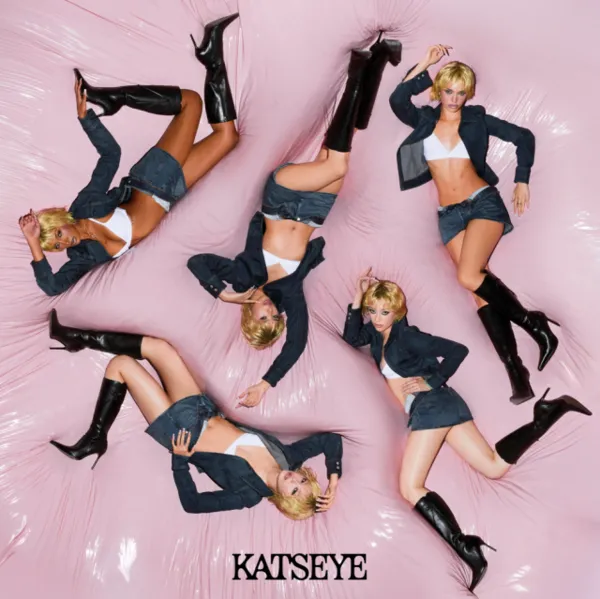
Global girl group KATSEYE reaches the top of the Billboard 200, proving the Korean production system can thrive globally through localization.
KATSEYE, the global girl group co-produced by HYBE and Geffen Records under Universal Music Group (UMG), has reached No. 1 on the Billboard 200. This achievement holds significance beyond a simple chart-topping position; it represents the musical and industrial methodologies developed by the Korean entertainment industry reaching the pinnacle of the global market through a group established locally in the United States.

This is not the first time a group with deep ties to Korea has topped the Billboard 200. Blackpink, NewJeans, and Twice have all reached the summit before. However, KATSEYE's case differs from traditional K-pop global expansion models in both its starting point and its approach.
While traditional K-pop followed an "export-type model"—distributing artists discovered and trained in Korea along with Korean-language music to overseas markets—KATSEYE designed its entire process around the US market, from member composition and auditions to training, music production, and local promotion. Moving beyond simply selling Korean content abroad, the group has transplanted the production system perfected by the Korean entertainment industry directly into the local market.
This demonstrates that the conceptual boundaries of K-pop are shifting. In the debate over whether K-pop should be defined as a music genre from a specific country or as an industrial production system that discovers and nurtures artists to build fandoms, KATSEYE provides an answer closer to the latter.
One of the questions repeatedly raised within the Korean entertainment industry and capital markets has been "Post-BTS." The issue was how to inherit the massive IP and fandom created by BTS in the global music market. In particular, as hiatuses due to members' military service occurred, the structural vulnerability—where dependence on specific artists can directly impact corporate performance and value—was highlighted.
KATSEYE's achievement presents a solution to this question through a new direction. It is not necessary for the center to be a Korean member, nor does it require Korean lyrics to be the core of the musical identity. Instead, the "K-pop methodology"—comprising global A&R, systematic training, performance design, fan communication, content production, and the integration of local labels and distribution networks—functions as the core asset.
In other words, K-pop's competitiveness is no longer confined to the geographical space of Korea.
The track "WILD," which led this ascent, is also proving its global scalability by showing a strong presence in major European markets, including the UK, France, Germany, the Netherlands, and Belgium. The upcoming world tour, centered in Europe and North America starting this September, is expected to be a crucial test to ensure this chart performance is not merely a one-time event.
Crucially, "localization" does not mean the "deletion of Korean elements." Rather, KATSEYE shows that the artist nurturing system built by the Korean entertainment industry over decades can be applied beyond the boundaries of a specific language or nationality.
In the cultural industry, competitiveness is not determined by the finished product alone. The production infrastructure itself—the ability to continuously create products, grow artists, and build long-term relationships with fandoms—is the true competitive edge. This is precisely why KATSEYE's Billboard No. 1 is drawing such intense attention.
When K-pop first gained global attention, the core question was "how far can music made in Korea be exported?" However, with the emergence of KATSEYE, the question has changed. Now, the new standard is "can the Korean production method work anywhere in the world?"
By transcending the geographical boundaries of Korea and the human composition of Korean artists, KATSEYE has applied intangible industrial assets—planning, nurturing, production, and fandom management—to the global market. Their success is a symbolic event showing that K-pop is evolving beyond a proper noun for Korean pop music into a global production grammar and industrial standard.
Ultimately, KATSEYE's Billboard No. 1 is less about "K-pop's entry into the US" and more about the localization of the system that made K-pop possible. In an era where content borders are blurring, the next frontier for the Korean entertainment industry may not be creating more stars in Korea, but exporting the system that can birth stars anywhere in the world.
Related articles