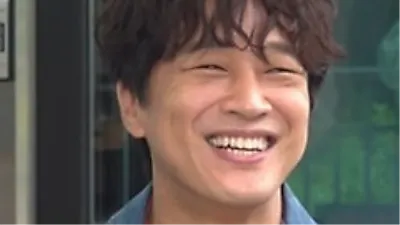
Comedian Kim Si-deok defends RESCENE's WONI against dialect controversy
Comedian Kim Si-deok refutes claims that RESCENE member WONI's use of Gyeongsang-do dialect is linked to far-right online communities.
Amid the ongoing controversy surrounding remarks made by RESCENE member WONI regarding so-called "Ilbe terminology," comedian Kim Si-deok, a native of Ulsan, stepped forward to publicly refute the claims. He stated that the expression in question is a dialect that has been used in the Gyeongsang-do region for a long time, arguing that linking regional dialects to political frames based on specific sentence endings stems from a lack of understanding of linguistic culture. He emphasized that dialects are precious cultural assets that must be preserved.

On the 5th, Kim posted a lengthy message on his social media (SNS) to convey his position regarding the recent controversy.
He began his post with a Gyeongsang-do expression, "Why is the world so scary?" (Se-sang-i wa-i-ri mu-seop-no?), before adding, "Having been born and raised in Gyeongsang-do, I have lived using the dialect naturally. Since I began broadcasting activities using the Gyeongsang-do dialect, I have consistently researched various materials and professional books related to dialects."
Regarding the expression at the center of the controversy, he explained, "The 'mu-seop-no' used by RESCENE's WONI is indeed an interrogative sentence ending commonly used in the Gyeongsang-do dialect."
Kim stated, "At some point, people began associating any expression ending in '-no' with Ilbe. Every time that happened, I have explained, 'What are you saying?' (meo-ra-no), 'Why are you acting like this?' (wa-i-ka-no), or 'It's not Ilbe.'" His point is that labeling a specific sentence ending as the language of far-right online communities is linguistically invalid.
He also explained in detail that the Gyeongsang-do dialect does not exist in only one form but possesses various linguistic variations depending on the region and generation.
Kim noted, "Even looking at expressions like 'Is there?' (it-seo-yo?) or 'Is there not?' (eop-seo-yo?), in the Gyeongbuk region they say 'it-ni-kkyeo?' or 'eop-ni-kkyeo?', while in the Gyeongnam region they say 'it-seu-ye?' or 'eop-seu-ye?'"
He continued, "If we subdivide further, even within the same metropolitan area like Busan, Ulsan, and Gyeongnam, the accents are different, and there are differences in dialects between small cities such as Masan, Changwon, and Jinhae, as well as Geoje, Tongyeong, and Goseong. Even the dialect used by the grandmother and grandfather generations is significantly different from the expressions used by the current young generation."
He also expressed regret over the reality that such regional linguistic diversity is gradually disappearing.
"Only some of the intonation remains, while words and sentence endings are gradually being forgotten," Kim emphasized. "I believe dialects are a precious cultural asset of our country." This is interpreted as meaning that dialects should be viewed not merely as regional characteristics but as an element of linguistic culture worth preserving.
Finally, he expressed his view on the recent controversy more directly.
Kim wrote, "Singers of the current generation are actually using the Gyeongsang-do dialect that people in their 50s and 60s used, so for young people to conclude it is 'Ilbe terminology' and apply a frame is 'Yeong-pa-i-da' (it's really not good)." 'Yeong-pa-i-da' is a Gyeongsang-do dialect expression meaning 'it's not good at all' or 'it makes no sense.'
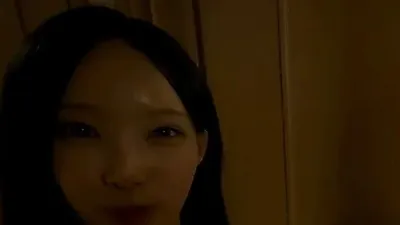
The controversy originated from content recently released by RESCENE's WONI on her YouTube channel, 'Hello, I am WONI, please look kindly upon me.'
In the video titled "Minami's True Self," while touring member Minami's house, the production crew said "mu-seop-no" (it's scary), to which WONI chimed in, "mu-seop-no. Even the lighting is scary."
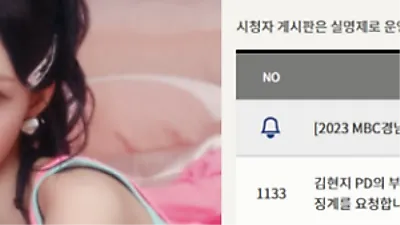
Subsequently, the controversy spread online after Kim Hyeon-ji, the MBC Gyeongnam PD who directed the documentary 'Adult Kim Jang-ha,' posted a message questioning the expression. While some raised claims that the '-no' sentence ending is an expression used in far-right online communities, others countered that it is merely an everyday dialect that has been used in the Gyeongsang-do region for a long time.
The debate is expanding into a social discussion surrounding the intention behind using specific expressions, the regionality of language, and the impact that modified language use in online communities has on existing dialects. In linguistics, the '-no' sentence ending is classified as a grammatical expression that has originally been widely used in the Gyeongsang-do dialect, but analyses have suggested that a change in social perception occurred as some online communities adopted and used it.
Kim's remarks are drawing attention for re-highlighting the historical nature of dialects and the independence of regional languages amidst this debate.
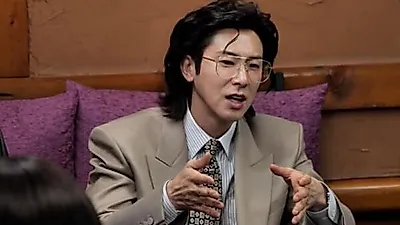
Ulsan native Kim debuted as a KBS 16th generation comedian in 2001, and the following year, he built public recognition through the popular 'Gag Concert' segment 'Park Joon-hyung's Living Dialect,' which utilized Gyeongsang-do dialect for comedy. Given his consistent interest in regional dialects and linguistic culture, his remarks on this controversy are garnering significant attention.
Related articles