Ahn Sun-young reveals spending tens of thousands monthly on mother's dementia care
Broadcaster Ahn Sun-young opens up about the heavy financial and emotional toll of caring for her mother, who battles dementia and other health issues.
Broadcaster Ahn Sun-young has opened up about the eight years of caregiving, the massive medical expenses, and the realistic sacrifices she has made to preserve her family's dignity while accompanying her mother, who suffers from dementia, to hospital appointments.

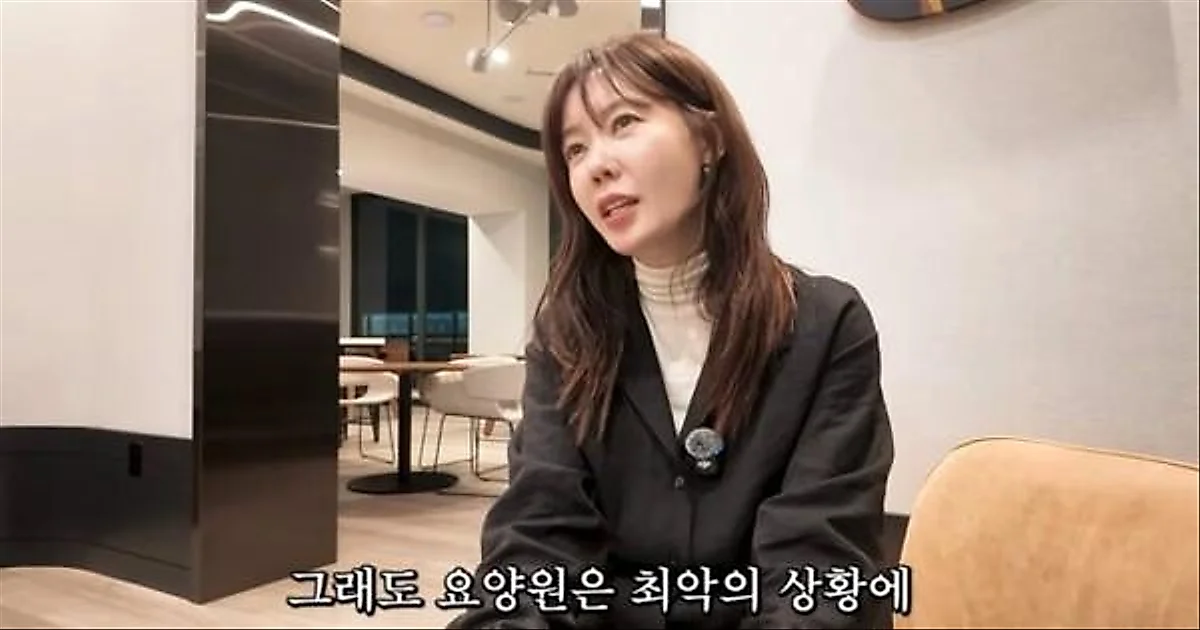
On the 13th, Ahn released a video titled 'A Day with My 78-Year-Old Mother Who Has Become a Child: Accompanying My Mother with Dementia to Hospital Appointments' on her YouTube channel, 'Ahn Sun-young's Double Life.'
On this day, Ahn personally visited the hospital for her mother's monthly outpatient appointments in psychiatry and neurology. She remarked, “In fact, this is why I cannot stay in Canada for more than a month,” adding, “Cognitive impairment is continuously progressing. This isn't a disease that just stops.”
She stated that she has been personally checking her mother's condition and managing hospital schedules after hearing that her mother recently had trouble finding her own room at the nursing home, and that her depressive symptoms and cognitive impairment have worsened.
Having accompanied her mother's hospital treatments for eight years, she was familiar with the hospital's layout. “I’ve followed her for so many years, eight years, so I’m familiar with the interior, but even I get confused,” Ahn said, explaining the complex process step-by-step, from taking a number to blood tests, EKGs, registration, and prescriptions.
While her mother appears relatively healthy on the outside, her cognitive decline is quite advanced. “She looks fine, but her cognitive impairment is quite severe,” Ahn said. “The doctor told me she is already taking the maximum dosage of her treatment medication. It can't be increased any further.”
Recently, problems occurred even after three teeth were extracted at once. Ahn noted, “Even when there was a major issue, she would forget it in just five minutes and tear her stitches with her hands, causing bleeding.”
Her mother's struggle was not limited to dementia. She has a history of suffering from breast cancer and collapsing from a stroke, which required surgery. Recalling the time of the stroke, Ahn confessed, “When she was hospitalized for a month, her condition was truly bad. Her delirium was so severe that she had to be restrained because she was screaming.”
Even with a professional caregiver hired at the time, caring for her mother was not easy. “I went to visit her every morning and evening,” Ahn said. “We could only use the hospital-designated caregivers, and even though they are professionals, my mother was too much for them to handle.”
The psychological pain she experienced as a guardian was also significant. Seeing other guardians crying in the hospital, she confessed, “Even though I am someone whose face is well-known professionally, I spent about a year crying in the hospital the year before last,” as she eventually shed tears.
Fortunately, positive results were confirmed during today's examination. Ahn shared, “The EKG is normal, and her diabetes, blood pressure, kidney, and liver functions have all improved again,” noting that the doctor reduced one medication and suggested a follow-up in five months. While dementia-related medications have increased, the health indicators related to the risk of stroke recurrence have improved.
After finishing the hospital visit, she had a video call with her son, Baro, and the family had a meal together. The mother recognized her grandson, saying, “It's this little guy!” with joy as she hugged him. Ahn concluded her day after taking her mother back to the nursing home.
“Since it's already the second year of hospital life, I think I've become desensitized. I don't feel mentally exhausted, but I am physically a bit tired,” she said. “I am just grateful to be able to do this much.”
She further expressed gratitude for the fact that her mother can now hold her hand and walk, saying, “There were times when she couldn't control her bladder or bowels and couldn't move at all.”
Above all, the words Ahn spoke revealed the raw reality of family caregiving.
“The reason my mother can hold my hand and walk right now is truly because of money. Money and information.”
She revealed, “When she first collapsed, we did every possible treatment that wasn't covered by insurance. Honestly, we spent tens of thousands of dollars a month.” She continued, “That is why we live to preserve human dignity. It's so she can walk while holding my hand.”
To Ahn, money was not merely a financial asset. It was the possibility of choosing slightly better treatment for a loved one, and the minimum condition that allowed her mother, who had been bedridden, to walk on two feet again and hold her family's hand.
She added, “My 20s and 30s were so desperately exhausting, but I am so glad I worked hard and saved up back then. I think a lot about how I saved for times like this.”
Ultimately, Ahn's story goes beyond a simple account of caregiving for a family member with dementia. Dementia is not just a disease that erodes a single patient's memory; it is a long-term process that reshapes a family's time, finances, labor, and emotions. In this process, caregivers often find that love alone is not enough, and they face the cold reality that financial resources, medical information, and social support often determine a patient's quality of life.
Nevertheless, what Ahn clung to at the end was not a grand narrative of recovery, but the simple, ordinary sight of her mother walking while holding her hand. Perhaps at the end of long-term caregiving, the most realistic and desperate happiness a family can hope for is exactly that kind of restoration of daily life.
 Up next
Ahn Sun Young opens up about placing mother with dementia in nursing home
Related articles