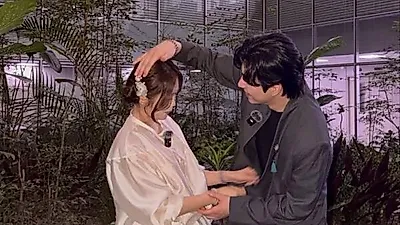
Ahn Sun Young restores bond with mother after nursing home move
Broadcaster Ahn Sun Young opens up about the physical and mental toll of caring for her mother with dementia and why professional care helped.
Broadcaster Ahn Sun Young revealed the process of eventually placing her mother, who suffers from dementia, in a nursing home, confessing, "Home care was so, so difficult and hopeless." Despite struggling with guilt for a long time due to the perception that caring for a dementia patient at home until the very end is true filial piety, she confessed that acknowledging the limits of caregiving and receiving help from professional facilities actually helped restore her relationship with her mother.
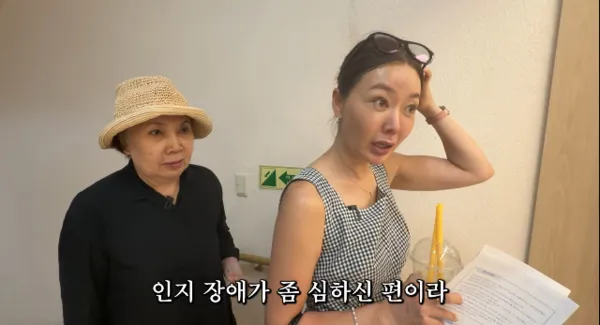
On the 23rd, Ahn released a video titled "Perceptions and reality of nursing homes... explaining why I had to send my mother to a nursing home" on her YouTube channel, "Ahn Sun Young's Double Life." Sharing her current life from Canada, she explained her mother's current situation, noting that she frequently receives questions from those around her asking, "Then who takes care of your mother?" She stated, "My mother, whom I was caring for at home, had to go to a nursing home because her cognitive impairment became too severe."
The story Ahn shared was far more than just the process of changing a family member's residence. As her mother's dementia progressed, not only did her cognitive functions decline, but changes also appeared in her personality and behavior, and Ahn confessed that she experienced significant psychological and physical burdens during that process. She said situations arose where her mother would direct profanity or violence toward her, eventually leading to a point where she had to seek psychiatric help.
In particular, the details she shared illustrate the extreme state of tension required of families caring for dementia patients. Ahn said that when she requested psychiatric assistance, medical staff explained that if they were dispatched, they might have to restrain and transport the patient as part of the procedure, but she could not bring herself to agree. She described those days as "days spent rolling around on shards of glass, covered in wounds." It clearly reveals the difficult situation families face between the responsibility to protect their beloved parents and their realistic capacity to provide care.
Despite this, Ahn was unable to choose a nursing home for a while. She confessed that she felt a sense of "modern-day Goryeojang" regarding nursing homes or dementia hospitals, feeling as though sending a parent to a facility was an act of abandoning her responsibility as a family member. She said she could not make the decision easily even after her mother exhibited delirium symptoms and left the house twice, requiring police assistance to return home. She explained that the perception of a nursing home being a "place you send someone at the very last moment" actually became a factor that delayed the family's decision.
However, Ahn eventually accepted reality. "To be honest, home care was so, so difficult and hopeless," she said. "After experiencing it all with my own body, I began looking into nursing facilities." This can be seen as her sharing her experience that in severe dementia situations that are difficult to manage with only family care, receiving help from professional facilities and medical/care systems is not necessarily an act of turning one's back on a parent.
Rather, after moving her mother to a nursing home, an unexpected change occurred in the relationship between Ahn and her mother. She said, "Compared to the times when we lived in the same house, where we were only physically together and I viewed my mother as a curse in my life, I have now forgiven her, understood her illness, and come to love her again." This suggests that being physically together does not necessarily mean emotional intimacy, and securing appropriate distance and receiving professional care can actually serve as an opportunity to restore family relationships.
Currently, Ahn lives traveling between South Korea and Canada because her son is playing elite hockey in Canada. She explained that she began a new life in an unfamiliar environment as her child joined a Canadian team—the home of hockey—two to three years earlier than she had expected. Compared to the past, when she had to handle the dual responsibilities of family caregiving and child-rearing, she explained that although the physical movement itself is difficult, she has escaped the extreme stress she previously experienced.
Regarding the reactions from those around her asking, "How can you travel back and forth to Canada every month?" Ahn replied, "The seven years I spent caring for my mother before were so difficult that physical fatigue is nothing to me." She added that her peripheral nerve disorder and burnout, which had tormented her, have all improved, saying, "I was under that much severe stress. I am truly happy now."
Dementia is regarded as a disease that shakes the lives of the entire family. Especially as cognitive functions governing memory, judgment, and behavior worsen, the intensity of care required from family members increases. In this process, the guilt felt by families can grow even larger when coupled with the social norm that one "must care for them at home until the end." Ahn's confession is drawing attention because it highlights the realistic issue that using nursing facilities should not be defined solely as abandoning parents, but rather as a way to consider both the professional care the patient needs and the sustainability of the family relationship.
Ahn married a businessman in 2013 and has a son. Having continued various activities in broadcasting and business, she used this confession to candidly reveal the pain of family caregiving and the process of making difficult choices that were hidden behind her polished public image. Ultimately, the "happiness" she speaks of did not stem from always being physically in the same house as her mother. Rather, it was the moment she was able to let go of the unbearable weight of caregiving and view her mother separately from the illness that allowed their mother-daughter relationship to begin anew.
 Up next
Ahn Sun-young reveals spending tens of thousands monthly on mother's dementia care
Related articles