Kim Chang-ok reveals dual life in Seoul and Jeju, finding solace in lacquerware
Communication expert Kim Chang-ok opens up about his dual life in Seoul and Jeju, his mental health journey, and finding healing through lacquerware art.
Communication expert Kim Chang-ok, who has spent his career teaching others about "communication" and "comfort," is opening up about the unexpected lifestyle he chose to soothe his own exhausted spirit. He will share stories ranging from his nine-year "double life" traveling between Seoul and Jeju Island to his past struggles with mental health and how he found a new life outlet through the art of lacquerware.
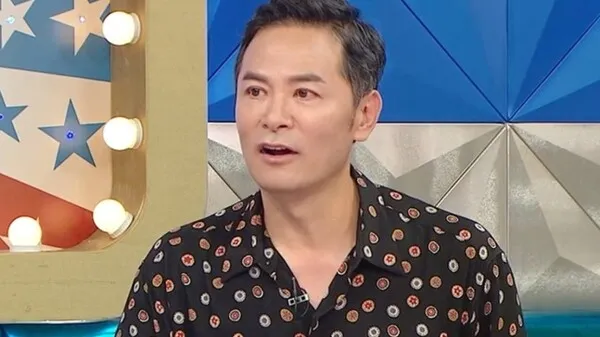
Kim is set to appear on the "Artists are Overflowing~ Let's Go! Artist" special episode of MBC's "Radio Star," airing at 10:30 PM on the 9th. Appearing alongside Chang Kiha, Swings, and Soyeon, he will reveal the daily fatigue hidden behind his public persona as a lecturer and his recent transformation into an artist.
The most striking aspect of his recent life is his passion for lacquerware. Having delivered over 10,000 lectures, Kim has spent the last four years immersing himself in lacquerware art. After discovering the medium's charm, he sought out a master to learn the craft. He now creates painterly works by mixing stone powder with lacquer to produce custom colors, using large rollers to apply lines to the canvas.
The creative process has not always been peaceful. Despite repeatedly suffering from lacquer poisoning, Kim refused to stop. He explained that focusing on the simple, repetitive labor helped organize the chaotic thoughts in his mind, providing enough psychological relief that he was eventually able to stop taking psychiatric medication.
However, this should not be viewed as a medical recommendation. Kim's experience is deeply personal, and any changes to psychiatric medication must be handled under the guidance of medical professionals. The significance lies not in the cessation of medication itself, but in how he found psychological stability through repetitive, creative labor.
He recently held his first solo exhibition, "Traces of Comfort," featuring approximately 40 works. The title reflects his current state of being. A man who has moved hearts with words for decades is now recording his emotional journey through materiality, color, and repetitive hand movements rather than speech. He will discuss the meaning and process behind his piece "Crying" during the broadcast.
His lifestyle of commuting between Seoul and Jeju follows a similar theme. Kim revealed that about eight to nine years ago, exhausted by a heavy lecture schedule, he felt a desperate need for a space where he could be alone. This led him to establish a small home in his hometown of Jeju Island. Paradoxically, for a "communication expert," what he needed most was time away from human relationships.
Life in Jeju, however, has not always been idyllic. He shared a story of when his family visited the Jeju house and a centipede fell from the ceiling onto his child's face while they were sleeping. The children, who were in elementary school at the time, were so terrified they declared they would never visit their father's house in Jeju again. The sanctuary meant for his mental rest became an unexpected "horror experience" for his family.
The broadcast will also reveal a more vulnerable side of Kim. He confessed that his wife once asked him, "Why do you make everyone else laugh when you're out, but you don't make me laugh at home?" It is a candid admission that while he can read and connect with the emotions of thousands, he can be shy and awkward in his most intimate relationships. It highlights that professional expertise in communication does not always translate to personal social ease.
To understand Kim's present, one must look at his past dream of becoming a vocalist. After graduating from a technical high school and serving in the Marine Corps, he entered music college later in life. He recalls attending classes in his military uniform and boots because he didn't want to fall behind his younger classmates. He has noted on previous broadcasts that he majored in vocal music and did not originally intend to become a lecturer.
The path of vocal music eventually transitioned into lecturing. Kim shared that after becoming a famous lecturer, it took him about 15 years to finally let go of his musical pursuits. He explained that his career in lecturing itself was born from the deficiencies of his childhood and a deep-seated longing for connection.
In this context, lacquerware represents more than a hobby. While he once connected with people through his voice and later through words, he is now finding a way to converse with himself through silence and manual labor.
Interestingly, Kim connects the lessons learned from his lacquerware master to his early days studying vocal music. Though the medium has changed from music to lacquer, the core discipline remains the same: focusing on a single breath and letting go of unnecessary tension. Ultimately, this second chapter of his life is not a departure, but an extension of his lifelong journey of self-discovery.
While people often assume those who provide comfort to others are masters at caring for themselves, Kim's recent journey suggests the opposite. The more one observes the hearts of others, the more one may need to retreat into solitude. A man who once comforted others with words is now finding his own solace through the work of his hands.
Kim's evolution from a lecturer of 10,000 sessions to a lacquerware artist is more than a change in hobby; it is a way for a man who has spent his life speaking to others to finally speak to his own inner self. This is why the title of his exhibition, "Traces of Comfort," resonates so deeply.
Related articles