Announcer Kwak Min-seon targets Oh Ha-young over family history controversy
Announcer Kwak Min-seon shares a poignant message about her independence activist lineage, seemingly responding to actress Oh Ha-young's recent controversy.
Kwak Min-seon, an announcer and descendant of an independence activist, has drawn attention by posting a message that appears to target actress Oh Ha-young, who recently faced backlash after repeatedly introducing her great-grandfather—whose pro-Japanese activities were recently revealed—as a "pride of the family."

On the 14th, Kwak posted a long message on her SNS, stating, "I heard on a recent broadcast that someone's descendant was proud of their great-grandfather, and it left me feeling sorrowful and heavy-hearted." Although she did not mention a specific name, the content was sufficient to evoke the recent controversy surrounding Oh.
She shared her own family history, saying, "As I grew up, I came to realize how difficult life has been for the descendants of independence activists or independence fighters."
According to Kwak, her great-grandfather used his entire fortune to fund the independence movement and was imprisoned while continuing the struggle. His remaining family members also had to endure the confiscation of their property and the surveillance and oppression of the Japanese imperial forces.
She also recalled the thoughts she had while watching her grandparents' poverty during her childhood.
"When I was young, I occasionally wondered why my grandfather and grandmother were so poor that they remained like a burden to my father," she wrote.
She continued, "I felt so guilty and shed many tears because my heart was different from hers." This is interpreted as her realizing late in life the traces of life left behind for descendants by the choices of ancestors who dedicated everything to the independence movement.
Kwak also expressed gratitude toward her father.
"My father did his best for his two daughters to ensure poverty was not passed down, and we were lucky enough to grow up happily surrounded by love," she said. "However, I know that the life we enjoy today is not something that was given to us naturally."
Expressing her feelings ahead of Liberation Day, she described them as "a sadness and guilt unlike any other," confessing, "In particular, I am ashamed of my past self, who held such misguided pride."
Finally, she vowed, "I want to live my life deeply engraving the will that our ancestors sought to protect," and added, "I will express my gratitude to all those who sacrificed and dedicated themselves for the independence of the Republic of Korea."
Kwak's great-grandfather was the independence activist Kwak Byeong-do. Kwak was an independence activist who was posthumously awarded the Order of Merit for National Foundation, the Patriotic Medal, in 2000 in recognition of his contributions to the independence movement.
On the other hand, Oh is currently suffering due to the controversy surrounding the pro-Japanese activities of her great-grandfather, An Sang-ho.
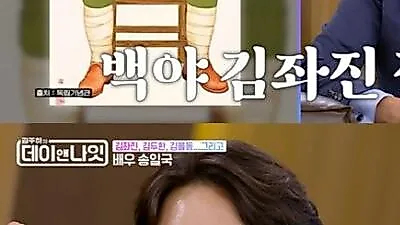
Oh previously appeared on KBS 2TV's "Problem Child in House," where she introduced her family as a "four-generation medical family," saying, "My great-grandfather went to Japan to study Western medicine and was the first doctor to open a clinic in Hanyang, treating even Emperor Gojong."
The controversy began when it was revealed online that Oh's great-grandfather was indeed An Sang-ho, and his activities during the Japanese colonial period were brought back into the spotlight. This followed reports that An had been active in the Daejeong Chinmokhoe, an organization with pro-Japanese characteristics.
Initially, Oh's agency stated that the allegations were "groundless," but they reversed their position just one day later after actual records were confirmed.
The agency stated, "We have confirmed that a record actually exists where the name of Mr. An Sang-ho appears on the list of councilors for the Daejeong Chinmokhoe in 1916. We sincerely apologize for causing confusion by hastily responding that it was 'groundless' without sufficient verification."
Oh also issued a belated apology. She reflected, "I only knew fragmentary stories about my great-grandfather's life through what I heard from my family. In such an ignorant state, I have brought up stories about my great-grandfather as a family pride in various places."
She continued, "I repent for lightly mentioning my family history without properly knowing the history of our country, which went through the painful era of Japanese colonial rule."
During the controversy, an explanation from Oh's father was also provided. He explained that An Sang-ho had a close relationship with Prince Ui and had returned to serve Joseon after receiving an invitation from the Prince to return to his homeland. He also raised doubts about the pro-Japanese controversy by noting that An Sang-ho organized the Hanseong Medical Society in 1915 by gathering Korean doctors and served as its first president.
However, the use of the term "Korea-Japan Annexation" during this process sparked further controversy. "Korea-Japan Annexation" is a term used by Japan to justify the annexation of Joseon, whereas terms like "National Humiliation" or the "Korea-Japan Annexation Treaty" are more commonly used today to reflect the forced loss of national sovereignty.
Ultimately, this controversy did not end with a single celebrity's "family pride." It has expanded into a question of how descendants should remember the lives of their ancestors and how they should communicate historical figures to the public.
In particular, Kwak's post invites a perspective that views this not as a clash of personal emotions, but as the differing traces left by the choices of ancestors on their descendants. On one side were ancestors who sacrificed everything for the independence movement, and on the other are the actions of a doctor living through the upheaval of colonial rule. The point is that the focus should not be on holding descendants accountable for their ancestors' choices, but on how to remember and speak of those choices within their historical context.
It remains unconfirmed whether Kwak's post was a direct target of Oh. However, given her mention of feeling "sorrowful and heavy-hearted" upon hearing about someone boasting of their great-grandfather, combined with her own family history as a descendant of an independence activist, it is being interpreted as an indirect expression of her historical sentiments regarding the recent controversy.
 Up next
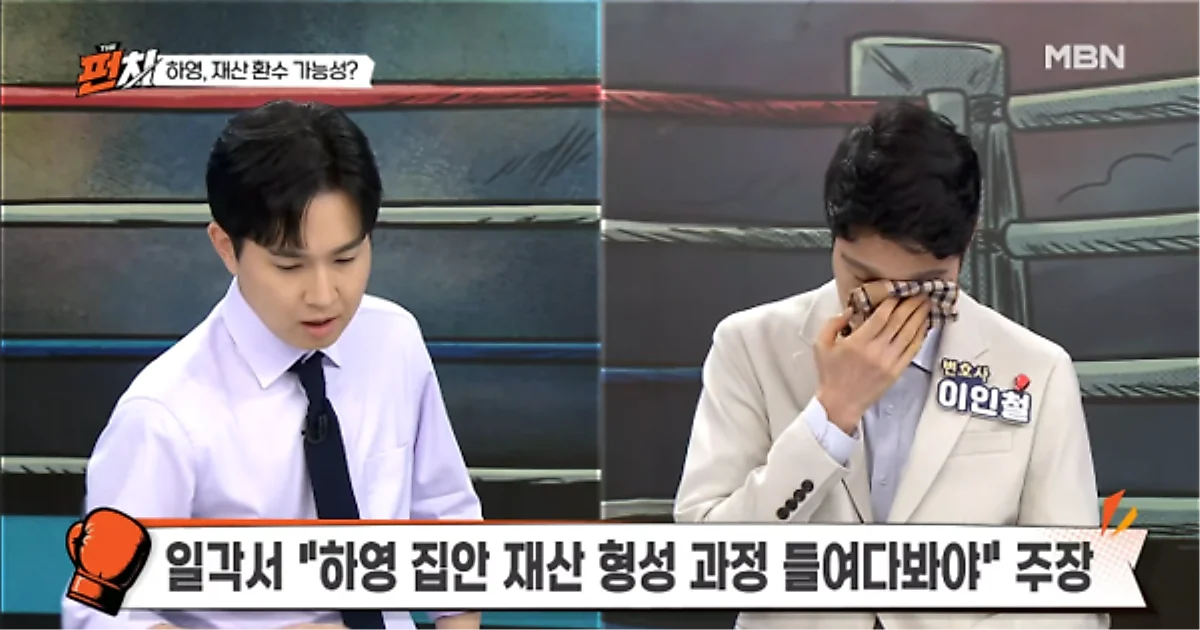
Lawyer Lee In-cheol, descendant of independence activist, breaks into tears over Oh Ha-young's family controversy
Related articles