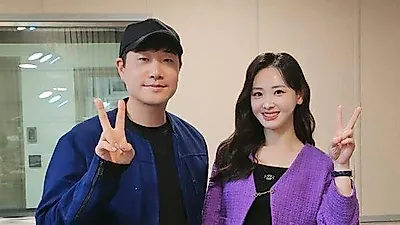
Historian Shim Yong-hwan: Don't label Oh Ha-young's great-grandfather a collaborator
Historian Shim Yong-hwan urges caution regarding the pro-Japanese controversy surrounding actress Oh Ha-young's great-grandfather, An Sang-ho.
Historian Shim Yong-hwan has once again called for a cautious judgment regarding the pro-Japanese controversy surrounding An Sang-ho, the great-grandfather of actress Oh Ha-young. While acknowledging that An Sang-ho's name appeared on the list of the Daejeong Chinmokhoe, which is classified as a pro-Japanese organization, Shim argues that it is historically inappropriate to conclude he was a 'pro-Japanese collaborator' based solely on currently confirmed data.

Shim expressed his views through his personal account after reviewing An Sang-ho's activities during the Japanese colonial period and related research.
He first established the premise that "the Daejeong Chinmokhoe is indeed a pro-Japanese organization." He explained, "An Sang-ho was registered as one of 21 councilors in November 1916, but he disappears from subsequent lists."
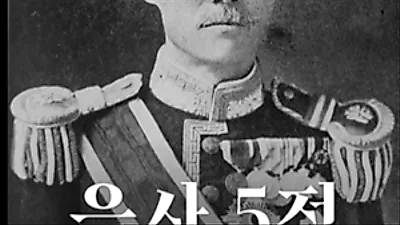
Regarding related research, he noted that records confirm An Sang-ho operated the An Sang-ho Clinic, having served as a physician to Gojong.
Evaluating An Sang-ho's actions, Shim noted, "He appeared to have conformed to colonial rule and was active in the distribution of modern medicine, but in other areas, he seems to have enjoyed prosperity by moderately colluding with the Japanese."
Nevertheless, he emphasized that a separate verification process is required for the historical designation of 'pro-Japanese collaborator.'
He argued, "In the study of the Daejeong Chinmokhoe, there is only the fact of his membership during the early period of 'social club activities' and fragmentary records from the end of his life that require more meticulous review. If I were to make a definitive conclusion, it might help gain public favor by catering to current trends, but it would never be the correct course of action academically."
"Is being on the Daejeong Chinmokhoe list enough to be a pro-Japanese collaborator?"
In explaining his judgment, Shim cited the Anti-National Activities Punishment Act enacted in 1949.
He emphasized that the law at the time distinguished and judged among pro-Japanese actors based on factors such as being 'leadership,' 'leading actions,' or 'vicious acts,' explaining that active collaborators and those who were not should not be punished by the same standard.
Ultimately, the core questions he raised are two-fold: Can An Sang-ho be defined as a pro-Japanese collaborator simply because his name was on the Daejeong Chinmokhoe list? And specifically, what pro-Japanese acts did An Sang-ho commit that would make him a subject of historical condemnation?
Shim believes additional review of these two points is necessary.
In particular, he mentioned that An Sang-ho's name is not included in the current Dictionary of Pro-Japanese Collaborators, stating, "This is a matter that should be decided through additional research by scholars, consensus among relevant experts, and national communication regarding the results."
This is interpreted to mean that rather than deciding pro-Japanese status based on the existence of just one or two specific documents, one must comprehensively examine the political and social context of the time, the specific actions of the individual, and the continuity and influence of those activities.
Oh Ha-young has already apologized... The crux of the controversy lies in 'the responsibility of the descendant'
This controversy began when Oh Ha-young introduced herself as being from a "four-generation doctor family" on a recent variety show. After introducing her family history of her great-grandfather being a physician who treated Gojong, his real name, An Sang-ho, was revealed, and the controversy expanded as records of his activities in the Daejeong Chinmokhoe during the Japanese colonial period came to light.
Oh Ha-young eventually admitted her shortcomings through a handwritten apology on the 12th.
She stated, "I only knew fragmentary stories of my great-grandfather's life through my family," and revealed that she learned of his pro-Japanese actions while personally searching through related materials.
She apologized, saying, "I accept those faults heavily and sincerely apologize as a descendant. I feel even more apologetic for causing a disturbance due to my shortcomings at a time leading up to Liberation Day."
Here, the controversy becomes even more complex. Separately from how the historical community defines An Sang-ho's individual actions, there exists the separate issue of how Oh Ha-young should have introduced her family history.
Shim's remarks are also read as suggesting the need to distinguish these two points. The issue of historically verifying an ancestor's actions is not the same as holding the individual descendant morally responsible.
In particular, the issue of pro-Japanese collaboration is not a matter of simple like or dislike, but an area where one must examine what choices an individual made within the historical structure of colonial rule and what consequences those choices produced. Therefore, Shim argues that the equation 'membership in a pro-Japanese organization = pro-Japanese collaborator' must be judged only after examining specific actions and context.
Ultimately, while the controversy seemed to conclude with Oh's apology, the debate surrounding An Sang-ho's historical position has entered a new phase. This is due to growing calls for historical verification based on historical records and research findings, rather than emotional condemnation or unconditional defense.
However, as Shim's interpretation is also one historical perspective, the possibility remains that the evaluation of An Sang-ho could change if additional historical materials and research are released in the future.
 Up next
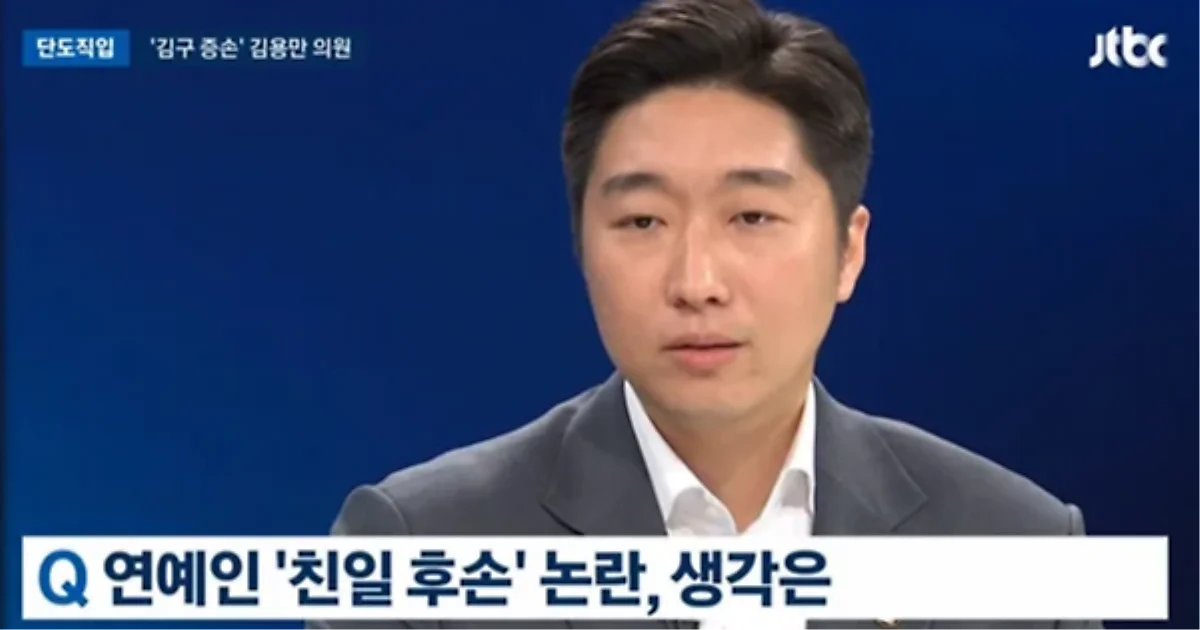
Descendant of Kim Gu, Kim Yong-man, advises Oh Ha-young: 'Don't be intimidated, take action'
Related articles