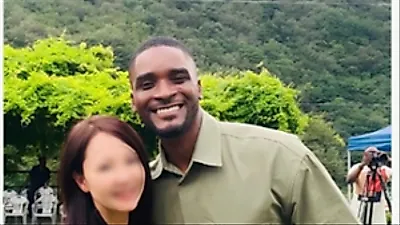
Lawyer Lee In-cheol, descendant of independence activist, breaks into tears over Oh Ha-young's family controversy
Lawyer Lee In-cheol urges actress Oh Ha-young's family to visit historical sites following controversy over her great-grandfather's pro-Japanese past.
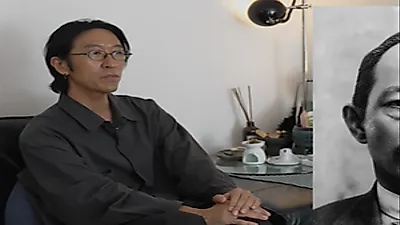
Lawyer Lee In-cheol, who gained recognition through his appearance in the 'Teenage Parents' series, addressed the controversy surrounding the pro-Japanese activities of actress Oh Ha-young's great-grandfather, urging her family to visit the actual historical sites. As a descendant of an independence activist, he eventually broke into tears, revealing his sorrowful heart during his remarks.
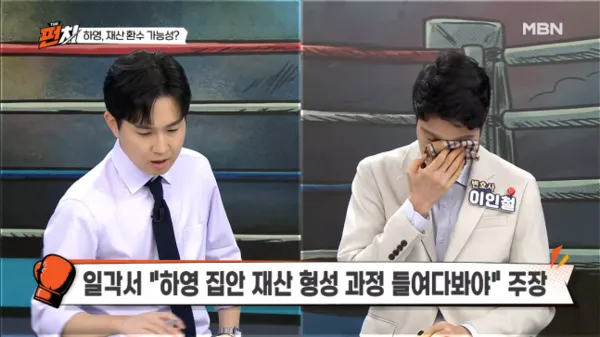
Appearing on MBN's 'The Punch' broadcast on the 13th, Lee touched upon the recent controversy regarding the pro-Japanese actions of Oh Ha-young's great-grandfather, An Sang-ho. Lee is known to be the great-grandson of the independence activist Song Gi-ju.
He first emphasized that criticism of Oh Ha-young as an individual must be distinguished from raising historical issues regarding this controversy.
"I have no intention of personally criticizing Ms. Oh Ha-young, as she did not commit the actions herself," Lee said. "However, there is something I truly want to urge Ms. Oh and her parents to do."
He then mentioned the site of the Provisional Government of the Republic of Korea in Shanghai, which he had visited personally.
"I visited the Shanghai Provisional Government not long ago, just before March 1st Movement Day. There is a very small building in Shanghai, and when I went there, I truly burst into tears," he said. "I thought to myself, 'The people who fought for independence in a place like this must have suffered so much.'"
As he explained how independence activists risked their lives to move their bases to evade Japanese surveillance, his voice began to tremble.
He continued, "I hope you all visit there at least once. If you go and tears come to your eyes, then you are a patriot. I felt that way," he said. "We will work hard to protect the Republic of Korea, which we defended with such difficulty."
Finally, he urged, "At least visit the Independence Hall on August 15th," and as he continued to speak, he ultimately shed tears.
Lee's remarks drew even more attention as they coincided with the recent controversy surrounding Oh Ha-young's family history.
Previously, Oh appeared on the KBS2 variety show 'Problem Child in House' on the 7th, where she introduced her family history as a fourth-generation medical family. At the time, Oh explained that her great-grandfather was a doctor who studied Western medicine in Japan and opened a clinic in Hanyang, even treating Emperor Gojong.
Following the broadcast, claims surfaced online that Oh's great-grandfather was An Sang-ho, who practiced medicine during the Japanese colonial period. The controversy escalated as records emerged showing that An Sang-ho was listed as a member of the Daejeong Chinmokhoe, an organization with pro-Japanese characteristics at the time.
Oh Ha-young's agency initially released a statement claiming the pro-Japanese allegations were "groundless," but later reversed their position after confirming that the relevant records actually existed.
The agency apologized for hastily claiming the allegations were groundless without sufficient verification, admitting that careful verification was necessary when conveying historical facts and an individual's history to the public.
Oh also posted a handwritten apology on her SNS afterward. She stated that while researching related materials following the controversy, she became aware of her great-grandfather's pro-Japanese actions, and expressed remorse for mentioning her family history so lightly without properly knowing the history of the Japanese colonial period.
However, further questions were raised when she subsequently deleted the apology posted on the Chinese SNS platform Xiaohongshu.
The message delivered by Lee in this controversy does not merely remain a dispute over a celebrity's family history. This is because holding descendants responsible for the actions of their ancestors and looking properly at the lives of those ancestors are two entirely different matters.
While descendants cannot choose the actions of their ancestors, they can choose how to remember and evaluate those actions. Especially at the point where the lives of descendants of independence activists clash with the history viewed by descendants of pro-Japanese figures, what matters is not the lineage itself, but the attitude toward history.
Lee's tears and his mention of the Shanghai Provisional Government and the Independence Hall can ultimately be read in the same context. Instead of erasing or beautifying the past, he is suggesting that one should visit the actual sites of the independence movement and directly face what the people living in that era had to endure.
 Up next
Announcer Kwak Min-seon targets Oh Ha-young over family history controversy
Related articles