Lee Hyori outraged by business couple's conflict on 'Love War'
Singer Lee Hyori reacts with fury to a boyfriend's verbal abuse and unfair treatment of his partner on JTBC's 'Love War.'
Singer Lee Hyori exploded in anger while watching a conflict between a business couple whose romantic and professional lives are deeply intertwined. The outrage followed revelations of the boyfriend's behavior: demanding professional sacrifices from his girlfriend—a company founder who receives neither a salary nor equity—and subjecting her to verbal abuse.
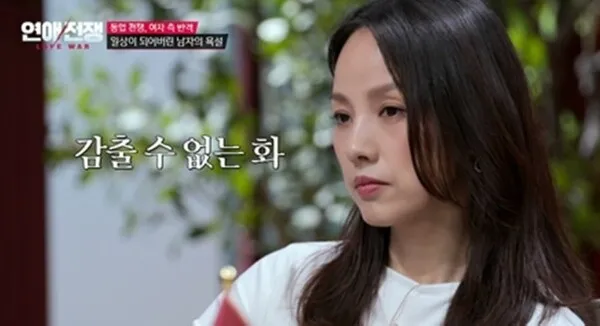
Seo Jang-hoon also spoke bluntly, labeling the boyfriend's attitude as that of an "exploitative employer" and noting that the situation could not be viewed as a simple romantic dispute.
In the 11th episode of JTBC's 'Love War' aired on the 7th, a same-age business couple running an advertising agency appeared as clients. Along with Lee Hyori, Seo Jang-hoon, and Kim Hee Chul, singer Brian appeared as a special guest to examine the couple's romantic and business issues.
Initially, the conflict appeared to be about work attitude. The boyfriend, who currently serves as the company CEO, claimed his girlfriend lacked responsibility, alleging she sighed at his requests, dismissed his opinions in front of employees, and left work promptly at 5 PM.
However, the situation flipped significantly once the girlfriend's perspective was revealed. She was handling her assigned tasks within the set timeframe and was responsible for over 30 different tasks at the company. As it emerged that the boyfriend had unilaterally dumped the sales team's duties onto her, the context behind her fatigue and sighs became clear.
The more significant issue was the compensation structure. Despite co-running the business she founded, the girlfriend had never received a salary and held no equity. She was effectively sharing the business risks and labor while being excluded from all economic rights.
When the girlfriend vented her frustration, asking, "Am I your slave?", the boyfriend countered with, "If the CEO tells you to do it, just do it," and refused to grant her the company equity she requested. Watching this, Seo Jang-hoon evaluated the boyfriend's attitude as being "like an exploitative employer." He pointed out that when romantic disputes involve company ownership and labor compensation, they move into the realm of management and contracts that are difficult to resolve with emotion alone.
The intensity of the conflict escalated when the extent of the verbal abuse was revealed. The boyfriend reportedly used harsh language toward his girlfriend, such as "psychopath" and "die," and the broadcast even revealed a statement to the effect of, "If I had a gun, I would have shot you." Such comments go beyond a simple argument and can be perceived as verbal violence that inflicts serious fear and threats.
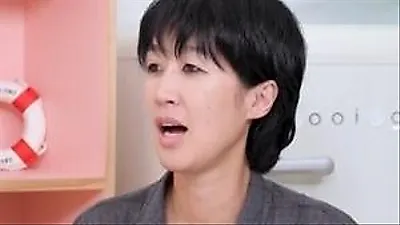
Lee Hyori's reaction was intense. When the boyfriend was seen laughing while the girlfriend was crying, Lee raised her voice, asking, "How can you laugh?" and took a firm stance, stating, "If it were me, I would have broken up immediately." She further questioned the boyfriend's character, asking, "Is that how a human speaks to another human?"
Lee particularly emphasized self-respect over business equity. She advised the girlfriend to "love and cherish yourself," noting that when choosing people or work, one should prioritize whether they provide comfort and respect rather than merely seeking excitement or stimulation.
This is a critical issue in relationships that combine romance with business partnerships. While lovers rely on emotional intimacy, business partners must clearly agree on roles, authority, compensation, and responsibility. When these two spheres merge, love can potentially act as a pretext to mask unequal labor or unclear ownership. The conflict in this case stemmed not just from the workload, but from the fundamental question of how contributions are recognized and compensated.
Ultimately, the girlfriend was not seeking grand compensation, but rather recognition for her labor, a sincere apology as a partner, and the guarantee of her legitimate rights as a business partner. The boyfriend eventually apologized, promising to be more careful with his words and to provide the promised company equity.
After long deliberation, the girlfriend decided to give the relationship one last chance, stating, "I want to talk one last time and give him a chance."
However, for this choice to lead to a restoration of the relationship, it must be followed by a realistic agreement regarding work distribution, compensation, and equity structure, rather than just an emotional reconciliation.
'Love War' demonstrated that love alone cannot sustain a business partnership. Lovers require respect rather than unconditional sacrifice, and business partners require clear rights and responsibilities rather than just affection. When the boundaries between these two worlds collapse, love can transform from a close bond into an unbearable working environment.

Related articles