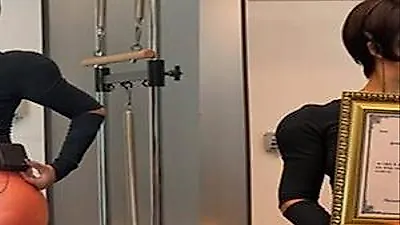
Uhm Tae Woong and Yoon Hye Jin outraged by fake ads exploiting daughter's growth
Ballerina Yoon Hye Jin calls out fraudulent AI-generated ads using her daughter Zion's height to promote fake growth products.
Ballerina Yoon Hye Jin has expressed strong indignation toward online advertisements that falsely portray the growth process of her daughter, Zion, to promote specific products. As advertisements that subtly combine celebrities' actual photos and family stories to make it appear as if the individuals themselves used the products began to spread, she stepped forward to correct the facts.
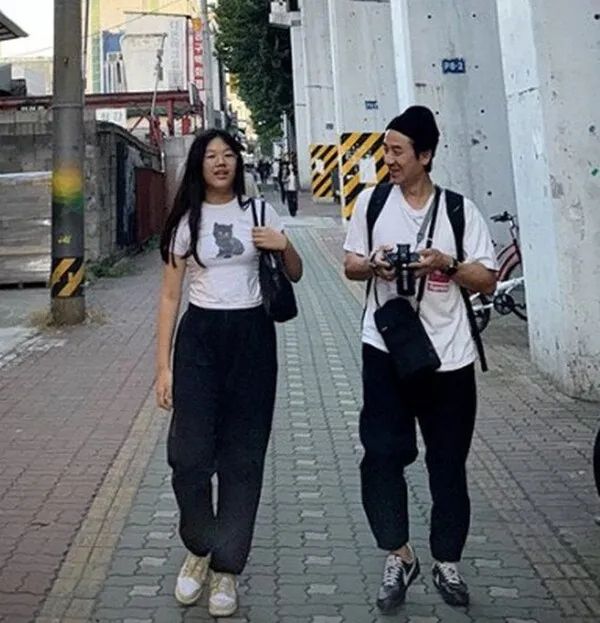
On the 14th, Yoon revealed on her SNS a post designed to look like an introduction to the secret behind her daughter Zion's height growth. The post contained claims that the secret to how 13-year-old Zion grew to 178cm lies in a specific product.
Moving beyond simple product introductions, the post even described specific lifestyle habits, such as Zion consuming the product daily and even adding it to her *kimchi* fried rice. By structuring the content to look like stories from a real family's daily life, the advertisers increased the likelihood that consumers would fail to recognize it as an advertisement.
Yoon immediately refuted the claims. She stated, "The photos were even processed with AI... I'm telling you, it's not true. There is no secret. Don't be fooled." She also expressed concern that the post had already garnered a significant response, noting, "There are already over a thousand comments."
Further explanations followed, clarifying that the photos used in the problematic advertisement were not content provided or authorized by Yoon. This highlights a critical issue where, if a celebrity's family photos or videos are combined with AI technology to transform them into advertising content with a new context, messages entirely different from the original meaning can be created.
Through an additional post, Yoon pointed out the flaws in the advertisement's content more specifically. She explained, "Yoon Hye Jin's daughter did not grow because of this, and when did I ever stock up on this every day from Coupang?" She added, "I just used tofu as a meal replacement once in a while when she was on a diet."
Contrary to the advertisement's claim that the product was continuously fed to her daughter, Yoon explained that she had only used tofu as a meal substitute on occasion for dieting purposes. In essence, the advertisement fabricated lifestyle habits that were untrue.
She also questioned the commercial use of the content itself, saying, "You shouldn't just take someone else's video and sell it by attaching a purchase link like this." She further questioned, "For those who are desperate for their children to grow taller, you might be tempted to believe this, but isn't this a scam?" urging consumers to be cautious when purchasing products.
In particular, it is noteworthy that this case is not merely a matter of unauthorized use of her likeness or name. When the physical characteristics of a growing child and a family's daily life are linked to the efficacy of a specific product, it can provide a powerful motivation for purchase, regardless of whether the product's efficacy has been objectively verified.
Yoon once again emphasized, "Zion didn't grow by eating this either," clearly denying the claim that her daughter's height growth was a result of consuming the product. She asserted that the fact that Zion grew to 178cm at age 13 and the effects of specific health or growth-related products are entirely separate issues.
For parents with children in their growing years, 'height growth' is a sensitive topic of interest. This is why online advertisements targeting anxieties and expectations regarding a child's growth rate or final height continuously appear. Content that makes it look as if a celebrity's child actually consumed a specific product can induce a much stronger sense of social trust than typical product advertisements.
Furthermore, it has recently become possible to create content using generative AI to modify existing photos or videos and add text that appears to be actual statements. As an environment has been created where advertisements looking like real user reviews can be made with just one photo and a few lines of description, it has become even more difficult for consumers to distinguish the source and authenticity of the content.
Celebrities are even more vulnerable to these issues. Since they have many photos and videos available to the public and even their family members are often known through broadcasts or SNS, there is a high possibility that private contexts not directly disclosed by the individuals will be reprocessed into commercial content.
Yoon has established herself as a top-tier Korean ballerina while serving as a principal dancer for the Korea National Ballet, and she has consistently communicated with the public through broadcasts and SNS. After marrying actor Uhm Tae Woong, she has built a friendly family image by sharing her daily life with her daughter, Zion.
The daughter of Yoon and Uhm has been known to the public since childhood, appearing on broadcasts with her parents. Recently, she drew attention again as her current status—growing to 178cm at the age of 13—became known. However, linking this growth to the efficacy of a specific product is a separate matter.
Yoon's decision to directly expose the advertisement stems from the fact that this is not merely a matter of unauthorized commercial use of her fame. She responded aggressively because the ads incorporate the physical characteristics of a growing child into a narrative designed to cloud consumer judgment.
Ultimately, this case demonstrates how easily a celebrity's photos or family stories can be converted into commercial messages unrelated to their original intent. Especially with advertisements dealing with sensitive areas like a child's height and health, consumers must verify who actually used the product, whether the statements were made by the parties involved, and if there is objective evidence for the product's efficacy.
By correcting the facts, Yoon has made it clear that there is no connection between Zion's growth to 178cm and the product in question. This serves as a warning that consumers should not accept advertisement content as fact simply because a celebrity's name or photo is featured.
Related articles