
Joo Jin-woo, who called Yoo Hae-jin a 'North Korean lookalike,' admits he hasn't seen 'The Assassin(s)'
As political disputes surrounding the film 'The Assassin(s)' intensify, People Power Party lawmaker Joo Jin-woo is facing controversy for making definitive claims about the movie's content during a National Assembly audit despite appearing not to have watched it.
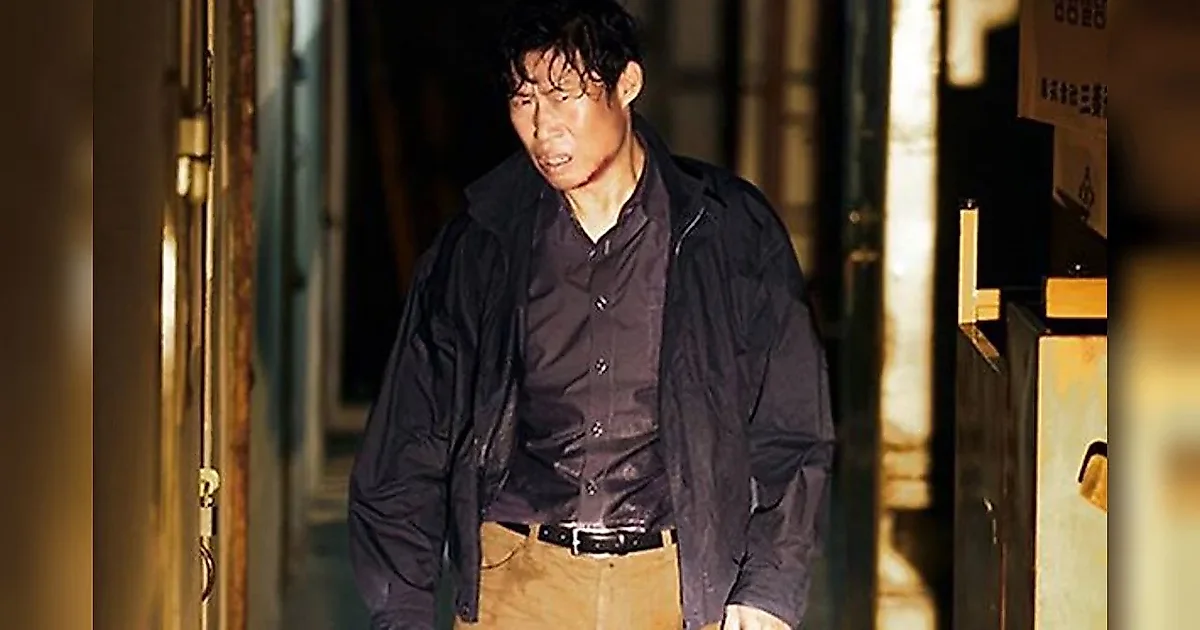
As the political dispute surrounding the film 'The Assassin(s)' grows increasingly intense, controversy is mounting over the fact that People Power Party lawmaker Joo Jin-woo, who has strongly criticized the work, responded to a question during a National Assembly audit asking if he had watched the film by retorting, "Is it even normal to watch such a depraved movie?" While he has continued strong criticism by taking issue with the film's content, counterarguments are being raised regarding his definitive interpretation of the content given the ambiguity of whether the politician who has been criticizing the work has actually seen it.
During the Legislation and Judiciary Committee's National Assembly audit on the 6th, Joo argued that an attempt at 'reversing history' is being made while mentioning the issue of the retrial for former Korean Central Intelligence Agency director Kim Jae-gyu. He went on to specifically mention 'The Assassin(s)', which is based on the 1974 shooting of First Lady Yuk Young-soo, criticizing that the use of the plural suffix 's' in the film's title itself creates a frame for reinterpreting the mastermind behind the incident.
In particular, Joo interpreted the film as suggesting the possibility that former President Park Chung-hee was behind the shooting of First Lady Yuk Young-soo. He argued that the film is a work that questions existing historical conclusions and highlights the possibility that it was not a North Korean operation. This effectively brought the ongoing 'historical distortion' debate in politics into the National Assembly audit room.
In response, Seo Young-kyo, the chairperson of the Legislation and Judiciary Committee belonging to the Democratic Party of Korea, asked, "Have you seen the movie?" Instead of clearly stating whether he had watched the film, Joo retorted, "Is it even normal to watch such a depraved movie?" As his remark was understood in context to mean that he had not watched the film directly, criticism spread online that Joo may have defined the film's content without actually verifying the work.
In particular, Joo has used strong expressions targeting 'The Assassin(s)' and lead actor Yoo Hae-jin. As his past use of the expression 'North Korean lookalike' regarding Yoo Hae-jin's appearance was brought up again, points are being made that political criticism of the film and expressions directed at the individual actor have been mixed. Since criticism of a film and an evaluation of an actor's appearance are entirely different matters, debate continues over whether the politician's language was appropriate, essentially raising the issue of personal attacks.
The core of the debate ultimately lies in what 'The Assassin(s)' actually depicts. While the film takes the August 15, 1974, shooting of First Lady Yuk Young-soo as its motif, it is not a documentary that reproduces the actual historical event as is, but a creative work that combines fiction and imagination. In the work, a situation arises where journalists and police question the officially known explanations during the process of chasing the truth of the incident, and circumstances are depicted where the Korean Central Intelligence Agency appears to obstruct the investigation or attempt to cover up the truth of the case.
However, the film does not conclude in a way that explicitly identifies former President Park Chung-hee as the mastermind behind the incident. Rather, it is closer to a method that leaves the ending open for the audience to infer various possibilities without clearly confirming which force was behind the incident. Because of this, even among audiences who have watched the work directly, interpretations diverge between 'the film pointed to a specific person as the mastermind' and 'the film merely raised suspicions.'
Director Hur Jin-ho has also expressed the position that he did not make the film with the content that former President Park Chung-hee ordered the death of Yuk Young-soo. From the director's perspective, the explanation is that the film is not one that sets a specific real-life person as the direct mastermind of the incident, but a work that reconstructs various questions and the investigation process surrounding the incident at that time through cinematic imagination. This is why points are being made that to judge what the work actually claimed, one must examine the entire narrative, the characters' dialogue, and the ending of the film.
Democratic Party of Korea lawmaker Lee Jae-jung also pointed this issue out directly. After watching the film herself, Lee argued that "this film clearly does not even place the possibility of former President Park Chung-hee's involvement within the scope of cinematic imagination," claiming that the political sphere is distorting the film. She offered criticism to the effect that the political sphere should watch and judge the film directly before bringing the work into the National Assembly audit room to evaluate it.
On the other hand, the camp criticizing the film argues that the very act of questioning the existing official conclusions regarding the actual historical event carries the potential for historical distortion. In fact, within the political sphere, movements have appeared to demand a halt to the screening or an explanation from the production team, taking issue with scenes in the film that raise the possibility of involvement by the Korean Central Intelligence Agency or the core of the power at the time. In the National Assembly, the debate has expanded beyond the movie theater, with the ruling and opposition parties clashing over whether to select the film's production team as witnesses or persons of interest.
Ultimately, the current debate is spreading to the question of how the political sphere should handle creative works, along with whether the film distorted history. In fact, analyses suggest that legal and social evaluations may also differ depending on whether the expressions in the film are assertions of historical facts or the presentation of hypotheses through fictional settings. There is also a view from the legal community that the entire context and method of expression of the work must be comprehensively considered to judge whether the content is something that could be accepted as actual fact by the audience.
In this situation, the question of "to what extent can the content of a film be asserted without having seen the film" has become another point of contention in this debate. This is because while criticism of the film itself is possible within the realm of freedom of expression, how much that criticism aligns with the actual content of the work is a separate matter. In particular, it is being pointed out that if one is to make even a historical evaluation based on the content of a specific film on a public political stage like a National Assembly audit, a factual verification of the work itself must precede it.
The controversy surrounding 'The Assassin(s)' is now expanding beyond a simple matter of film box office success or historical interpretation into a social debate surrounding the political sphere, the film industry, and freedom of expression. Above all, as situations arise where entirely different interpretations emerge from the same scene, voices are growing that a process is needed to confirm what the film is actually saying before political factional logic takes over. In the end, the debate surrounding the story on the screen is growing larger outside the screen.
Lee Chang-seok is the CEO and editor of Mediafine and writes for Mediafine Global, mainly covering K-Variety and also writing on K-pop, Celebrity and K-drama.
Related Articles
Cho Kuk: "'The Assassin(s)' does not mock Yuk Young-soo's death—Yoo Hae-jin is a 'righteous militia face'"
'The Assassin(s)' Nears 2.5 Million Viewers—Screening Suspended at CGV Gumi
Comments 0
Comments are currently disabled.