
Despite Controversy, 'The Assassin(s)' Surpasses 2.5 Million Viewers and Receives Successive Invitations and Praise at Overseas Film Festivals
The film 'The Assassin(s)' is maintaining strong box office momentum in Korea, surpassing 2.5 million cumulative viewers within 15 days of release despite intense controversy over historical distortion. While the film is receiving consecutive invitations and acclaim at major international film festivals, it faces diverging evaluations domestically and abroad, alongside safety concerns for lead actor Yoo Hae-jin.
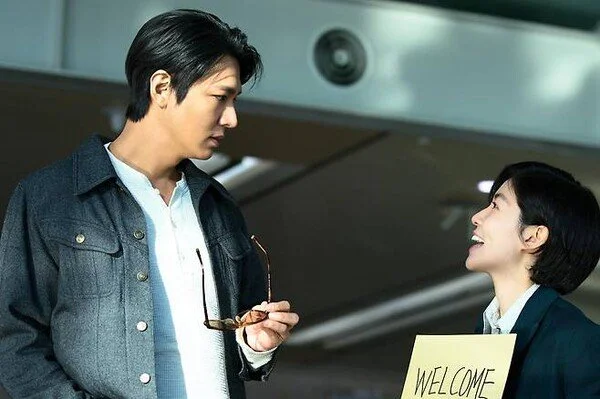
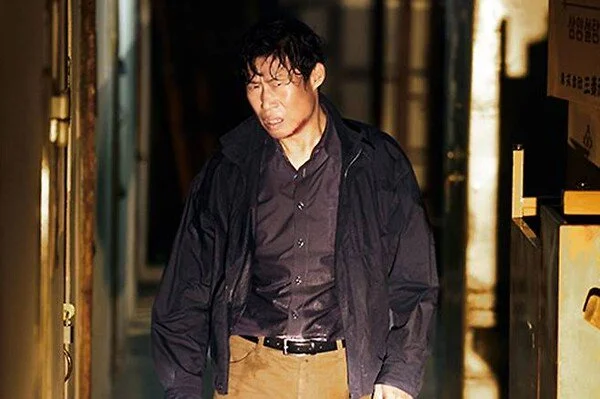
The film 'The Assassin(s)', which has been swept up in a fierce backlash since its release due to controversy over historical distortion, is continuing its steady box office momentum in domestic theaters. Following the achievement of surpassing 2.5 million cumulative viewers just 15 days after its release, the film is seeing diverging evaluations both domestically and internationally as it receives successive invitations and praise from major overseas film festivals. Lead actor Yoo Hae-jin, who stands at the center of the controversy, also continued his achievements as an actor by winning the Best Actor award at the Buil Film Awards, separate from the work itself.
According to the Korean Film Council's integrated computer network for movie ticket sales, 'The Assassin(s)' surpassed 2.5 million cumulative viewers as of the morning of the 8th. This is an achievement reached in just 15 days since its release on September 23. Having maintained high reservation rates since its release, the film is demonstrating strength in actual audience mobilization, suggesting that the controversy has not directly hindered its box office success. An unusual trend is appearing where interest in the film itself increases as the pros and cons debate surrounding the work intensifies in Korea.
As notable as its performance in domestic theaters is the reaction at overseas film festivals. 'The Assassin(s)' was invited to the Gala Presentation at the 51st Toronto International Film Festival, where it was revealed as a world premiere and was selected as a runner-up for the International Audience Award. This category is significant as it is determined based on votes from film festival audiences, indicating a direct response from local viewers.
Following the reaction in Toronto, invitations to overseas film festivals have continued. The 28th Rio de Janeiro International Film Festival, the 37th SGIFF, the 21st Paris Korean Film Festival, and the 46th Hawaiʻi International Film Festival have all invited the work. At the Rio de Janeiro International Film Festival, it was listed in the World Panorama section, and it will meet audiences as an opening film at SGIFF and the Paris Korean Film Festival.
In particular, the selection by SGIFF is drawing even more attention in connection with the ongoing controversy in Korea. SGIFF stated that while they are aware of the discussions surrounding 'The Assassin(s)', they intend to screen it as the opening film as scheduled. The festival emphasized that the work was selected through an independent programming process according to the creative vision of the production team, and highlighted that it is a creative work that combines fictional characters and situations with historical events.
This demonstrates that the debates over historical interpretation raised in Korea and the evaluations of the work at overseas film festivals do not necessarily move by the same standards. In fact, SGIFF provided an explanation to the effect that rather than defining the work as a film for specific historical conclusions or political purposes, they intend to view it as a work of contemporary Asian cinema. This is interpreted as an intention to maintain the festival's independent programming principles even amidst growing controversy.
The Hawaiʻi International Film Festival has also officially invited 'The Assassin(s)' to its Gala Presentation section. What overseas film festivals have commonly noted is not just the historical subject matter itself, but the way it is unfolded through the genre grammar of mystery and pursuit, the direction of director Hur Jin-ho, and the ensemble of actors including Yoo Hae-jin, Park Hae-il, and Lee Min-ho. Even at the Toronto International Film Festival, local media and audiences showed interest in the mystery, action, acting, and progression of the work.
The situation in Korea is quite different. 'The Assassin(s)' is a work that adds cinematic imagination to a historical event, motivated by the assassination attempt on the First Lady that occurred on August 15, 1974. Although the production team stated that it is a creative work, some raised issues regarding the interpretation and depiction of actual history, and the debate spread beyond the film. Since its release, it has affected the activities of the production team and actors, such as the cancellation of schedules related to the Busan International Film Festival and some promotional events.
The situation became even more sensitive as the controversy spread into protests directed at individual actors. As protest rallies were held near Yoo Hae-jin's residence and threatening remarks continued online, the police took protective measures for his safety upon the request of his agency. They provided Yoo Hae-jin with a smartwatch, registered him in the 112 system, and strengthened patrols around his residence. The police explained that safety measures can be taken not only when actual criminal damage occurs but also when there is a concern of harm.
Because of this, Yoo Hae-jin did not appear at his scheduled Busan schedule amidst the ongoing controversy. However, it is necessary to distinguish between an actor's individual work activities and the social debate regarding the film. Yoo Hae-jin won the Best Actor award for 'The King's Warden' at the 35th Buil Film Awards held on the 7th, but he was absent from the ceremony, and a representative from the production company accepted the award on his behalf. This draws attention as an evaluation of the actor's acting achievement, separate from the controversy of 'The Assassin(s)'.
Ultimately, 'The Assassin(s)' is currently in a unique phase where a single film is being consumed in entirely different ways both domestically and abroad. In Korea, the debate surrounding the boundary between historical facts and cinematic interpretation is heated, and in the process, even the safety issues of the appearing actors have surfaced. On the other hand, overseas film festivals are looking at the work focusing on its genre completeness, direction, acting, and contemporary thematic consciousness, inviting it to major programs.
In the film, Cheol-gu, Jae-hwan, and Yeong-il pursue the truth of the incident from their respective positions. It is a structure where characters who jump into the investigation for their colleagues, characters who track clues with long experience, and characters who jump into the reporting scene without hesitation, delve into a single incident in different ways. Yoo Hae-jin, Park Hae-il, and Lee Min-ho play characters with different textures, increasing the density of the intense pursuit drama.
How much the boundary between fact and fiction can be allowed in a film based on a historical event remains the core of the debate surrounding the work. At the same time, the evaluation of a creative work needs to be examined by separating the issue of historical interpretation from genre completeness. As 'The Assassin(s)' continues to meet audiences at overseas film festivals following its surpassing of 2.5 million viewers in Korea, the debate surrounding the work is also expected not to subside easily for the time being.
Lee Chang-seok is the CEO and editor of Mediafine and writes for Mediafine Global, mainly covering K-Variety and also writing on K-pop, Celebrity and K-drama.

Comments 0
Comments are currently disabled.