
'The Assassin(s)' Nears 3 Million Viewers—Racing Toward Success Amid Controversy
The film 'The Assassin(s)' is approaching 3 million cumulative viewers, maintaining its box office lead despite intense debates over historical interpretation and protests. While the production team maintains that the film is a work of cinematic imagination based on real events, the controversy has escalated to include protests targeting the actors.
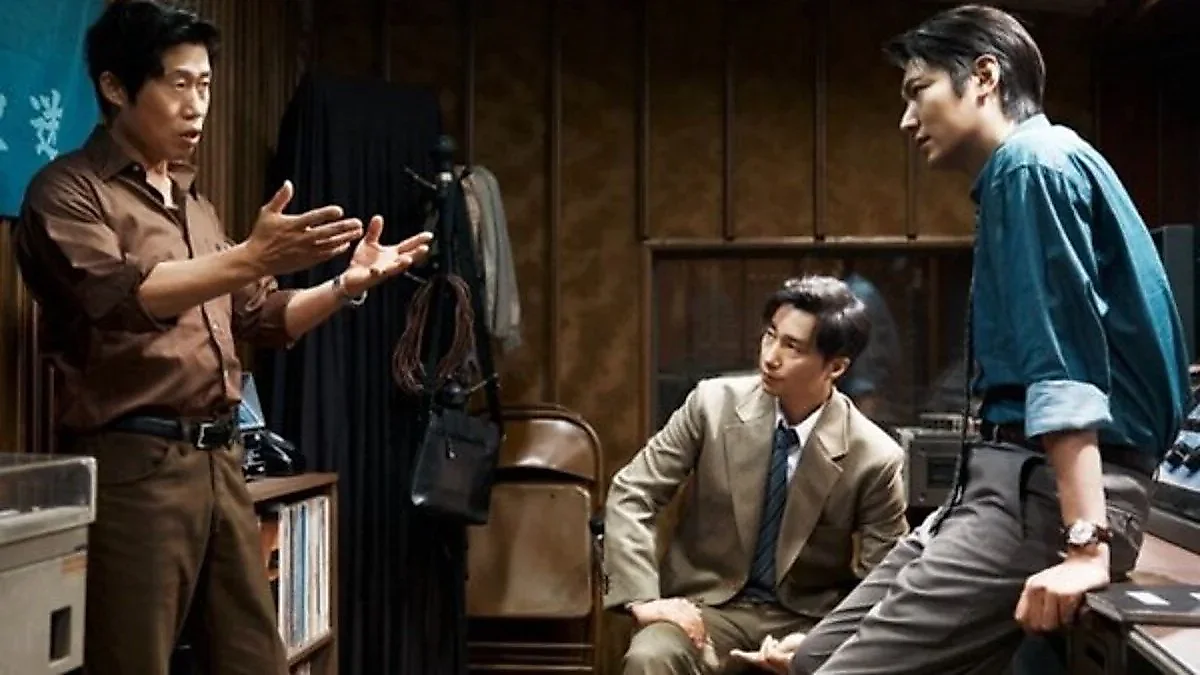
The film 'The Assassin(s)' is holding its position at the top of the box office and is on the verge of surpassing 3 million cumulative viewers, even amidst fierce debates surrounding its historical interpretation. Although the work, which uses a real political event as its subject matter, has led to accusations, condemnation rallies, and debates over creative freedom, the flow of audiences visiting theaters has not easily been broken. As interest focuses on how criticism of the work and social controversy will affect its box office performance, 'The Assassin(s)' is maintaining its commercial competitiveness even in its third week of release.
According to the Korean Box Office Information System of the Korean Film Council on the 10th, 'The Assassin(s)' drew 160,976 viewers on the 9th, Hangeul Day, ranking first in the overall box office. As of the morning of that day, the cumulative number of viewers was 2,745,841, leaving about 250,000 people until the 3 million mark. It is also noteworthy that the number of viewers on Hangeul Day was higher than on the 3rd, the first day of the National Foundation Day holiday. Even in the third week, when interest from the early release period tends to fade, it showed the possibility of long-term success by maintaining its audience mobilization power.
The gap with competing works was not large. 'Chiikawa the Movie: The Secret of Mermaid Island' recorded second place on the same day, drawing 152,104 people. The difference in daily viewers with 'The Assassin(s)' was only 8,872. 'Tazza: Song of Beelzebub' rose to third place with 68,740 viewers. While it is maintaining the lead in the box office, the pursuit by competing works is also significant, so whether it surpasses 3 million viewers depends on the choices of holiday audiences. It also maintained interest by continuing to rank first in Korean film reservation rates for 26 consecutive days.
Released on the 23rd of last month, 'The Assassin(s)' is a work that traces the suspicions and the mastermind surrounding the shooting and death of First Lady Yuk Young-soo on August 15, 1974. It is directed by Hur Jin-ho and stars Yoo Hae-jin, Park Hae-il, Lee Min-ho, and others. It garnered interest even before its release in that it reconstructed historical gaps and questions into a cinematic narrative based on a real event, but at the same time, it also sparked controversy surrounding the interpretation of sensitive modern history.
At the center of the controversy is the issue of how the film reconstructs the actual event. Interpretations diverged over the setting dealing with the mastermind of the incident and the possibility of involvement by the upper echelons of the Korean Central Intelligence Agency, and debates also broke out in political circles. The situation even led to the director, production company officials, and writers being accused of defamation. The conflict has expanded outside the work, surrounding how far a feature film based on a historical event can raise suspicions and exercise imagination, and how cinematic representation can affect real people and historical evaluations.
The production team has stated that they had no intention of concluding the hypotheses in the film as historical facts or defining specific individuals as the mastermind behind the incident. They explained that it is a feature film that adds cinematic imagination based on the actual event and related records, and is not a work produced with specific political purposes or intentions. Director Hur also stated in a broadcast interview that he thought of the upper echelons of the Korean Central Intelligence Agency and former President Park Chung-hee separately. Regardless of the production team's explanation, while audiences and critics may critically examine the historical interpretation of the work, it is also important to discuss by distinguishing the film's settings from actual historical facts.
The problem is that the criticism surrounding the work has not stopped at accusations against the director and production team but has spread to pressure targeting individual actors. A condemnation rally was held in front of the residence of lead actor Yoo Hae-jin, and situations occurred where the police took protective measures for his personal safety. While criticism of a work should be respected just like freedom of expression, it is pointed out that if that criticism manifests in a way that threatens the safety of creators and individual actors, it should be treated as a separate issue. It is also a point to consider whether an actor can be held responsible for all interpretations and political meanings of a work simply because they appeared in the film.
Films dealing with historical events inevitably form tension between the representation of facts and dramatic imagination. As they use real people and events as subject matter, creators must carefully consider the historical context and factual relationships. Conversely, audiences also need to judge by distinguishing confirmed records from cinematic settings rather than immediately accepting scenes from a feature film as historical evidence. Not agreeing with the historical interpretation of a work does not mean criticism is prohibited, and asserting creative freedom does not make all criticism unjust. The key lies in maintaining a public forum where counterarguments and verification are possible while guarding against threats to creators or private pressure.
An interesting point is the fact that even in a situation where such controversies are growing, the choices of the audience continue. However, it cannot be concluded from box office performance alone that the audience agrees with the film's historical interpretation. This is because the reasons for visiting the theater can be diverse, such as curiosity about the direction of the work, the acting of the actors, and the narrative. While it is possible that the controversy increased interest in the film, there is insufficient basis to judge that it is the sole cause of the box office success. The number of viewers is an indicator of commercial performance, not a voting result that judges historical truth or the political legitimacy of a work.
Nevertheless, it is clear that 'The Assassin(s)' has maintained its lead in the box office until its third week of release and is approaching 3 million viewers. The debate surrounding the work may continue for a while, but the box office performance and historical evaluation must be examined by different standards. Along with interest in whether the film will surpass 3 million viewers, attention is also focused on how this controversy will serve as an opportunity to discuss the role of films that reproduce historical events in Korean society, freedom of expression, and the limits of criticism.
Lee Chang-seok is the CEO and editor of Mediafine and writes for Mediafine Global, mainly covering K-Variety and also writing on K-pop, Celebrity and K-drama.
Related Articles

Despite Controversy, 'The Assassin(s)' Surpasses 2.5 Million Viewers and Receives Successive Invitations and Praise at Overseas Film Festivals
'The Assassin(s)' Nears 2.5 Million Viewers—Screening Suspended at CGV Gumi

Comments 0
Comments are currently disabled.