
The Assassin(s) reaches break-even point after one month of release
The film 'The Assassin(s)' has surpassed its break-even point of 3.3 million viewers exactly one month after its release, even as it faces intense domestic controversy regarding historical distortions of the assassination of Yuk Young-soo.
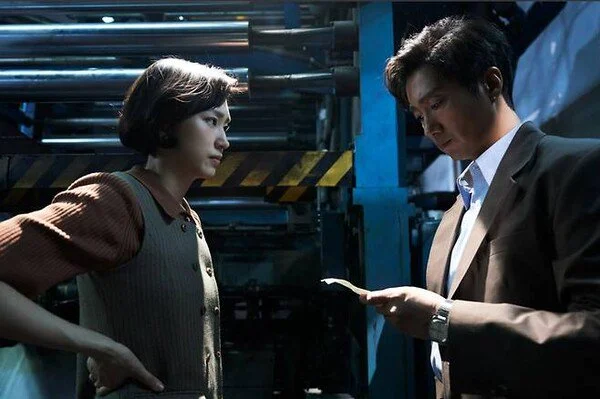
The film 'The Assassin(s)' surpassed its 3.3 million viewer break-even point on the 22nd, exactly one month after its release. Despite historical controversy regarding the assassination of Yuk Young-soo, the 19 billion won production has also seen sold-out screenings at the 37th SGIFF.
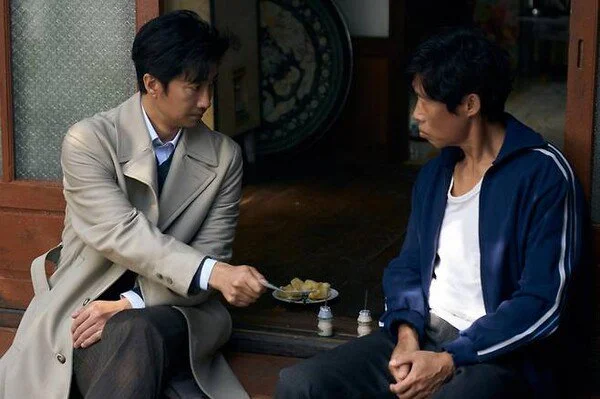
The film 'The Assassin(s)' has surpassed its break-even point just one month after its release. Despite facing heavy storms of controversy, including allegations of historical distortion surrounding the assassination of the late Yuk Young-soo and demands to halt screenings, the film has crossed the milestone by attracting more than 3.3 million viewers. Following its achievement of the break-even point in domestic theaters, the film has continued a streak of sold-out screenings at prestigious international film festivals, confirming international interest in the work regardless of the controversy.
According to the Korean Box Office Information System of the Korean Film Council on the 23rd, 'The Assassin(s)' ranked third at the box office on the 22nd, drawing 10,069 viewers. The cumulative number of viewers reached 3,306,283, surpassing the break-even point set at 3.3 million. This achievement comes exactly one month after its release on the 23rd of last month. Despite the ongoing debates following its release and mixed reviews from audiences, the film has achieved commercial success by steadily attracting theatergoers.
The total production cost of 'The Assassin(s)' is approximately 19 billion won, consisting of 16 billion won in net production costs and 3 billion won in promotion expenses. The break-even point was calculated at 3.3 million viewers, taking into account overseas sales revenue and domestic secondary distribution rights. By exceeding this threshold, the film has achieved its goal of reaching the break-even point. However, since the final profit scale varies depending on various factors such as theater revenue distribution, overseas sales, and secondary rights, surpassing the break-even point does not immediately signify a large profit.
Along with its domestic success, the response from overseas is also noteworthy. Following its selection as a runner-up for the International Audience Award at the 51st Toronto International Film Festival, 'The Assassin(s)' drew interest from local audiences by being screened as the opening film at the 37th SGIFF. The film, which opened the festival on the 21st, recorded a complete sell-out for its second screening held on the 22nd. While debates regarding historical interpretation continue in Korea, evaluations of the film's cinematic completeness and direction have been unfolding abroad.
The praise from SGIFF has added momentum to the interest surrounding the work. Regarding the background of its selection as the opening film, a festival programmer explained that they wanted a work that was an overwhelming blockbuster yet possessed the sensibility and individuality of an auteur director. They further evaluated that 'The Assassin(s)' sufficiently met these expectations based on the audience response. The programmer added that it is the work in which director Hur Jin-ho's cinematic journey is most completely realized, showing remarkable achievements in production scale, ambition, and directing of visuals, and noted that it is a remarkable achievement for contemporary Korean cinema.
Actor Aamir Khan also sent praise toward the work. He emphasized the importance of the message the film conveys, stating he was deeply moved, and extended congratulations to the director, producers, and production staff. The positive responses from international film industry figures and consecutive sell-outs show that 'The Assassin(s)' is expanding its reach to international audiences beyond its domestic success. However, while the praise and sold-out status at film festivals are indicators of interest and evaluation of the work, they need to be viewed separately from the historical issues raised domestically.
The sensitivity of the subject matter is the reason this work has become the center of intense debate in Korea. 'The Assassin(s)' is inspired by the assassination of Yuk Young-soo on August 15, 1974, and depicts a story tracing the suspicions and the mastermind behind the incident. Controversy over historical distortion arose because the film implies the possibility of another accomplice besides the perpetrator Moon Se-gwang, who was officially announced by the special investigation headquarters at the time, as well as the possibility of involvement at the level of the administration. Some in the political sphere even sent an official letter to SGIFF to request the suspension of the film's screening.
However, the festival did not change its screening policy. The festival stated its position to present the film as the opening work as scheduled, respecting the creative vision of the production team, and explained that it was selected through an independent programming process considering the work's artistic achievement and contribution to contemporary Asian cinema. The festival also made it clear that it intends to introduce the work to the audience as a single creative work. Amid the debate over the creative freedom of films dealing with historical events versus the responsibility toward facts, the festival has shown an attitude of maintaining its role in screening and evaluating the work.
Evaluations suggest that the film's success was bolstered by the narrative tracing the reality of the incident and the ensemble of actors. Key actors including Lee Min-ho, Park Hae-il, and Yoo Hae-jin heighten the tension by expressing the characters involved in the investigation and reporting in different tones. It has been noted that the choices made by characters moving from different positions to approach the truth of the incident increase the pace of the story, and that characters acting according to their respective professional calling and beliefs add density to the drama.
The breaking of the break-even point for 'The Assassin(s)' is an achievement that is difficult to explain by the number of viewers alone. This is because a work that reconstructs a sensitive scene of modern history through cinematic imagination experienced both commercial success and controversy, while drawing interest from audiences and critics at overseas film festivals. Of course, overseas praise or sell-out records cannot be the final answer to the controversy surrounding historical representation. The film's commercial achievement, artistic evaluation, and verification of historical facts must be discussed under different criteria. Attention is focused on how far the box office run of 'The Assassin(s)', which exceeded its break-even point in one month, will continue, and in what direction the controversy surrounding the work will develop.
Lee Chang-seok is the CEO and editor of Mediafine and writes for Mediafine Global, mainly covering K-Variety and also writing on K-pop, Celebrity and K-drama.
Related Articles

'The Assassin(s)' Surpasses 3.08 Million Viewers, Audience Numbers Increase in 3rd Week
'The Assassin(s)' Nears 3 Million Viewers—Racing Toward Success Amid Controversy

Comments 0
Comments are currently disabled.