Lee Jun-young awakens traumatic memories in 'Four Hands, Two Sonatas'
In tvN's 'Four Hands, Two Sonatas,' Lee Jun-young's character uncovers a violent past involving a kidnapping and shooting that connects him to Song Kang.
tvN's weekend drama 'Four Hands, Two Sonatas' has shifted the central axis of its narrative, following the mystery surrounding Choi Jeong-yo's (Lee Jun-young) disappearance and revealing his long-hidden past and complex emotions toward Kang Bi-o (Song Kang).
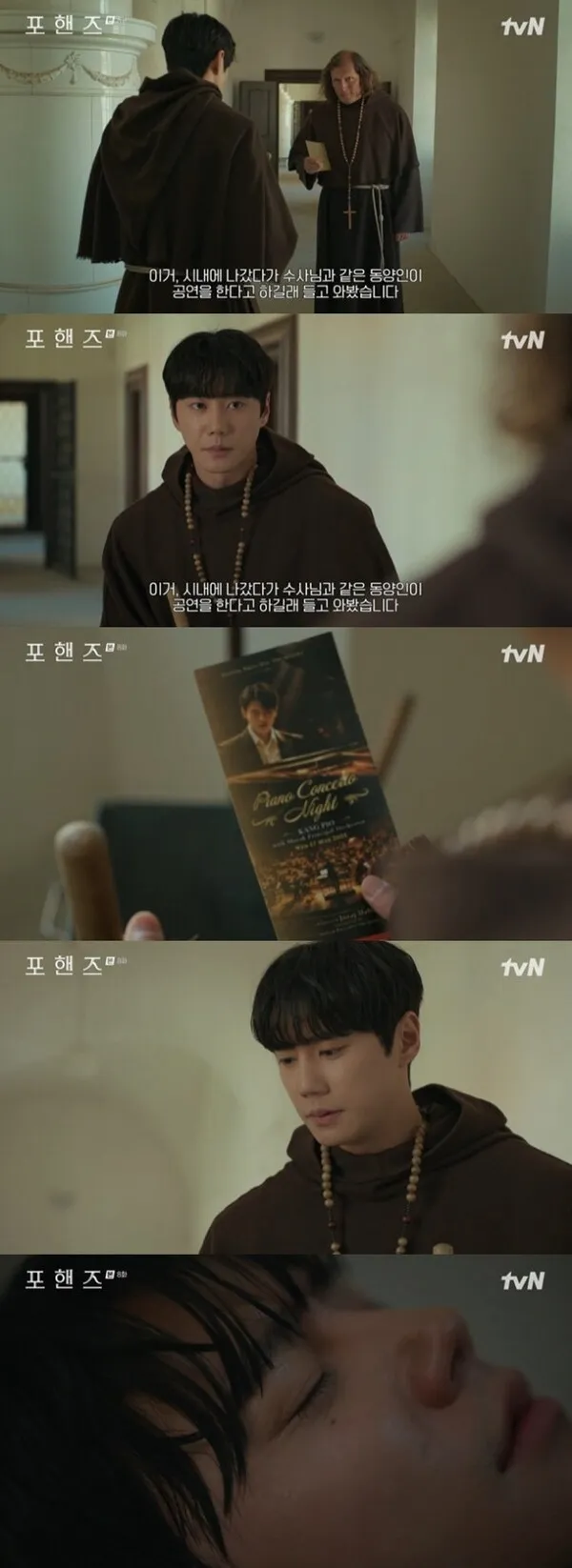
In the eighth episode aired on the 20th, Choi Jeong-yo's past from five years ago was revealed. At the time, Choi was living in a monastery in Slovakia, leading a life seemingly disconnected from the outside world while avoiding his own past.
A monk who was concerned for him brought a performance pamphlet found by chance in the city. Thinking the monk might be interested since a fellow Asian was performing, he handed it over, saying, “Perhaps this might help you find your memories.” The pamphlet was none other than for a Kang Bi-o performance.
Choi's reaction was unexpected. Upon seeing Kang Bi-o's face on the pamphlet, he silently threw the paper into the trash. While the action seemed like an attempt to look away, his subconscious already clearly remembered Kang Bi-o's name and the past incident.
That night, Choi suffered from nightmares. What resurfaced in his dreams were not merely memories of his school days. Fragmented memories surfaced consecutively, from the moment he was able to play the piano on stage with Kang Bi-o's help, to the emotions built between the two, and even the scene where he faced resentment from Kang Bi-o.
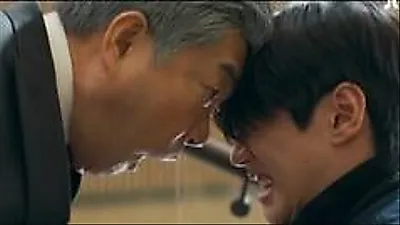
The most shocking memory was the incident that occurred right before the final stage of a competition. Immediately before stepping onto the stage, Choi was kidnapped and eventually shot. It has been confirmed once again that Choi's disappearance, which had remained an unsolved mystery for viewers, was not a simple case of running away or hiding, but was connected to a violent crime.
After Choi disappeared, Kang Bi-o also could not return to a normal life. Previously in the drama, it was depicted that Kang had been tracking Choi's whereabouts for a long time, and after accepting that he was dead, he fell into a severe slump, even seeing hallucinations of Choi during performances. Ultimately, the reason Kang found it difficult even to sit in front of a piano is interpreted as being unable to free himself from his friend's death and the resulting guilt.
What is interesting is that the two remember the same incident in completely different ways. To Kang, Choi was a friend who suddenly disappeared and a person whose death he eventually had to accept; but to Choi, Kang was a former musical colleague and a person who constantly summoned the memories he wanted to forget.
Their relationship was difficult to explain as simple friendship from the beginning. Having faced each other in a competition during their childhood, the two were rivals who recognized each other's talent more accurately than anyone else. In fact, Kang was the person who made Choi experience the result of '2nd place' for the first time, and while Choi acknowledged Kang's musical talent, he competed with him in his own way.
Furthermore, the piano was not just a career path for the two. Kang held onto the piano between his family's expectations and his own desires, while Choi faced the crisis of having to give up music due to his difficult economic reality. Although they started from different environments, their relationship possesses a structure where competition, admiration, friendship, and inferiority intersect, as they confirmed each other's existence through the shared world of music.
It also seems that Choi's subsequent path as a conductor rather than a pianist is not unrelated to this past. In the drama, Choi reappeared as a winner of an international conducting competition and made a grand return by taking on a guest conducting role for the Korea Symphony. However, behind his success, the indelible past of Kang and the incident from five years ago still remain.
The scene in this episode where Choi picks up the Kang Bi-o pamphlet he had previously thrown away is therefore symbolic. The fact that he eventually took back with his own hands the name he had thrown into the trash to deny his past means that he can no longer turn away from his memories.
Looking at the pamphlet, Choi whispered Kang Bi-o's name. Through this, his state, which had appeared 'as if he had lost his memory' until now, also takes on a new meaning. Choi was not a person who had forgotten everything, but rather a person who was pushing the past away because he remembered it too vividly.
The interesting point of the drama is that this restoration of memory does not lead their relationship to a simple reconciliation narrative. Kang cannot help but be shocked by the fact that Choi is alive, and Choi must face his emotions regarding Kang while navigating the memories of his own kidnapping and shooting.
Furthermore, the two are now reunited as a pianist and a conductor, unlike in the past. As Choi proposes a collaborative performance to Kang for his domestic debut, the two are finally heading toward the same stage, though intense tension permeates the rehearsal process.
The title 'Four Hands, Two Sonatas' itself is significant, referring to a musical form where two people play a single piano together. Just as two different people must share the same keys to complete a piece of music, it is difficult to explain the current narrative of Kang and Choi without one another. However, the music they must create together contains not only beautiful harmonies but also the dissonance of past wounds and resentment.
The acting chemistry between Song Kang and Lee Jun-young is driving the complexity of this relationship. Song portrays the process of Kang being unable to accept Choi's death, which shakes both his piano playing and his life, while Lee expresses both the coldness of Choi—who returned as a conductor while hiding the fact that he survived—and the suppressed emotions beneath.
The story of the two, which began with a reunion after seven years during the first broadcast, has now expanded beyond a simple youth musical drama. As a relationship that began with musical competition and friendship expands into disappearance, shooting, guilt, and resentment, the genre colors of 'Four Hands, Two Sonatas' are deepening.
Ultimately, what Choi must find is not simply his own past. The core of the remaining mystery is who kidnapped and shot him, what role Kang played in that incident, and why he tried so hard to erase Kang's name for so long.
Although the friend thought to be dead has returned, reunion does not necessarily mean reconciliation. Rather, as the two sit before the same piano, the buried memories and emotions are likely to become even clearer. As 'Four Hands, Two Sonatas' depicts the growth of two geniuses through music, the key point moving forward will be how the two can transform their past dissonance into a single melody.
 Up next
Lee Jun Young Delivers Veteran Performance in Reborn Rookie
More on Lee Jun Young