IP of statement defending Oh Ha-young linked to Japanese carrier
Controversy grows as the IP address of a statement defending actress Oh Ha-young's great-grandfather is linked to a Japanese telecommunications range.
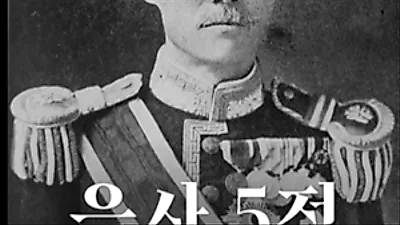
As the controversy surrounding the pro-Japanese activities of actress Oh Ha-young's great-grandfather, An Sang-ho, continues, claims are surfacing online that the IP address of the author of a statement released by Oh's fans on Liberation Day was assigned to a range used by a Japanese telecommunications carrier, drawing further attention.

However, experts point out that since an IP range alone cannot confirm an author's nationality, actual place of residence, or identity, one should not conclude the background or intentions of the statement's author based solely on this information.
On the 15th, a statement titled 'We request you to watch the future steps of actress Oh Ha-young in light of Liberation Day' was posted on Oh Ha-young's fan community. Written under the name of 'Fans who cherish Oh Ha-young,' the post conveys the sentiment that while the pro-Japanese activities of her great-grandfather, An Sang-ho, must be strictly evaluated according to historical facts, the responsibility of ancestors should not be transferred directly to Oh as an individual descendant.
More than the content of the statement itself, what caught more attention online was the IP address displayed for the post's author.
The community is known to display part of the IP address when a non-logged-in user writes a post. Claims spread online that after comparing the IP range displayed for the statement's author with public network registration information, it appeared to be a range assigned to SoftBank in Japan.
However, there are clear limitations to this.
An IP address only shows information about the network used for connection; it is not information that specifies a user's nationality or actual place of residence. If a VPN, proxy, overseas network, corporate/institutional network, or other bypass connection environments were used, the actual location of the user and the registered country of the IP can appear differently.
Therefore, it is technically unreasonable to conclude that the person who wrote the statement is Japanese or resides in Japan simply because of the 'Japanese telecommunications carrier range.'
Nevertheless, the reason this part drew interest online is due to the timing and content of the statement's release.
On Liberation Day, a statement appeared regarding a descendant of a figure embroiled in controversy for pro-Japanese activities during the Japanese colonial period, suggesting that the responsibility of ancestors and descendants should be distinguished. With the fact that the author's IP was displayed as a Japanese telecommunications carrier range, various interpretations are emerging among netizens.
While some netizens agreed with the basic intent of the statement—that "one should be wary of holding descendants accountable for the sins of their ancestors like collective punishment"—they raised questions such as, "Why did they release it specifically on Liberation Day?" On the other hand, counterarguments have emerged that estimating the author's background based solely on IP information is another form of speculation.
Ultimately, there are two core issues that must be distinguished in this controversy.
One is the evaluation of An Sang-ho's historical actions, and the other is the question of to what extent those actions can be held as the responsibility of his descendant, Oh Ha-young.
Previously, Oh Ha-young introduced her family history on a broadcast as a 'family of doctors spanning four generations,' mentioning her great-grandfather An Sang-ho with pride. The controversy expanded after records surfaced showing that An Sang-ho had been active in pro-Japanese organizations during the Japanese colonial period.
Oh's side initially denied the allegations but later corrected their position, and Oh herself apologized through a handwritten letter, stating she had belatedly confirmed her great-grandfather's pro-Japanese activities. She expressed remorse for introducing her great-grandfather's life only as a positive family history without sufficiently verifying her family history and stated she would study history more deeply.
The Institute for Research in Contemporary History also took a stance suggesting that An Sang-ho's pro-Japanese activities themselves are clear. However, while drawing a line against a 'guilt-by-association' approach that transfers legal and political responsibility to descendants due to the mistakes of ancestors, they pointed out that Oh needs to reflect on her attitude of glorifying or consuming the history without sufficient reflection on her ancestor's wrongdoings.
This can serve as an important standard for viewing this controversy.
A descendant cannot choose the actions of their ancestors. However, that does not automatically grant them the right to ignore or glorify historical facts existing within their own family history. Ultimately, the focus should be on what attitude one takes and what actions one shows after learning the truth.
In that sense, Oh Ha-young's fans' statement should be viewed by separating the claim that 'descendants should not be held accountable through collective punishment' from the question of 'how Oh will accept her family history and what she will do moving forward.'
With the addition of the IP issue, there is a risk that the focus of the controversy may unnecessarily shift. An IP address is not evidence of historical facts, nor is it data that proves an author's nationality or political leanings.
Ultimately, the judgment must center on An Sang-ho's actual actions and their historical evaluation, as well as Oh Ha-young's subsequent actions after learning the truth.
Because the statement was released on the symbolic day of Liberation Day, it is bound to be received sensitively. However, the more a debate involves history, the more important it is to distinguish fact from speculation. Not passing down an ancestor's faults to a descendant and accurately remembering those faults are not conflicting values.
Rather, only when both are maintained can a more mature discussion regarding historical versus individual responsibility take place.
 Up next
Oh Ha-young's great-grandfather owned 2,700 pyeong of land in Gunpo
Related articles