Oh Ha-young's great-grandfather named among doctors who treated Lee Wan-yong
Controversy grows as records reveal actress Oh Ha-young's great-grandfather, An Sang-ho, was among the medical staff who treated collaborator Lee Wan-yong.
The controversy surrounding the pro-Japanese activities of An Sang-ho, the great-grandfather introduced by actress Oh Ha-young on a recent broadcast, has entered a new phase. This follows the discovery of records in the 'Journal of the National Institute of Korean History'—part of the National Institute of Korean History's Korean History Database—showing that An Sang-ho's name was included among the medical staff who treated the pro-Japanese collaborator Lee Wan-yong after he was attacked by independence activist Yi Jae-myeong in 1909.
However, these records alone cannot definitively prove An Sang-ho's pro-Japanese leanings. The medical act of treating Lee Wan-yong as a doctor is a professional duty, which is distinct from an individual's political or historical actions. Rather, the discovery of these historical materials increases the need to examine the specific historical context in which the career of the man Oh Ha-young described took place.
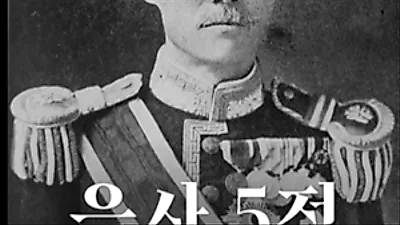
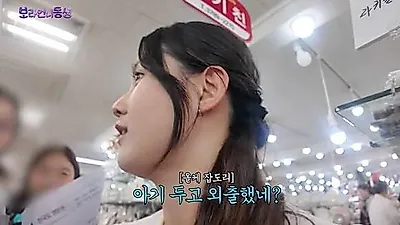
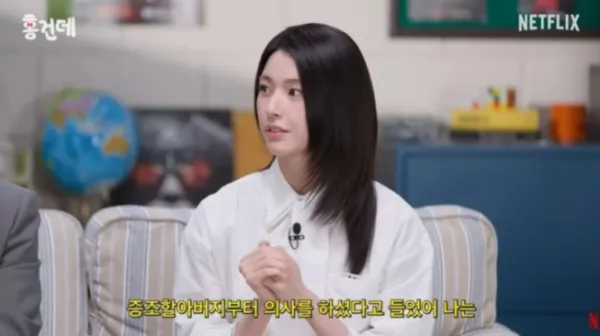
On the 7th, Oh shared her family history on the KBS2 variety show 'Problem Child in House.' She introduced her great-grandfather as a pioneer who studied Western medicine in Japan, opened a clinic in Hanyang, and treated Emperor Gojong.
Following the broadcast, suspicions were raised online that her great-grandfather was indeed An Sang-ho. His history of studying medicine in Japan, running a hospital in Hanyang, and maintaining connections to the royal family aligned closely with Oh's description.
Subsequently, Oh's representatives confirmed that her great-grandfather was An Sang-ho. While they initially issued a statement claiming the allegations of pro-Japanese activities were "groundless," they revised their position after reviewing additional historical materials.
Her agency, Bisters Entertainment, issued an official statement on the 11th, apologizing for the initial response. "Upon further investigation, we confirmed that records actually exist showing that Mr. An Sang-ho's name was on the list of council members for the Daejeong Chinmokhoe in 1916," the agency stated, apologizing for claiming the allegations were groundless without sufficient verification.
Furthermore, attention has turned back to the record that An Sang-ho was among the medical staff who treated Lee Wan-yong.
The data titled 'Pro-Japanese Treasonous Acts from 1904 to 1910,' included in the National Institute of Korean History's database, contains records of the Lee Wan-yong attack on December 22, 1909, and the subsequent medical treatment.
At the time, Yi Jae-myeong attacked and stabbed Lee Wan-yong with a knife as he was returning from a memorial service for the King of Belgium. A rickshaw puller, Park Won-mun, died at the scene, and Lee Wan-yong, who sustained injuries to his shoulder and other areas, was transported to a hospital.
The relevant data shows that several doctors treated Lee Wan-yong, and An Sang-ho's name is included in that list. Historical records confirm that An Sang-ho was part of the medical team that saved Lee Wan-yong's life.
However, an important distinction is required here.
The fact that An Sang-ho treated Lee Wan-yong is not, in itself, evidence of pro-Japanese activity. A doctor treating a patient regardless of their political inclination or social status is fulfilling a fundamental professional duty. Therefore, concluding that An Sang-ho was a pro-Japanese collaborator simply because he saved Lee Wan-yong would be an excessive leap in historical judgment.
The core of the controversy arises when these facts are viewed alongside other historical records.
Previously, An Sang-ho was known to have actively promoted Japanese lifestyles through an interview with 'Maeil Sinbo,' the official organ of the Government-General of Korea, in 1918. The report noted that An did not wear Korean clothes, did not eat spicy food, and that his children used the Japanese language at home.
At the time, 'Maeil Sinbo' presented An's household as an example of the integration between Japan and Korea.
Additionally, records confirm that An's name was included in the 1916 list of council members for the Daejeong Chinmokhoe, a group led by prominent pro-Japanese figures such as Lee Wan-yong and Song Byeong-jun. Oh's side belatedly acknowledged this record, withdrawing their initial 'groundless' stance and apologizing.
When the available materials are viewed together, it is confirmed that An Sang-ho practiced modern medicine, had ties to the royal family, actively adopted Japanese lifestyles, and was listed in the Daejeong Chinmokhoe, a group evaluated as a pro-Japanese organization. This is now compounded by the record of him being part of the medical team that treated Lee Wan-yong during the 1909 attack.
However, these facts do not all carry the same historical weight. Treating Lee Wan-yong was a medical act; the interview regarding Japanese lifestyles reflects personal habits and social perceptions of the era; and the Daejeong Chinmokhoe membership is a more direct indicator of political and social affiliations. Rather than reducing these to a single conclusion of 'pro-Japanese,' historians must weigh the nature of each record and the context of the time.
It is also worth noting that An Sang-ho is not listed in the 'Dictionary of Pro-Japanese Collaborators' compiled by the Institute for Research in Collaborationist Activities. While inclusion in such a dictionary is not the sole determinant of historical character, it underscores why further investigation is needed rather than drawing definitive conclusions from the currently available data.
This controversy is more than mere celebrity gossip. Oh introduced her family as a 'four-generation medical family,' remembering her great-grandfather as a pioneering doctor. However, the family history remembered by descendants and the life of an individual as recorded by contemporary sources do not always align perfectly.
History is not a list of honors inherited through blood, nor is it a list of sins automatically assigned to descendants. The importance lies in how an ancestor's life is reconstructed through historical evidence.
The fact that Oh's side initially denied the allegations before apologizing after verifying the records highlights this point. It serves as a reminder that when using family history as a promotional tool, historical verification must precede the emphasis on family glory.
Oh is scheduled to participate in an interview regarding the Netflix series 'Such a F***ing Love' on the 14th. As this will be her first direct meeting with the press since the controversy regarding her great-grandfather escalated, attention is focused on what she will say regarding the matter.
 Up next
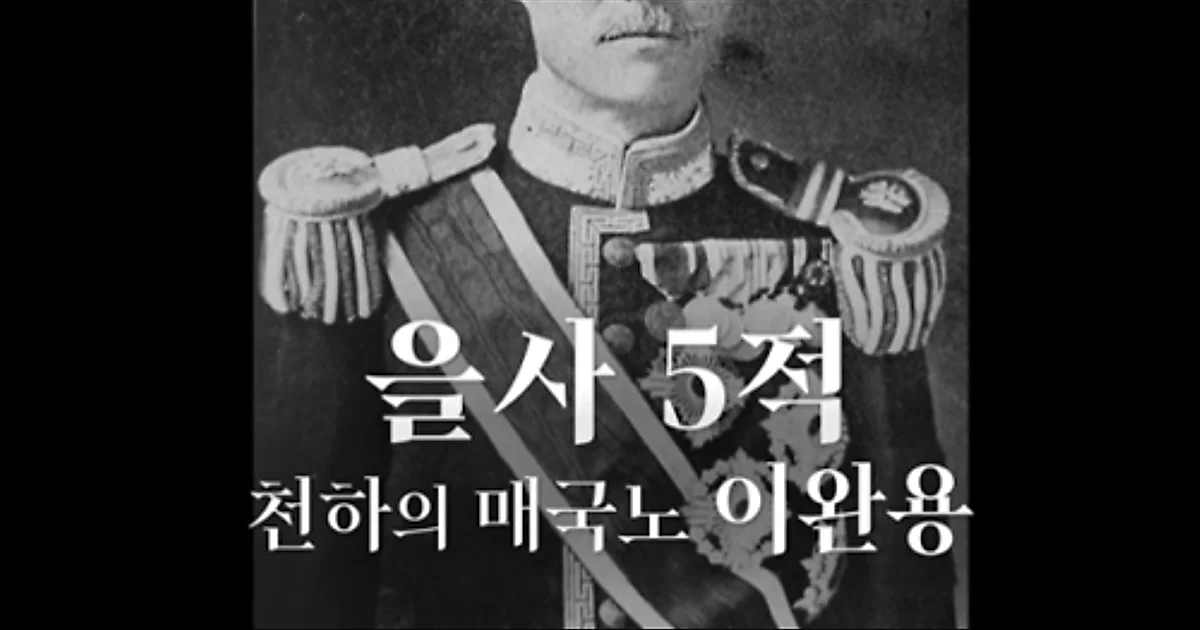
KBS to spotlight traitor Lee Wan-yong amid Oh Ha-young controversy
Related articles