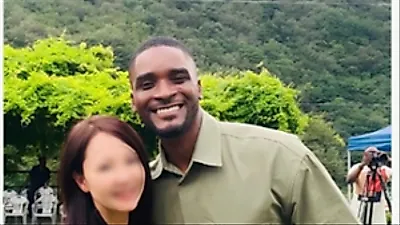
Yoon Joo-bin's silence vs. Oh Ha-young's pride: a historical irony
A look at how actors Yoon Joo-bin and Oh Ha-young navigate their family legacies involving an independence activist and a pro-Japanese figure.
As Liberation Day approaches, controversy surrounding the pro-Japanese activities of actress Oh Ha-young's great-grandfather, An Sang-ho, is resurfacing. This has brought renewed attention to the past remarks of actor Yoon Joo-bin, the direct descendant of independence activist Yun Bong-gil. While both share a lineage of famous historical figures, the way they have presented these histories to the public differs significantly.
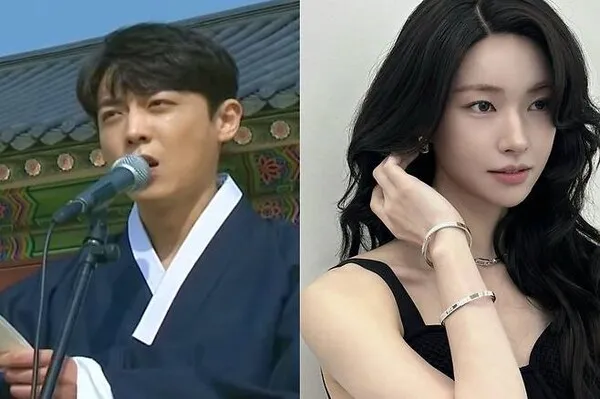
On the KBS2 variety show "Problem Child in House," Oh recently introduced herself as being from a "fourth-generation medical family," noting that her great-grandfather, An Sang-ho, had opened a Western medical clinic in Hanyang to treat Gojong. However, the broadcast sparked backlash when records emerged showing that An was included in the list of council members for the Daejeong Chinmokhoe during the Japanese colonial period.
While Oh's agency initially denied the allegations, they later corrected their position after verifying the records. Oh also issued a handwritten apology, explaining that she had only understood her great-grandfather's life through fragmented stories told by her family.
The core of the controversy is not whether Oh herself committed pro-Japanese acts; there is little disagreement with the principle that descendants should not be held liable for the sins of their ancestors. Rather, the issue lies in whether one sufficiently verifies historical facts when presenting family history to the public, and how one reflects on that history when new data contradicts a previously held family pride.
In this context, Yoon Joo-bin is being recalled.
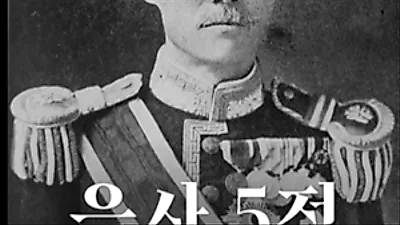
Yoon is the direct descendant of Maeheon Yun Bong-gil, the independence activist who famously threw a bomb at the Japanese military leadership in Shanghai's Hongkou Park in April 1932. Yun passed away in Kanazawa, Japan, in December of that year after his arrest. In 1962, the government posthumously awarded him the Order of Merit for National Foundation, Republic of Korea.
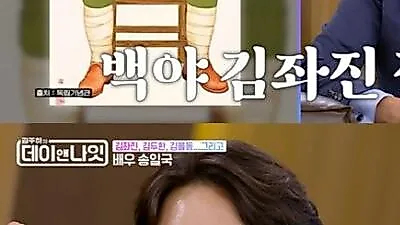
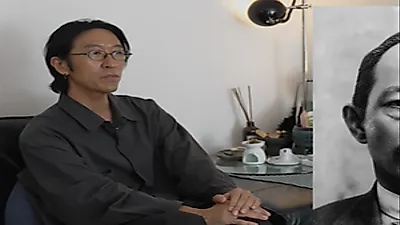
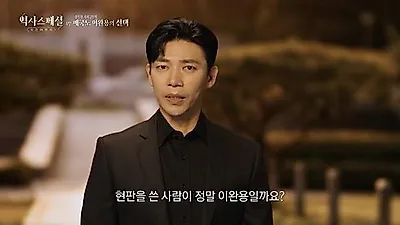
Yoon first publicly revealed his lineage in 2019 during the KBS special program "Spring of 100 Years," which marked the centenary of the March 1st Movement and the establishment of the Provisional Government of the Republic of Korea.
His words from that time remain poignant. Honoring his great-uncle, Yoon remarked, "My great-uncle's spring stopped at the age of twenty-five, but he lives on in our memories as an eternal young activist."
More notably, when asked why he had not disclosed his lineage since his debut, Yoon explained that his family had always taught him to "become a person who has a positive influence on society." He revealed that his family specifically advised him not to commercially exploit Yun's name for his own fame or career.
By choosing not to actively promote his family history, Yoon demonstrated a significant sense of ethics. While a famous ancestor's name can serve as powerful symbolic capital, Yoon was wary that using the name to gain fame would result in the mere consumption of his ancestor's life rather than true remembrance.
Conversely, in Oh's case, the attempt to highlight her family's social prestige inadvertently brought her great-grandfather's controversial historical actions into the spotlight. What was presented as a source of family pride was revealed to be a subject of entirely different historical evaluation.
It is not appropriate to judge these two cases as a simple matter of right or wrong. Being a descendant of Yun Bong-gil does not mandate silence, nor does having an ancestor suspected of pro-Japanese activities forbid one from mentioning their family history. The issue is the attitude one adopts when speaking of the past.
A historical legacy is neither an achievement nor a fault of the descendant, as they did not choose the lives of their ancestors. However, how they handle that legacy in the present is a choice they make. Yoon's case is less about "hiding" his identity and more about separating his ancestor's name from his own pursuit of fame. Oh's case, meanwhile, centered on the consumption of a family history that had not been fully verified.
Ultimately, these cases do not ask which descendant is more "qualified." Such a question would merely be another way of ranking human value based on bloodline. The more important question is how we remember the past.
Being the descendant of an independence activist does not automatically make one's life noble, nor does being the descendant of a pro-Japanese figure make one's life inherently sinful. Historical responsibility belongs to the actor. However, how a descendant understands their family history and how they speak of it in the face of new truths is a responsibility they must carry in the present.
As Liberation Day nears, the contrast between a descendant who sought to keep his ancestor's name separate from his own fame, and one who proudly shared a history that later revealed uncomfortable truths, serves as a reminder: history is not inherited through blood, but passed down through memory.
 Up next
KBS to spotlight traitor Lee Wan-yong amid Oh Ha-young controversy
Related articles