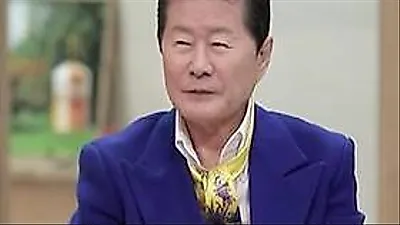
J.Y. Park addresses religious group 'Firstfruits' controversies
J.Y. Park clarifies the identity of his religious group 'Firstfruits,' discussing its doctrines and proposing a new name for its teachings.
Singer and JYP Entertainment chief producer J.Y. Park has once again addressed allegations of heresy and cult involvement surrounding the religious group 'Firstfruits,' which he leads. Following his past denials of links to the Salvation Sect, he has now directly explained the doctrinal identity of 'Firstfruits' and the religious traditions that have influenced them, even publicly proposing a name to refer to their specific doctrines.

According to Park's explanation, 'Firstfruits' has evolved from a simple Bible study group into a religious community that has developed its own independent doctrinal interpretations, rather than being a group belonging to a specific existing denomination. However, since the explanation provided by Park is strictly from his own perspective, separate review is required before concluding the religious-sociological nature or denominational classification of the group from the outside.
On the 19th, a video titled "What denomination is Mr. Park's church?" was released on the YouTube channel 'Firstfruits.' In the video, which lasts approximately 1 hour and 12 minutes, Park, standing at the pulpit, began by mentioning the perspective through which the attendees are participating in the meeting.
Park said, "There probably aren't many among those who came here today who came with a comfortable mind," adding, "Especially if there are people around you who attend church, they would have all tried to stop you." He continued, "You must have heard things like 'You shouldn't go there,' 'I heard it's a strange place,' 'I heard it's a cult,' or 'I heard it's a pseudo-religion.'"
The question he stated he encountered most frequently in the controversies surrounding him was, "What denomination are you?"
Regarding this, Park claimed, "Firstfruits is not a church without a genealogy," asserting, "Surprisingly, it is a church with a clear foundation and a genealogy." Through the expression 'genealogy,' he emphasized that their doctrines were not arbitrarily created without any tradition or theological lineage.
He also drew a line regarding perceptions of connections to specific religious organizations. He explained, "In our church, there are people from Catholicism, Presbyterianism, Baptist, and Shincheonji Church of Jesus," then countered, "Just because there are people from Shincheonji Church of Jesus in our church, does that mean our church is Shincheonji Church of Jesus?"
This explanation is intended to convey that one should not equate an individual member's past religious history with the denominational identity of the community they currently belong to. Park also shared an anecdote suggesting that encountering products or cultural elements related to a specific religion cannot serve as evidence of being a believer in that religion.
He mentioned his experience of liking a beverage produced by the Unification Church lineage, explaining that simply because he drank that beverage, it does not make him a follower of the Unification Church. His logic is that one should not equate an individual's experience, consumption behavior, or a member's background with the identity of the entire religious community.
The more fundamental criterion presented by Park was 'eternal life.' He explained, "In distinguishing any doctrine or denomination, the standard must be eternal life," stating that how each religion teaches one obtains eternal life, and whether they believe one can lose the eternal life once obtained, are important criteria.
He then directly revealed the core view of faith of 'Firstfruits.'
Park said, "Our Firstfruits church teaches that eternal life is obtained through a mysterious and perfect faith, which is received as a gift only for those who have repented."
He was explaining his perspective that, in defining the identity of a religious community, core doctrines such as the theory of salvation and the theory of eternal life should be placed at the center rather than the name of the organization or denomination. In particular, the questions of 'how to obtain eternal life' and 'can eternal life be lost' have long been subjects of debate in Christian theology regarding the theory of salvation.
In the latter half of the video, even more specific details emerged. Regarding the doctrines they have recently begun to explain anew, Park mentioned the possibility of attaching an independent name, saying, "I think we could even attach a denomination name."
The name he introduced was the 'Gospel Denomination for the Uncircumcised.' Mentioning a book he is preparing, Park presented this name, suggesting that rather than using the name of an existing denomination, they could define the doctrinal explanations they are newly organizing as a single name.
This statement also intersects with the past controversies surrounding Park's religious activities.
In 2018, when allegations were raised that he led a Salvation Sect gathering, Park refuted them directly via social media. At the time, he questioned, "Are the Bible study gatherings I personally paid for, rented the venue for, and taught that are being called Salvation Sect gatherings?" denying any link between his study meetings and the Salvation Sect.
In 2020, he was asked a similar question on Munhwa Broadcasting Corporation's 'Radio Star.' At the time, Park explained that he became interested in Bible study after visiting Jerusalem and that the study group he started with friends gradually grew in scale.
His explanation at the time shows a significant shift compared to his current statements. In 2020, Park described the group he participated in as having "no connection to any organization or church" and being "just a religious study group without a denomination."
However, six years later, Park is directly referring to 'Firstfruits' as a "church." He is not only explaining the doctrines of salvation and eternal life they teach but has also mentioned their relationship with existing religious traditions and publicly proposed a unique doctrinal name.
This can be interpreted as showing how Park's religious activities have evolved from personal Bible study into a community with a defined doctrinal system. However, this does not immediately imply a specific denominational or sociological classification. A community's denominational affiliation or status as a cult cannot be determined solely by its own self-definition; it requires a comprehensive review of its doctrines, organization, historical lineage, and evaluations from major denominations and religious scholars.
While Park's religious activities have previously been consumed within the framework of celebrity religious controversies, this video differs in that he spent a long time explaining his own views of faith. Whereas he previously drew a line by saying there was "no denomination," he has now more specifically revealed the doctrinal characteristics of the 'Firstfruits' community and the language they use.
It is also noteworthy that a figure with immense influence in popular culture is publicly explaining his views of faith from a leadership position within a religious community. Park is not only a singer but also the leader of JYP Entertainment, involved in the production and planning of numerous K-pop artists. Given his high public profile, his religious statements inevitably carry more weight than the personal confessions of an average individual.
Ultimately, the core of these remarks is that Park is attempting to face the religious controversies surrounding him head-on rather than avoiding them. He denied suspicions that 'Firstfruits' is a specific religious organization while detailing their beliefs regarding salvation and eternal life, even suggesting the possibility of a separate name for their doctrine.
Park, who explained six years ago that there was "no denomination," now describes his community as a "church with a genealogy" and even mentions a unique doctrinal name. The language Park uses to describe the identity of 'Firstfruits' has become much more specific, mirroring the time that has passed since his previous explanations. Whether these remarks will influence future religious debates surrounding 'Firstfruits' will become clearer only after the actual content of the doctrine and objective reviews from the religious community are conducted.
 Up next
Defconn's question to J.Y. Park resurfaces amid religious group claims
Related articles