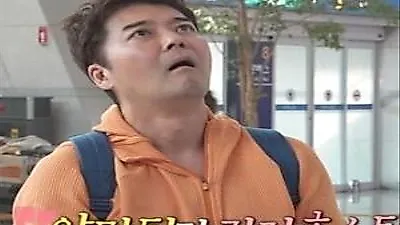
Posts defending Jun Hyun-moo deleted after 'I Live Alone' admits to local cooperation
Controversy grows for MBC's 'I Live Alone' as production staff clarifies administrative support received during Jun Hyun-moo's Kazakhstan trip.
The controversy surrounding Jun Hyun-moo's Kazakhstan trip on the MBC variety show 'I Live Alone' is resurfacing following additional clarifications from the production team and the deletion of social media posts by an acquaintance.

Contrary to the production team's initial statement that "no filming support or sponsorship was received," a follow-up notice explained that while "there was no monetary sponsorship or production cost support," they did receive cooperation from local tourism authorities for administrative procedures and filming logistics.
On the 31st, the MBC 'I Live Alone' production team posted a 'Notice Regarding Kazakhstan Filming' on its official website, stating, "There was no monetary sponsorship or production cost support from the Almaty City Tourism Bureau," but adding, "The filming proceeded smoothly as we received administrative procedures and on-site filming cooperation necessary for local filming."
The issue lies in the shift in phrasing compared to the previous explanation. When suspicions regarding the Kazakhstan filming were raised on the 25th, the production team stated, "There was no fact of receiving filming support or sponsorship." At that time, the expression could be interpreted as a total denial of any 'filming support.' However, the team has now clarified that while no monetary sponsorship or production costs were provided, they did receive cooperation for administrative and on-site filming needs.
Ultimately, the core of the controversy does not lie simply in whether money was exchanged. Rather, it stems from viewer skepticism regarding the relationship between the spontaneous 'planless trip' depicted on screen and the extent of the administrative support and convenience provided by local institutions during production.
In particular, this controversy began with Jun Hyun-moo's travel method itself. In the Kazakhstan episodes aired on the 14th and 21st, Jun was shown traveling to Almaty after spontaneously deciding on a destination at Incheon Airport, a journey lasting approximately 29 hours. The program framed this process under the concept of an 'impromptu trip taken without a plan.'
However, following the broadcast, some viewers pointed out that the driver's license acquisition, vehicle rental, and administrative procedures—which can be difficult during actual overseas travel—proceeded suspiciously smoothly. Specifically, regarding scenes where Jun was depicted as solving all processes alone on the spot while the production team accompanied him, voices emerged questioning the authenticity of the 'reality' presented.
The controversy was fueled by official data from Kazakhstan. As it was revealed on the 21st on the Almaty City-related page of the Kazakhstan government website that the 'I Live Alone' filming was conducted with the support of local tourism authorities, questions were raised about whether there was a gap between the 'planlessness' emphasized on broadcast and the actual filming environment.
In response, the production team explained on the 25th that the events were "exactly as revealed on broadcast," stating that Jun rented a vehicle at the airport just before departure by submitting an international driver's license and passport as requested by a local rental car company. At the time, they emphasized, "There was no fact of receiving filming support or sponsorship regarding this Kazakhstan trip."
However, the additional notice on the 31st showed a subtle but important departure from that position. Instead of the comprehensive expression 'there was no filming support,' they specified that 'there was no monetary sponsorship or production cost support' while newly acknowledging that they received administrative and on-site cooperation from local institutions.
In this process, the fact that an acquaintance of Jun, referred to as Person A, deleted related posts is also drawing attention. On the 25th and 26th, A posted videos on SNS showing the process of spontaneously deciding on a travel destination with Jun. At the time, A introduced the videos as the actual footage that served as the motive for this 'I Live Alone' Kazakhstan episode.
The video released by A captured Jun visiting an airline counter at the airport to inquire about destinations he could fly to on the spot. A also added explanations such as, "We went around all the desks at the airport, but as expected, there wasn't a single correct ticket," and "Since we are extreme Ps [personality type], while looking for good restaurants in Incheon, we searched a flight booking app and found exactly one place," emphasizing that the two enjoy spontaneous trips in their daily lives.
This was initially accepted as evidence supporting the fact that Jun's travel style shown on broadcast was not entirely staged. However, as of the 31st, it has been confirmed that the related posts uploaded by A have been deleted.
The deletion of the posts does not immediately imply broadcast manipulation or false explanations, as the reason for the deletion has not been disclosed by A. However, because the deletion coincided with the production team's change in explanation, it is fueling further speculation.
In this matter, a distinction must be made between 'sponsorship' and 'filming cooperation.' The fact that no production costs or monetary compensation were received is legally and professionally distinct from receiving administrative support or convenience from local institutions. However, from a viewer's perspective, there is a significant difference between the explanation 'no support was received' and 'cooperation was received from local institutions.'
Furthermore, reality variety shows are a genre where the reproduction of facts and directorial intervention work in tandem. Even if a participant's actions are genuinely spontaneous, the production team must prepare locations, routes, administrative procedures, and local cooperation in advance. Therefore, the key lies in transparently explaining to viewers where the actual spontaneity ends and the production team's preparation begins.
'I Live Alone' has long been beloved for its perceived ability to show the daily lives of celebrities naturally. Especially in cases like Jun's Kazakhstan trip, where the narrative centers on the randomness and spontaneity of travel, the explanation regarding the relationship between the production environment and the broadcast footage becomes even more critical.
Currently, the production team maintains that no monetary sponsorship or production support was received while acknowledging the cooperation from local authorities. Consequently, the focus of the controversy is likely to shift from whether sponsorship was involved to the specific scope of the local support and how it influenced the nature of the 'planless trip' depicted on screen.
The entertainment of variety shows is often built upon a meticulous production system. The issue is not the existence of that system, but how accurately and consistently it is explained. This controversy serves as a case study of whether the 'trust in authenticity' that reality shows maintain with their viewers can be preserved.
Related articles