Ji Yeon-soo on Raising a Child with 850,000 Won Monthly Child Support
Broadcaster Ji Yeon-soo opens up about the financial struggles of raising a child alone following her divorce from U-KISS member ELI.
Broadcaster Ji Yeon-soo has candidly shared the realistic difficulties she faced while raising her child alone after her divorce. By directly mentioning the burden of childcare and child support issues following her divorce from her ex-husband, former U-KISS member ELI, she prompted a reconsideration of the practical problems faced by divorced families beyond mere personal history.
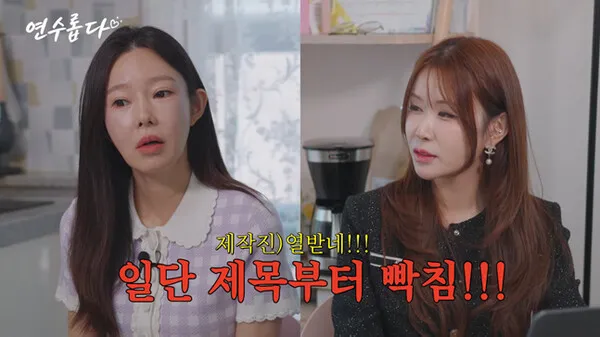
On the 29th, a video titled 'Ji Yeon-soo's thoughts on ex-husband's child support!' was released on Ji Yeon-soo's YouTube channel 'Ji Yeon-soo's Yeonsuroopda.' On this day, Ji Yeon-soo took time to listen to stories from people struggling with divorce and childcare issues and offered advice based on her own experience.
In particular, regarding a story about 'an ex-husband who delays child support while boasting about luxury goods on SNS,' Ji Yeon-soo provided a realistic answer. She stated, "It is his personal money, so there is nothing that can be done. In the end, there is no choice but to go through legal channels."
However, the core point emphasized by Ji Yeon-soo was that child support is not simply money paid to one spouse.
She pointed out, "Child support is money that goes into a child as they grow, so it is the child's right," adding, "No matter how much you claim it to your former spouses, they think of it as if they are giving their own money to this woman."
This remark touches upon the social perception issues surrounding child support after divorce. She emphasized that child support is not living expenses given to a divorced spouse, but a responsibility for child-rearing that both parents must share jointly.
Ji Yeon-soo also mentioned the realistic limitations of the child support calculation standards. She said, "The child support calculation table is from several years ago. Prices are rising, but the calculation table is still insufficient, so it is woefully lacking."
She then revealed the amount of child support she receives. Ji Yeon-soo explained, "I receive 850,000 won (from her ex-husband ELI). The minimum child support is 640,000 won. That is the standard for the youngest child."
Of course, the amount of child support can vary depending on the parents' income, the child's age, and various legal standards, but Ji Yeon-soo's remarks show that the economic burden felt during the actual process of raising a child is a problem beyond simple numbers.
She confessed that clinging emotionally to the issue of child support could make her own life harder, saying, "You have to live with an empty heart. If I think about that, I'm the only one who collapses."
She continued, "Rather than clinging to child support, it is realistically more correct for me to just get a part-time job quickly," revealing her own experience of having to work for her livelihood after the divorce.
The reason this statement is drawing attention is that Ji Yeon-soo did not stop at simply criticizing her former spouse, but spoke about the reality faced by parents raising children alone. She honestly revealed the gap felt between legal rights and realistic livelihood.
Ji Yeon-soo married ELI, who is 11 years younger, in 2014 and had a son in 2016, but divorced in 2020. Since then, Ji Yeon-soo has held custody and parental rights. The two showed the possibility of reconciling by appearing together on the TV CHOSUN variety show 'We Got Divorced 2,' but they ultimately chose their own paths.
Since then, ELI has garnered attention again by announcing news of remarriage six years after his divorce. Accordingly, interest continues in the past marriage and divorce process of the two, as well as their current lives.
This confession by Ji Yeon-soo goes beyond the private life of a specific individual and makes one look back at the responsibilities parents bear after divorce and the realistic institutional problems. In particular, it once again shows that in childcare issues where the child must be the center, the important thing is not emotional conflict, but a responsible attitude for the child's stable life.
Related articles