Kim Gu Ra: "I have no intention of working until I die—only until 60"
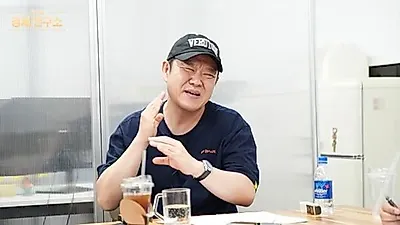
Broadcaster Kim Gu Ra shares his realistic retirement plan, setting a goal of age 60 during a candid conversation with Jo Hye-ryeon.
Broadcaster Kim Gu Ra has specifically mentioned his retirement timing. Unlike the typical statements made by stars who claim they will continue broadcasting for their entire lives, he revealed a realistic plan by setting a personal goal of age 60, stating he will only continue his broadcasting activities after that if opportunities are presented to him. This has drawn attention as a discussion of retirement coming from a veteran entertainer who has been active in the broadcasting industry for a long time.
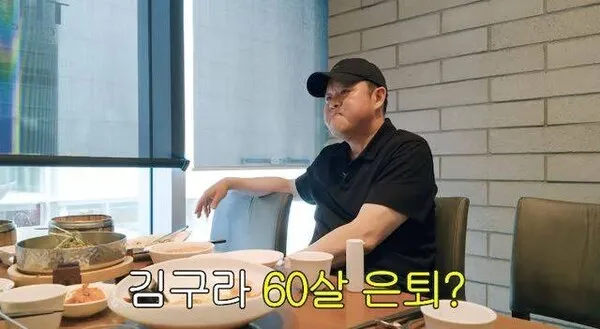
On the 16th, a video titled "Jo Hye-ryeon's Honest Confession: Meeting Kim Gu Ra Alone for the First Time in 30 Years" was released on the YouTube channel 'Jo Hye-ryeon: Jo Hye-ryeon.' Meeting at a restaurant, Kim Gu Ra and Jo Hye-ryeon looked back on their long broadcasting careers while sharing thoughts on their future activities and retirement.
As both individuals have built significant careers in the industry, the conversation reflected concerns about their current positions and how to design their future lives rather than stories from their rookie days.
Jo Hye-ryeon said, "Looking back now, I am so grateful that the two of us are still going strong in 2026." She then expressed confidence in her ability to continue broadcasting for a long time, saying, "I think I can keep doing this for more than 20 years more."
However, Kim Gu Ra's reaction was different. He shook his head at Jo's outlook and replied, "No."
When Jo asked, "But didn't you say you were going to quit now?" Kim Gu Ra clearly stated his retirement goal.
It was that "the goal is 60 years old."
Kim Gu Ra continued, "You always have to think about life after retirement. It's not like 'I'm going to work until I die.'" He explained, "I'll work hard until I'm 60, and after that, I'll do it only if opportunities are given to me."
While the phrasing specifies a retirement timing, it is far from meaning he will leave the broadcasting industry immediately. Rather, it is closer to the perception that he will remain active until a certain point, but after that, he will not view broadcasting as an absolute means of livelihood or a primary goal in his life.
What is noteworthy in Kim's remarks is that he himself rejected the concept of 'working until death.' Unlike general office workers, entertainers do not have a clear institutional standard like a mandatory retirement age. As long as public interest and the necessity of programs are maintained, they can remain active regardless of age, but at the same time, it is a profession constantly exposed to external variables such as appearance opportunities and viewer interest.
In particular, for entertainers, their names and characters themselves often become products. While experience and expertise can be competitive up to a certain age, they are required to adapt when program formats and viewer tastes change. Kim's revelation that he is thinking about life after retirement from a relatively early stage can be seen as a realistic self-design considering these characteristics of broadcasting labor.
Kim Gu Ra began building his unique way of speaking and straightforward character through internet broadcasting and radio in the late 1990s. Since then, he has expanded his field of activity across terrestrial, cable, and general programming channels, including talk shows, variety shows, and programs with current affairs elements.
His characteristic cynical and direct way of speaking was a character that drew mixed reactions, but over a long period of broadcasting, it established itself as a unique hosting style. His ability to quickly grasp the other person's words, point out flaws through questioning, and structure situations has been evaluated as his representative broadcasting asset.
Jo Hye-ryeon is also someone who has spent a similar amount of time in the broadcasting field. Since the 1990s, she has built her own domain through comedy and variety shows in various programs, and has expanded her scope of activity through performances and content production outside of broadcasting.
The fact that these two were discussing 'how much longer they can broadcast' gives this conversation meaning beyond a simple retirement statement. This is because the person in question is directly contemplating their own life cycle, rather than having the end of a celebrity's prime determined by external forces.
It is also difficult to see the number '60' presented by Kim as an immediate retirement date marked on a calendar. While saying, "I'll work hard until I'm 60," he left room for possibility by adding, "I'll do it if opportunities are given to me." Rather than a declaration to completely cut off broadcasting at the age of 60, it is read as a plan to change his way of working and life priorities based on a certain age.
This attitude aligns with the changing perception of 'work' in an aging society. As life expectancy increases, retirement no longer signifies the complete end of labor. Depending on economic needs, social relationships, and personal fulfillment, people may continue to work, but deciding when and for what purpose to work is becoming increasingly important.
In the case of broadcasters, there is often a large gap between the 'age one can work' and the 'age one wants to work.' If popularity is maintained, they can remain active into old age, but conversely, appearance opportunities may decrease regardless of personal will. Kim's comment that he will "do it if opportunities are given to me" accurately reflects the nature of the broadcasting profession.
Another noteworthy point is his attitude toward preparing for life after retirement. If broadcasting becomes one's entire life, letting go of work can create an identity vacuum; however, if one prepares for life after a certain point, the situation changes. Kim's statement that "you always have to think about life after retirement" can be interpreted as the need to separate one's life as a broadcaster from one's life as an individual.
Kim Gu Ra continues to be active through various variety shows and YouTube content, showcasing his signature realistic way of speaking. Given his long career, he often offers blunt analysis regarding relationships with junior broadcasters and changes in the entertainment industry. However, this time, the conversation differs as he spoke about his own future rather than evaluating others or the industry.
For Kim Gu Ra, who has spent nearly 30 years in broadcasting, '60' is not just a number, but a benchmark he has set for himself to determine how long he will continue his career. Unlike Jo, who expressed her will to continue broadcasting for "more than 20 years," Kim is not simply trying to hold on as long as possible, but is considering his life after a certain point.
Ultimately, his remarks are less a definitive declaration of "retiring at 60" and more a reflection that "broadcasting is not everything in life." He intends to work faithfully while opportunities are given, while also preparing for a life beyond the camera.
Unlike an era where the desire to work for a lifetime was considered a virtue, it is now becoming a different way of life to design when one will work and how one will step back. Kim's goal of age 60 is being received as an honest self-confession regarding how to prepare for life after work, moving beyond a simple retirement theory from a veteran entertainer.
Related articles