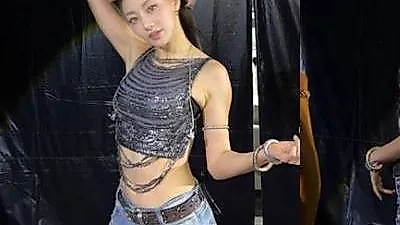
Roo'ra's Kim Ji-hyun: 'The biggest scam was that movie'
Former Roo'ra member Kim Ji-hyun expresses regret over how her role in the film 'Summertime' was perceived by the public.
Kim Ji-hyun, a former member of the group Roo'ra, has shared unexpected behind-the-scenes stories regarding the film 'Summertime.' She explained that while she chose to appear in the film expecting artistic merit, public interest focused on her physical appearance rather than the work itself. Reflecting on how the film remains her most defining image decades later, Kim expressed deep disappointment, even describing the experience as "the biggest scam I've ever been a victim of."
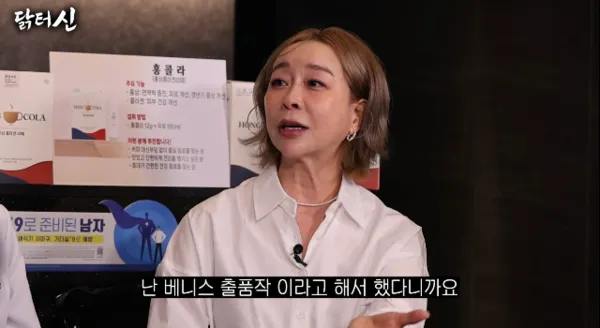
During a video released on the YouTube channel Dakteo-shin on the 16th, Kim discussed her personality, noting she suffers from "congenital gullibility syndrome," before bringing up her past film experience.
When asked if she was the type to easily believe others, Kim explained herself in her characteristic cheerful manner, saying, "My ears are like Dumbo. They flutter easily." She added, "Because of my gullibility, I've been scammed a lot. The biggest scam was the movie."
The film she referred to is 'Summertime,' in which she starred alongside Choi Cheol-ho and Ryu Soo Young. Kim recalled that the decisive factor in choosing the project was not financial compensation, but the promise of its submission to an international film festival.
She explained the situation at the time, saying, "It wasn't about money; they said it would be submitted to the Venice International Film Festival. I read the script, and it was a work filmed when I was at the peak of my career and it was very intense. I acted based on the work, but people didn't look at the work; they only looked at my body."
Kim's remarks touch upon the complex way the appearance of female celebrities was consumed in Korean popular culture from the late 1990s to the early 2000s. After gaining massive recognition as a member of Roo'ra, she transitioned into film, but she recalls that specific scenes and her physical image were imprinted more strongly than her acting or the film's narrative.
'Summertime' drew significant attention at the time due to its provocative subject matter and high-intensity scenes. For Kim, it was an opportunity to expand her career as an actress following her success as a singer, but the image imprinted on the public created a significant gap from her intentions.
When Kim said, "People didn't look at the work; they only looked at my body," she was targeting this exact discrepancy. She decided to appear based on the script's potential, yet the physical image of the actress became the focal point of public consumption rather than the quality of the performance.
During the broadcast, Shin Jung-hwan offered a different perspective. He shared how people around him still remember the film, saying, "Noona, people around me still talk about that."
According to Shin, jokes are still made regarding the work, such as "Ji-hyun Noona was truly the best," "It was a work that truly guided my twisted adolescence correctly," and "Noona, you are truly a benefactor."
It appears that the work Kim finds uncomfortable remains a powerful memory of youth for others. Shin suggested that it might be a positive thing since the current younger generation might also find the film exciting, to which Kim reiterated, "I told you, I did it because they said it was a Venice submission work."
She continued, "That's why it's the most truly infuriating scam," emphasizing the regret she felt regarding her decision to join the project.
An interesting aspect of Kim's recollection is how the name 'Venice International Film Festival' served as a major motivator. Submission to an international festival often signals artistic achievement and the potential for global reach. For Kim, who was already a major pop star, the film represented a chance to build a legitimate acting career rather than just a celebrity cameo.
However, a gap often exists between an actor's intended image and the audience's perception. At the time, with limited internet and social media presence, film information was distributed primarily through posters, trailers, and news reports—environments where provocative scenes or an actor's looks could easily overshadow the film's substance.
Kim's experience serves as a case study of how a single work can fixate a star's image. For an actor, leaving a powerful impression is not always a positive outcome; if a specific image becomes too dominant, it can overshadow future roles and diverse performances.
Kim rose to fame as a key member of Roo'ra during their heyday in the 1990s. The group established themselves as a leading co-ed group with hits such as 'Angel Without Wings,' '3!4!', and 'Lovers.' Kim leveraged that stardom to expand into solo music and acting.
Therefore, her role in 'Summertime' is more than just a singer appearing in a provocative film; it illustrates the complexities of how pop stars transition into acting and how the public interprets those choices.
Ultimately, Kim did not seek to negate her choice entirely, but rather highlighted the disconnect between the direction of the work and how it was consumed. While it was a "work" to her, it was an "image" to the public.
This is why 'Summertime' continues to be linked to Kim's name decades later. In popular culture, an actor's image can outlive the work itself. A single scene, expression, or era of beauty can become a permanent representative image—a common phenomenon in the entertainment industry.
Shin Jung-hwan's comments further demonstrate that memories of a single work are rarely uniform. While Kim views the film through the lens of unmet expectations, for others, it remains a vivid memory of youth. The meaning of a work is ultimately shaped by the intersection of the creator's intent, the audience's reception, and the memories formed over time.
Kim's repeated emphasis on the Venice International Film Festival submission underscores the weight of her original intention. It is a candid reflection on the gap between the era's gaze on star performers and the artistic intentions of the actors themselves.
Related articles