(G)I-DLE's Miyeon facing police investigation over medical law controversy
Police are investigating (G)I-DLE's Miyeon and the YouTube show 'The Evangelist' over suspected illegal medical advertising violations.
The controversy surrounding potential violations of the Medical Service Act in the YouTube content 'The Evangelist,' featuring (G)I-DLE member Miyeon, has escalated to a police investigation. Although the production team clarified that the video is not a medical advertisement and that they received no monetary compensation or production support from the medical institution, the Yongsan-gu Public Health Center has requested an investigation to verify the relationship between the medical institution and the production team.
The Yongsan-gu Public Health Center reportedly requested the police investigation to determine if the medical institution featured in 'The Evangelist' engaged in illegal medical advertising. The center also issued administrative guidance demanding immediate correction regarding the medical institution's use of the term 'specialized hospital' in the video.
The core of this measure is not simply whether the name of a hospital appeared in the video. The investigation is expected to focus on whether the content constitutes medical advertising under the Medical Service Act, the extent to which the medical institution was involved in the planning, filming, or exposure of the video, and whether an economic relationship equivalent to an advertising contract existed.
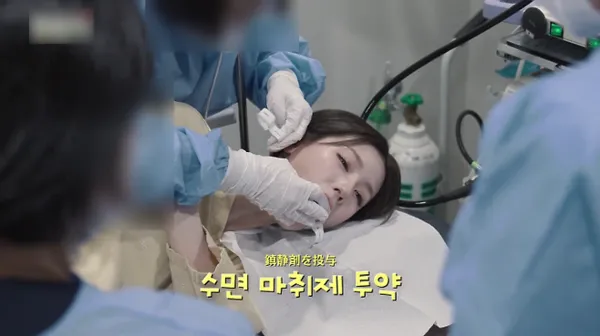
The controversy stemmed from the health checkup segment of 'The Evangelist' released on the 1st. The video captured Miyeon visiting a medical institution located in Yongsan-gu, Seoul, to undergo a health checkup and a sedative gastrointestinal endoscopy.
The issue was not merely the inclusion of scenes showing medical services. Concerns were raised that the video could constitute medical advertising under the Medical Service Act, as information that could identify the medical institution, along with the medical staff and internal facilities, was exposed.
In general variety shows or vlogs, the appearance of a specific business or location is not legally treated the same as medical advertising. A judgment must be made by comprehensively considering specific circumstances, such as the intention and method by which information about a medical institution or medical practice was provided to the public, and whether there was involvement or compensation from the medical institution.
As the controversy erupted, the production team actively denied suspicions that the content was an advertisement. "We have never been commissioned by the medical institution where the filming took place to advertise, promote, or produce this content," the team stated, adding, "We have not received any monetary compensation or economic support."\
The team also maintained that the costs for the health checkup and medical treatment were paid directly by the production team. They explained that they did not produce promotional content by receiving costs or sponsorships from the medical institution, but rather that the performer underwent an actual checkup during the program's filming process.
However, the controversy was not fully resolved even after the production team's explanation and the modification of the video. It has been reported that even in the modified video, certain information that could identify the specific medical institution, such as the name of the institution, endoscopy costs, and the name of the cooperating medical institution, remained exposed without being fully obscured.
Consequently, the Yongsan-gu Public Health Center reportedly requested a police investigation, viewing it as necessary to verify not only the visual exposure issues but also whether a separate relationship existed between the production team and the medical institution.
Another issue raised by the health center is the medical institution's use of the term 'specialized hospital.' A distinction must be made between an institution expressing expertise in a specific field in a general sense and using the specific term 'specialized hospital' as defined by law. The health center has issued administrative guidance demanding corrective measures regarding the use of the name.
Medical advertising regulation is an area where stricter standards are applied than general product or service advertising due to the unique nature of medical services. The purpose is to prevent consumer judgment regarding medical information from being distorted by advertising and to prevent patient inducement or exaggerated advertising caused by excessive competition between medical institutions.
Article 56 of the current Medical Service Act stipulates the subjects and methods of medical advertising, as well as the types of prohibited advertising. In particular, the subjects of medical advertising are restricted, and certain types of expressions regarding medical practices or advertisements that may mislead patients can be subject to regulation.
As the production team denies any advertising or compensation, the key to this investigation lies in confirming the actual circumstances of how the video was produced. It cannot be concluded that a video is an illegal medical advertisement simply because a hospital name or interior appears; conversely, the production team's denial does not automatically exempt the content from the Medical Service Act.
The investigative authorities may confirm whether there were prior consultations with the medical institution, how the filming location and the performer's checkup process were decided, whether the medical institution was involved in the content or editing, and whether any economic support equivalent to advertising or sponsorship fees was provided.
Furthermore, the context in which the medical institution's name, staff, and costs were exposed will be a crucial factor in the judgment, as the overall composition, expression, and the degree of the medical institution's participation must be comprehensively examined.
For a violation of the Medical Service Act to be established, a review of specific facts and legal requirements is necessary. Therefore, at this stage, it is inappropriate to definitively label the production of 'The Evangelist' or Miyeon's appearance as a violation of the law. This investigation request does not mean guilt has been established, but is a procedure for investigative authorities to verify facts and make legal judgments regarding the suspicions raised by the administrative agency.
This case is particularly noteworthy as it illustrates the boundary between content featuring a celebrity's daily life and health checkups and the promotion of medical institutions. While sponsored or advertised content has become common on video platforms like YouTube, the medical field is subject to legal restrictions that differ from general consumer goods. Therefore, even if the production team did not intend to create an advertisement, a separate legal review of the content's substance and production process may be required.
Ultimately, the outcome of the 'The Evangelist' controversy depends on whether the police investigation confirms the actual relationship between the medical institution and the production team and the circumstances of the video's production. As the production team's denial of advertising clashes with the health center's determination that the relationship must be verified, attention is focused on how the police will judge the case based on gathered evidence and statements.
Related articles