Moon Se-yoon honors late Turtleman in emotional tribute
On KBS2's 'Immortal Songs,' Moon Se-yoon stepped in for the late Turtleman, while legends like Park Nam-jung and R.ef shared nostalgic K-pop stories.
Korean popular music has undergone numerous eras of stars and genre experimentation to establish K-pop as a global cultural phenomenon. Legendary singers who lived through those times gathered in one place for a moment to look back at the history of Korean popular music, blending nostalgic music, laughter, and unexpected connections that bridge generations.
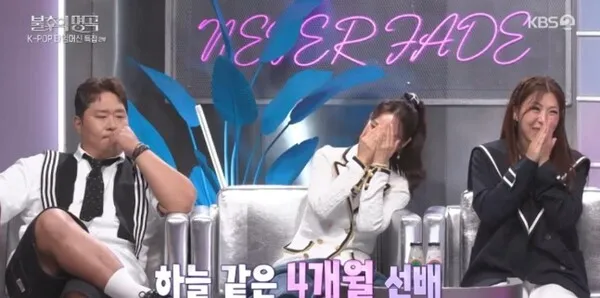
The second part of the 'K-POP Time Machine Special' aired on KBS2's 'Immortal Songs' on the 8th. This broadcast allowed viewers to reconfirm the lineage of Korean popular music, not only through the stages of singers who dominated an era but also through behind-the-scenes stories and the sincere respect shown by junior artists.
In particular, the special transformation of entertainer Moon Se-yoon caught eyes on this day.
Moon Se-yoon took to the stage as a guest member of Turtles, standing in for the late Turtleman. While he could not completely replace Turtleman's unique, cheerful, and bright energy, Moon breathed new life into the stage with his signature friendly charm.
An unexpected connection with Chae Yeon, who played the role of the 'youngest' surrounded by senior singers in last week's broadcast, was also revealed. When Chae Yeon asked Moon about his debut year, it was revealed that both of them debuted in 2003.
However, Moon drew laughter by claiming to be the 'senior' since he debuted a full 4 months earlier. The fact that singers and entertainers who once competed on stage are now standing in positions to reminisce about each other's eras made the passage of time feel real.
Anecdotes showing the landscape of popular music in the 1990s and 2000s also followed.
Noise, who won the 'Gayo Top 10' Golden Cup twice, revealed the harsh reality of the music industry at the time. Since it wasn't an era where every singer was accompanied by professional stylists and makeup teams like now, Noise mentioned they used to feel envious while watching the makeup boxes carried by makeup artists of other singers.
They recalled a fishing bag they had at home and ended up using it instead of a makeup box. While the humble reality existing behind the glamorous stage drew laughter, it was also a scene that showed how different the environment of the popular music industry was compared to today.
R.ef also expressed their characteristic confidence while reminiscing about their past popularity. When the immense popularity of Hong Jong-gu was mentioned, the members naturally continued their self-boasting, asking, "If Hong Jong-gu was that level, how much better must Lee Seong-uk have been?"
In response, MC Kim Jun Hyun playfully cut the conversation short by saying, "Then I'll stop looking into it," inducing laughter.
However, the atmosphere changed at that moment when Turtles' Geumbi expressed her sincere fan heart. Geumbi confessed that during her school years, the popularity was so great that female students were divided between fans of 'Seo Taiji and Boys' and 'R.ef,' and that she was an ardent R.ef fan.
The moment a star of the past meets their fan on a current broadcast reveals that the popular culture of an era is not just a simple memory, but a cultural memory that actually influenced someone's growth process.
The opening of the competition was led by the original dance singer Park Nam-jung.
Park is a representative figure who popularized the concept of a 'dancing singer' in Korean popular music. Hong Kyung-min testified that students who were confident in dancing back then all imitated Park's dance during school retreats, recalling his influence at the time.
Chae Yeon also confessed that she was an ardent fan in her childhood, to the point where she had almost memorized the lyrics of Park's songs.
Yet, another interesting generational connection was made here.
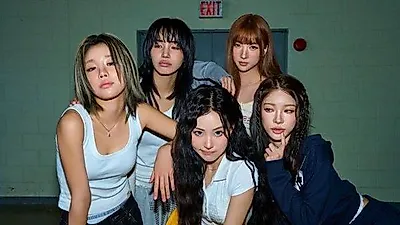
Park revealed that his daughter, Sieun of the group STAYC, also looked up to Chae Yeon as her idol during her childhood. The daughter of Park, who was an idol to the youth of one era, looked up to Chae Yeon, a star of the next generation, and now Chae Yeon is standing on the same stage as the juniors leading today's K-pop.
Hyun Jin-young added to the fun of this scene by expressing cute jealousy, saying, "They are just exchanging compliments with each other."
Ultimately, what 'Immortal Songs' showed that day was not mere retro.
The history of Korean popular music is not a record of disconnected generations, but rather a continuous flow of culture where people listen to each other's music, imitate each other's dances, and become someone's idol to create idols for the next generation.
The prototype of a dance singer created by Park Nam-jung, the sense of 1990s popular music expanded by R.ef and Noise, the popularity and friendliness shown by Turtles, and the lineage extending from Chae Yeon to STAYC's Sieun show that K-pop did not emerge suddenly.
As the world consumes K-pop as a massive cultural industry, tracing the roots of this glamorous present leads back to these names. It is a cycle of seniors who danced and sang on stage, and the fans who admired them, who eventually become stars themselves.
The most impressive scene of the broadcast was not the glamorous performances themselves, but the moments of confirming "who was whose idol."
Just as Chae Yeon was an idol to Park's daughter Sieun, today's K-pop stars will one day become the first stars remembered by someone else.
The timeline of Korean popular music flows in this way. When a generation's idol steps off the stage, the next generation fills the void. And at some point, they stand on the same stage to prove their shared history.
'K-POP Time Machine Special' Part 2 was a cultural timeline that showcased these generational connections through music and laughter.
 Up next
Moon Se Yoon Tells Departing Yoo Seon Ho 'I Love You More Than Kimchi Stew' on 2 Days & 1 Night
More on Moon Se Yoon