
Comedian Kim Won-hyo explains why celebrities often fail in business
Comedian Kim Won-hyo analyzed why celebrities often struggle with business ventures, citing high hourly earnings from entertainment work and a lack of hands-on responsibility as key factors.
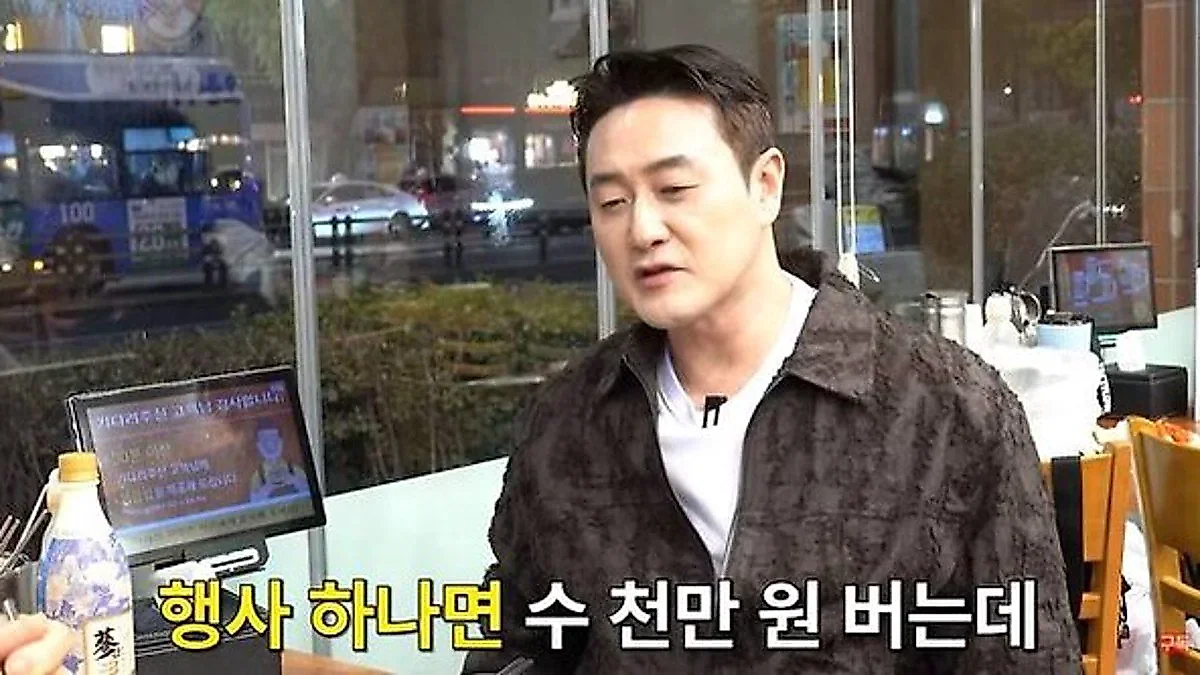
During a YouTube appearance on the 18th, comedian Kim Won-hyo explained that high hourly broadcasting fees and a lack of active involvement often cause celebrities to struggle in retail. Having previously attempted ventures ranging from a kimbap restaurant to selling air from Jirisan Mountain, he noted that many entertainers give up before long-term profits can accumulate.
Comedian Kim Won-hyo has provided a realistic analysis of why celebrities often fail when venturing into business. He noted that for entertainers who can earn high incomes from a single broadcast appearance or event, running a retail business can feel relatively unprofitable. Having experienced various ventures ranging from a kimbap restaurant and an underwear business to selling air from Jirisan Mountain, he highlighted the pitfalls of celebrity-led businesses based on his own trial and error.
On the 18th, a video titled "I poured in 10 years... Kim Won-hyo, who hit it big in business after Gag Concert failed" was released on the YouTube channel 'Business Landlord Kang Ho-dong'. Kim Won-hyo, who recently entered the offline group-purchase market business, spoke candidly about his background in starting the business and the practical challenges celebrities face in retail.
Kim first explained the difference between broadcasting activities and business. "When people meet me, they ask, 'Why aren't you on TV lately?' I want to go, but you can't just say you want to do a broadcast. You have to be called," he said, noting that broadcast appearances cannot be decided by one's own will. In contrast, he added that business differs in that one can start it by taking out loans even if money is scarce. His point was that instead of waiting for broadcast opportunities, he sought a way to generate income himself.
However, Kim did not succeed in business from the start. He revealed his past attempts in various fields, stating, "I tried a kimbap restaurant, an underwear business, and even sold air from Jirisan Mountain." He noted that there was significant trial and error before reaching his current achievements. In particular, he emphasized that "business doesn't work just because you think you're good at it; you have to learn," pointing out that individual ability alone cannot guarantee the success or failure of a business.
The first factor he identified for failure was the high hourly income of celebrities. Kim explained that the income celebrities earn through broadcasts or events is highly efficient when converted into a daily or hourly rate. He cited examples such as singers receiving tens of millions of won for singing a few songs at an event, or hosts receiving millions of won for moderating for one or two hours. His analysis suggests that after becoming accustomed to such income, managing a store every day to earn money may not feel relatively attractive.
Conversely, in retail, high sales do not necessarily translate to high profits. Kim explained that even if monthly sales exceed 100 million won, actual profits may fall short of expectations after paying various expenses such as labor and material costs. He noted that as a business succeeds, personnel and operating costs can also increase. In such situations, he analyzed that celebrities might think, "It's better to do one event than to run a business all month," and attempt to return to broadcasting or event activities.
Kim also emphasized that the profit structure of a business must be viewed from a long-term perspective. While the profit from a single store may be less than what is earned through entertainment activities, the situation can change if profits accumulate by operating multiple stores. He explained that if the profits from multiple stores build up, they could eventually become large enough to rival entertainment income, but pointed out that "people do not reach that stage." He meant that if one only compares immediate profits, they are likely to give up before the business can grow.
The second reason he cited was a style of participation where individuals only lend their names or equity without taking actual responsibility. Kim stated that some participate by providing portrait rights or holding only equity to avoid the risk of business failure. He noted that rather than equity investment itself being the problem, the attitude of not being actively involved in the business can be a limitation. "Even if you only hold equity, you can do well if you participate actively, but that is not easy," he explained.
He further emphasized the importance of a direct investment and responsible attitude, saying, "Even if only 100,000 or 500,000 won of my own money goes in, I work harder because I don't want to waste it." His point was that investing one's own money and time and bearing the results of the business leads to deeper involvement in operations. While the scale of investment does not guarantee success, his conclusion from experience is that it is difficult to achieve results if a business is viewed merely as a side job or an opportunity to utilize fame.
Having gone through various trials and errors from a kimbap restaurant to his current business, Kim Won-hyo's explanation shows that while celebrity fame can be a starting point, it is not a key to guaranteed success. His analysis suggests that the ultimate deciding factors are whether those accustomed to high appearance fees can endure the slow profit structure of retail, look beyond short-term gains toward long-term growth potential, and participate with a sense of responsibility in actual operations.
Oh Seo-yoon reports for Mediafine Global, mainly covering K-Variety and also writing on K-drama, K-pop and K-movie.



Comments 0
Comments are currently disabled.