How Yi Wan-yong transformed from a pro-American elite into a traitor
KBS 1TV traces the dramatic fall of Yi Wan-yong, a pro-American reformer who became Korea's most notorious traitor.
When discussing the end of the Korean Empire, few figures show a trajectory of transformation as extreme as Yi Wan-yong. He was not a person who followed Japan from the very beginning. Rather, he was a representative pro-American reform official who directly experienced American modernization, and a key figure in the Independence Club who advocated for the independent sovereignty of Joseon.

Yet, that very person later became the synonym for a 'traitor' who led the way in Japan's annexation of Joseon.
Why, then, did Yi Wan-yong defect? Explaining his actions simply by saying he was a 'pro-Japanese collaborator' makes it difficult to fully account for his deeds. Following his life leads to a much more uncomfortable question: how does a political elite of an era corrupt when they prioritize their own power and survival over the nation and its people?
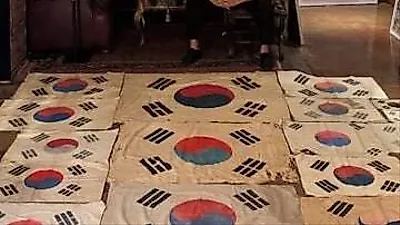
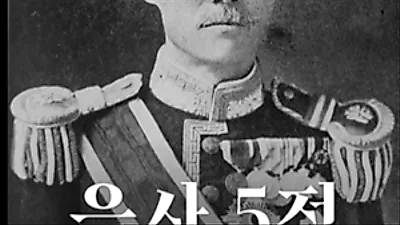
In the first part of the KBS 1TV 'History Special - Time Traveler' Liberation Day special, titled 'The Choice of Traitor Yi Wan-yong,' airing on the 16th at 9:30 PM, the program will trace Yi Wan-yong's dramatic transformation through newly identified historical materials and records.
◆ An Enlightenment Official Who Admired America: How Did He Become a 'Pro-Japanese Traitor'?
Yi Wan-yong was not originally pro-Japanese.
Dispatched to the United States in 1887 to facilitate Emperor Gojong's diplomacy with America, he witnessed firsthand the development of the United States, which was emerging as a new global power at the time. He subsequently grew into a leading pro-American reform official and was evaluated as one of the top ministers in the *Dongnip Sinmun* (The Independent).
While serving as a key executive of the Independence Club, he also actively participated in the construction of Dongnimmun (Independence Gate). He is also known to have been the official who donated the largest amount among the bureaucrats at the time.
Because of this, rumors have constantly surfaced that the calligraphy on the plaque of Dongnimmun was written by Yi Wan-yong. While the controversy surrounding the actual author of the plaque requires separate historical verification, the fact that Yi Wan-yong was once a person who advocated for the independence and enlightenment of Joseon makes his subsequent actions even more paradoxical.
How did a man who claimed he would protect Joseon end up leading the way in handing it over to Japan?
◆ 1904: The Russo-Japanese War Changed His Choice
The decisive turning point in Yi Wan-yong's transformation was the Russo-Japanese War in 1904.
As the international situation began to shift in favor of Japan, Yi Wan-yong appears to have judged Japan as the new power of reality. The production team stated they confirmed circumstances in 1930s newspaper articles where Yi Wan-yong inquired about his future position with the Japanese side.
During the height of the Russo-Japanese War in 1904, he reportedly sent an acquaintance to Tokyo to consult a high-ranking Japanese official with whom he had a past connection regarding his political future.
This can be interpreted less as a simple passive defection and more as a political calculation to preemptively ride the wave of the new power.
Later, Yi Wan-yong explained his actions through the 'Theory of Adaptation' (Byeon-yeok-ron). It was a logic that one must behave in accordance with the trends of the world when times change.
However, there is a fundamental problem here. Adapting to the changing times and riding the victory of the strong to hand over a weak nation are two entirely different matters.
This is also why Yi Wan-yong's 'realism' cannot be distinguished from opportunism.
◆ Did He Propose the Deposition of Gojong Before the Hague Envoys?
What is particularly noteworthy in this broadcast is the relationship between Yi Wan-yong and Gojong.
Typically, the historical narrative familiar to us is that Japan pushed for the forced abdication of Gojong following the Hague Secret Emissary incident in 1907.
However, the production team explains that records from the Japanese Legation in Korea contain circumstances that could overturn this.
It is recorded that in late 1906, about half a year before the Hague Secret Emissary incident occurred, Yi Wan-yong visited the Japanese military commander Hasegawa and was the first to propose the deposition of Gojong.
The implications of this record are significant. It means that a bureaucrat who once held the trust of Gojong had moved beyond merely accepting Japanese demands to a position where he was proactively proposing the political outcomes Japan desired.
Ultimately, Yi Wan-yong's defection can be seen not as a single moment of choice, but as a long political process of moving his position wherever the center of power shifted.
◆ Even After the Nation Vanished, His Daily Life Was Peaceful
The forced annexation of Korea in 1910 marked the end of the Korean Empire. However, the recently revealed 1911 diary of Yi Wan-yong, titled 'Ildangseongon Ilgi,' presents an even more bitter scene. In the diary he kept for about six months immediately following the annexation, rather than expressions of grief for the fallen nation or political anguish, much of the content consists of personal daily life, such as dinners with acquaintances, appreciation of calligraphy and paintings, and inspections of land.
While the nation disappeared, his daily life did not collapse. On the contrary, his wealth grew immensely. According to records from the 1920s, Yi was one of the wealthiest individuals in Joseon, owning land roughly five times the size of Yeouido.
At this point, the reason why Yi's defection cannot be viewed simply as a change in political belief becomes clear: he completely decoupled the fate of the nation from his own.
◆ The True Tragedy of Yi Wan-yong Is Not Just That He Was a 'Villain'
If we reduce Yi Wan-yong to a mere monster in history, we may miss his true historical significance. He was not an ignorant man. He was an elite with the best education and international experience of his time; he knew what reform and modernization for Joseon meant, and he understood how international affairs moved.
Nevertheless, he ultimately chose the direction of power that favored him over the values he once believed in.
Thus, the life of Yi Wan-yong is not merely a history of pro-Japanese collaboration. It is an example of how dangerous it can be when knowledge and intellect sever ties with moral responsibility.
It is not difficult to call his choice 'realism.' However, looking at reality coldly is different from entrusting one's conscience to the powerful. This connects to the concept of the 'banality of evil' later proposed by historian Hannah Arendt. Great evil does not always appear in the form of a mad monster. Sometimes, it is realized through ordinary humans who calculate their own interests, analyze situations, and justify their choices with rational language.
This is why Yi Wan-yong is remembered to this day. He was not a man who failed to read the times, but one who read them too cleverly and used that insight for his own benefit rather than for the community.
◆ Why We Revisit Yi Wan-yong Ahead of Liberation Day
On December 22, 1909, activist Yi Jae-myeong attacked Yi Wan-yong in the heart of Myeong-dong. This was only eight months before the forced annexation of Korea. Yi's mission failed, and Yi Wan-yong survived.
However, history remembered their lives in entirely different directions. One man risked his life to protect his country, while the other participated in the process of handing over national sovereignty to Japan to preserve his own power.
Therefore, what we should focus on in the life of Yi Wan-yong is not simply the conclusion that "he was a traitor." The more important question is this: What will we choose in the face of massive historical changes?
Will we quickly calculate where power is moving and ride that wave? Or will we choose the principles we must uphold, even if it means facing immediate disadvantage and danger?
Yi Wan-yong chose the former. That choice brought him immense wealth and power, but even after more than 100 years, it has ensured his name remains inseparable from the word 'treason.'
History does not merely record what a person gained; it also records what they threw away to get it. This is why the history of Yi Wan-yong, brought back to our attention ahead of Liberation Day, is so unsettling. His choice happened over a century ago, but the question of how much one can compromise their principles in the face of power and interest remains a question of the present.
 Up next
Song Il-kook: Descendants of independence activists struggle to make a living
Related articles