Lee Ho-sun: "A Daughter Nursed Her Mother Through Bodily Care, but the Entire Estate Went to the Son"
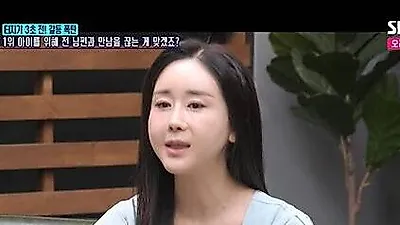
On tvN STORY's "Lee Ho-sun Counseling Center," professor Lee Ho-sun warned about praise addiction and explained how childhood attachment can shape adult lives.
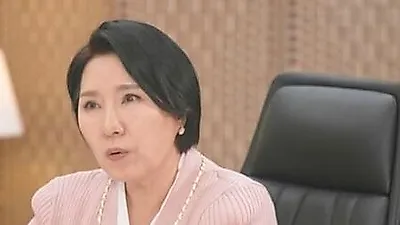
On June 2, Lee Ho-sun, a professor at Soongsil Cyber University, appeared on tvN STORY's "Lee Ho-sun Counseling Center" and warned viewers about the risks of an excessive need for approval, which she described as praise addiction. During the broadcast, she also offered guidance on healthier ways for parents to praise children.
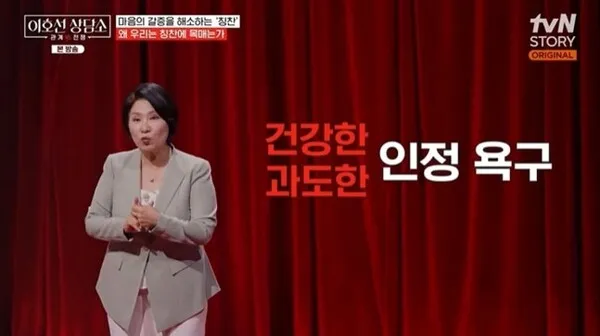
Lee began by saying that everyone has a desire to be recognized. She then drew a clear line between a healthy need for recognition and an excessive one, explaining that the latter can become praise addiction. According to Lee, an excessive need for approval means a state in which a person feels they cannot function unless they are recognized by others, and in which the standards for the entire world are set not by the self but by other people.
She went on to introduce attachment theory, saying that the key to the theory is to look at how a person learned to form relationships with their parents during childhood. Lee explained that people who fall into praise addiction often carry memories such as, "If I did not show my very best, my parents pushed me away," or, "My parents recognized and embraced me only when I did well." She said that even after becoming adults, people with those memories may continue living by the same pattern, leaving their lives feeling as if they are running every day without rest.
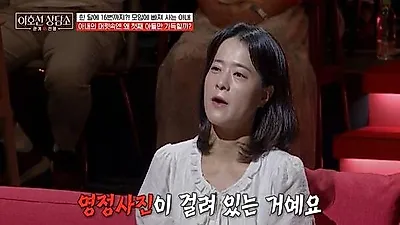
Lee then shared the story of a friend who had been hit by her parents, her older brother, and her younger brother, and who even ran away from home after her family refused to pay her school expenses. The friend eventually left home at a young age, earned money through part-time work, graduated from university, and later got married.
Years later, that same friend cared for her ailing mother and even handled the intimate bodily care involved in nursing her. However, before the mother died, she wrote a will that left no inheritance at all to her daughter. The case was presented as an example in which the daughter had provided devoted care, yet the mother's estate was left to the son instead.
Related articles