Lee Jang-won's grandfather shares memories of colonial Korea
On SBS's 'Same Bed, Different Dreams 2', Lee Jang-won's 100-year-old grandfather recounts life under Japanese rule and the joy of liberation.
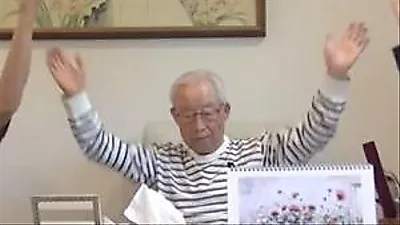
Singer Lee Jang-won's 100-year-old grandfather, Lee Hyun-seop, has shared firsthand testimony regarding the colonial education he experienced and the forced mobilization of Korean youths during the Japanese occupation. His voice, spanning a century, breathes life into textbook history through personal memory, vividly illustrating the social landscape of the colonial era and the period surrounding Korea's liberation.
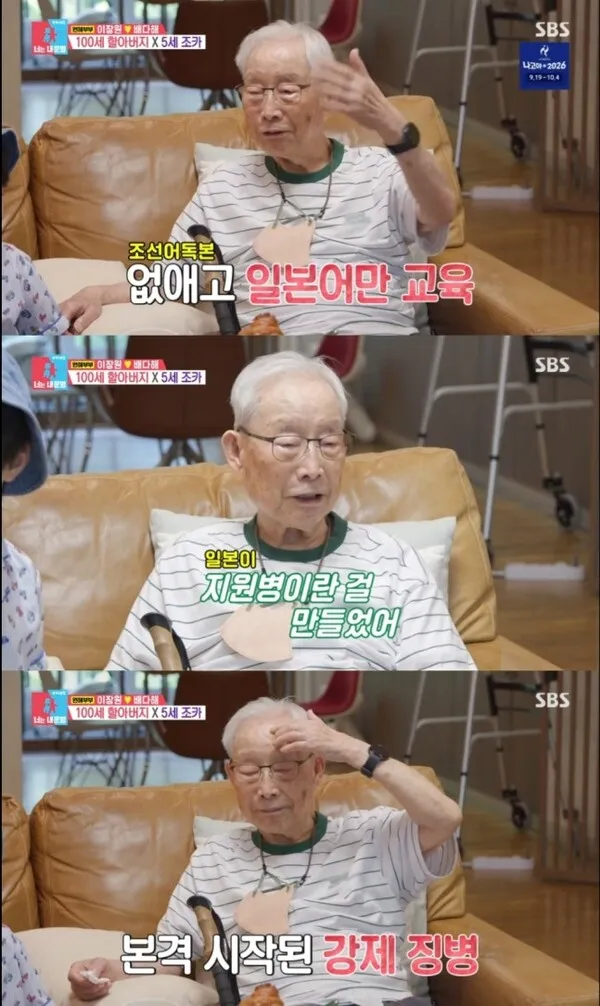
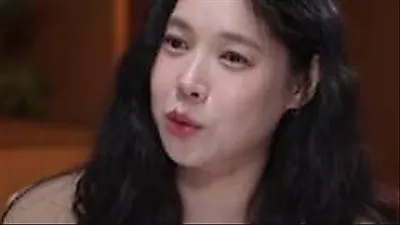
In the episode of SBS 'Same Bed, Different Dreams 2: You Are My Destiny' broadcast on the 1st, Lee Jang-won and Bae Da-hae revealed their daily lives living with the centenarian, Lee. Born in 1926, Lee has lived through the major upheavals of modern Korean history, from the Japanese colonial period to liberation, the Korean War, and rapid industrialization.
Lee began his account with the colonial education he underwent as a child. He recalled, "I entered the first grade in 1933. Because the Korean language reader was removed, we learned only in Japanese. Even our surnames were changed."
Colonial education extended far beyond changing the language of instruction. The Government-General of Korea pursued policies to weaken Korean linguistic and cultural identity by expanding the use of Japanese and forcing the adoption of Japanese-style names. Lee's testimony serves as a significant personal record of how these systemic policies were felt in the daily lives of young students at the time.
He also provided detailed accounts of how Korean youths were mobilized for war.
"Japan tried to send Korean youths to war. There was a volunteer system. When the volunteer system wasn't enough, they eventually took Koreans through conscription. Once they turned 20, they were forcibly conscripted into the military," he remembered.
In reality, as the fronts expanded due to the Second Sino-Japanese War and the Pacific War, Imperial Japan intensified the military mobilization of Koreans. The Korean volunteer system was implemented in 1938, followed by the successive introduction of student volunteers and conscription. From 1944, conscription was fully applied to Koreans, leading to the mobilization of youths from colonial Korea as troops for the Japanese military.
A particularly poignant part of Lee's testimony concerns his memories of liberation on August 15, 1945. He noted that at the time, "It was uncertain how liberation would happen." The first news he heard was the surrender of the Japanese military.
However, as time passed, the atmosphere in the streets shifted completely. He recalled, "After a day or two, everyone came out to the city and shouted manse in joy. I felt that something was changing."
While the liberation in 1945 was a massive historical event, for the individuals on the ground, it was an uncertain moment where the future remained unclear. Lee's memory captures both the joy of liberation and the vague uncertainty of a new era.
His testimony also touched upon the political chaos following liberation. He recalled, "The Committee for the Preparation of Korean Independence was formed. Then Kim Il-sung appeared and said that since he liberated Joseon, he would make even South Joseon a good country for the Communist Party."
As this is the personal memory of a 100-year-old witness, it is best viewed as a window into the era as remembered by a generation that lived through that turbulent period, rather than a definitive political record. Immediately after liberation, political forces on the Korean Peninsula were rapidly reorganized, and following the entry of US and Soviet troops, the political division between North and South quickly solidified.
For Lee, who also lived through the Korean War, 20th-century Korean history was not merely an object of study, but his life itself. His journey—from a young student under colonial rule to a youth witnessing liberation, and finally a man facing war and division—encapsulates the fluctuations of modern Korean history.
What is particularly noteworthy in this broadcast is how the past has entered the present through individual memory. For Lee Jang-won and Bae Da-hae, his grandfather's story is more than just family history; it is an oral record that allows them to understand an era they did not experience directly.
Lee Jang-won has connected with the public not only through his music but also by sharing his family life on variety programs. In addition to his unique background as a singer from KAIST and his musical identity with the band Peppertones, he has shown a more human side through his marriage to Bae Da-hae.
Ultimately, Lee's testimony demonstrates how historical memory is preserved through intergenerational dialogue. Within the memories of a man who has lived 100 years, the massive events of modern Korean history—colonial rule, forced mobilization, liberation, and division—are etched in a personal language.
History is not preserved solely through archives and statistics. The childhood memories and reminiscences shared with family serve as vital oral histories for understanding an era. This is why Lee's testimony resonates so deeply with viewers; the classrooms of the 1930s and the streets of 1945, preserved in the mind of a centenarian, bring a distant history into the present.
Related articles