Oh Ha-young's mother's past interview resurfaces amid family controversy
Following actress Oh Ha-young's apology over her great-grandfather's pro-Japanese history, her mother Lee Mi-sook's past comments on wealth are trending.
As actress Oh Ha-young apologizes for the controversy surrounding her great-grandfather An Sang-ho's pro-Japanese activities, her mother Lee Mi-sook's past interview as the CEO of Coremed is once again drawing attention online.

Recently, content from a 2011 interview Lee conducted with Digital Times has been spreading across several online communities. During that interview, Lee shared her views on wealth management and business quite candidly.
At the time, Lee stated, “Living life has taught me that money isn't everything,” adding, “In the past, I was tempted to earn a lot of money, but not anymore.”
Recalling her experience of keeping cash at home, she said, “I once kept 100 million won in cash in a safe for a long time. Having cash in the safe made me feel full [satisfied] for no reason.” She added, “The next time, I put in 200 million won, and from then on, there wasn't much difference.”
She further remarked, “I don't think there is a need to have that much money. Being able to live a somewhat comfortable life is enough,” and “I no longer dream of hitting the jackpot. I am not even that insistent on a KOSDAQ listing.”
Lee's academic background and career are also being re-examined. A nursing major, she is known to have studied industrial design abroad for about five years during the 1970s. After returning to Korea, she lectured on industrial design theory at institutions such as Kookmin University for over 15 years, served as an editor-in-chief for medical journals and an administrative director at general hospitals, and eventually led Coremed, a medical and IT convergence company.
Due to the historical context of the 1970s, some netizens are expressing interest in her long-term studies abroad and the economic conditions of that era. They noted that during that time, restrictions on studying abroad in Korea were greater than they are now, and considering foreign exchange circumstances and education costs, continuing studies abroad for a long period was not as common as it is today.
Consequently, some online reactions included comments such as, “If she was able to study abroad for five years back then, didn't she have a significant economic foundation?” or “I am curious about how the family's wealth was formed.”
However, the interview alone does not provide evidence to confirm who covered Lee's study abroad expenses or the exact economic status and wealth-building process of her family at the time. Therefore, it is necessary to be cautious about concluding the scale of the family's wealth based solely on the cash holdings or the history of studying abroad mentioned in the past interview.
This resurgence in attention is a result of the recent controversy surrounding the family history of her daughter, Oh Ha-young.
Through various broadcasts and interviews, Oh has previously introduced herself as being from a “fourth-generation doctor family.” In particular, she expressed pride in her family history regarding her great-grandfather An Sang-ho, describing him as a doctor who studied Western medicine in Japan and practiced in Hanyang.
However, controversy erupted when it was revealed that An Sang-ho's name appeared on the list of council members for the Daejeong Chinmokhoe, a pro-Japanese organization, in 1916 during the Japanese colonial period.
Additionally, it was revealed that Oh's grandfather, An Bu-ho, previously worked at the National Sorokdo Hospital. While his period of employment overlaps with a time when human rights violations—such as forced isolation, sterilization, and abortions—occurred against Hansen's disease patients, there has been no confirmation to date that An Bu-ho was directly involved in such actions.
As the controversy spread, Oh's side initially denied the allegations but later changed their stance and apologized. Oh's father also explained that he believed his father-in-law had assisted Prince Ui, who showed anti-Japanese activities.
However, during this process, another controversy arose when the forced annexation of the Korean Empire by Imperial Japan was referred to as the "Korea-Japan Annexation."
Ultimately, Oh expressed her position through a handwritten apology on the 12th.
She admitted that she had only understood her great-grandfather's life fragmentarily based on stories told by her family and had spoken of it as a point of family pride in various places. She also expressed her apologies as a descendant, stating that she learned of her great-grandfather's pro-Japanese activities while personally verifying related materials.
Since then, the controversy surrounding Oh's great-grandfather has expanded to re-examine the past histories of her grandfather and father, and now even the past interview of her mother.
However, the past actions and statements of each family member must be judged by individual fact-checking.
 Up next
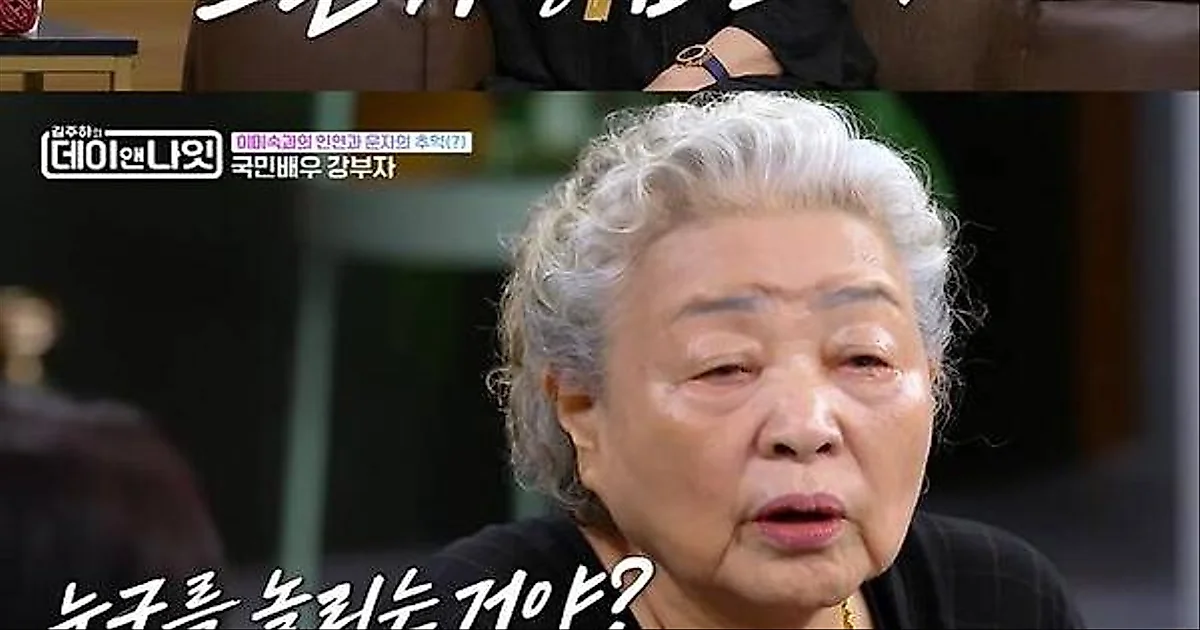
Kang Bu-ja offended by Lee Mi-sook's text: 'Respect elders'
Related articles