Seo Jang-hoon reveals discovering Roo'ra plagiarism controversy in the US
During 'Knowing Bros', Seo Jang-hoon shared how he first encountered the plagiarism scandal surrounding Roo'ra's hit 'Cheonsang Yu-ae' while in the US.
Seo Jang-hoon, who transitioned from basketball star to variety entertainer, revealed an unexpected anecdote about how he first encountered the plagiarism controversy surrounding Roo'ra's hit song 'Cheonsang Yu-ae' while living abroad. As he shared his experience of hearing the original Japanese song directly, former Roo'ra member Lee Sang-min reacted with a mix of flustered embarrassment and bittersweet nostalgia, bringing both laughter and a sense of melancholy to the studio.
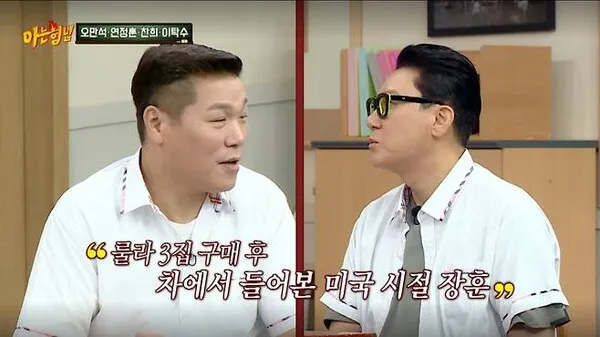
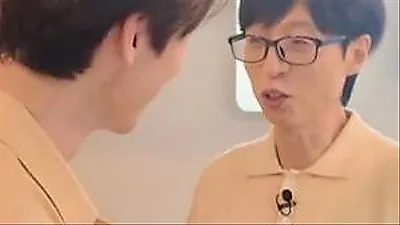
In the 538th episode of the JTBC variety show 'Knowing Bros' aired on the 1st, actors Oh Man-seok, Yeon Jung-hoon, SF9 Chan-hee, and Lee Tak-soo appeared to share various stories. The broadcast drew significant interest as the cast members reminisced about their school days, eventually summoning an unexpected music industry scandal from the 1990s.
During the episode, Lee Sang-min led the conversation by asking the guests, "To be honest, were you someone who was somewhat popular during your school days?"
Oh Man-seok replied, "I was popular until the 6th grade in elementary school," adding, "But in middle and high school, I attended all-boys schools..." while Yeon Jung-hoon recalled his school days spent in the United States.
Yeon reminisced, "My joy was renting videos in Koreatown," and said, "Watching Korean dramas made me want to go to Korea." He continued, "If I had gone to college in Korea, I had a romanticized vision of walking while sipping vending machine coffee and bumping into someone," which drew laughter.
The atmosphere shifted abruptly when Seo brought up his own experience staying in the United States.
Seo said, "I also rented videos at a Korean supermarket when I was briefly in the US in 1995," adding, "I bought a Roo'ra album back then."
He then turned to Lee Sang-min and asked a pointed question.
"Which album was 'Cheonsang Yu-ae' on?"
Caught off guard by the sudden trip down memory lane, Lee could not hide his flustered expression. He burst into laughter, asking, "Why did it have to be then?", but Seo continued to explain the situation he had experienced.
Seo said, "You have to understand my heart. I was listening to the song in a car, and the song was so good." He continued, "A Japanese older brother I was living with heard the song and told me, 'There is a similar song,' and played the original for me."
He added, "I listened to it myself, and it was exactly the same."
In response, Lee finally seemed to resign himself and admitted, "It's not similar. It's identical," turning the studio into a sea of laughter.
Seo recalled, "He played it for me directly, and it was truly identical. And then, as if by magic, a few days later, Lee Sang-min appeared in the newspapers due to the plagiarism controversy."
As it was an incident that shook the domestic music industry at the time, it was a memory Lee could not simply laugh off.
'Cheonsang Yu-ae', the title track of Roo'ra's 3rd album released in 1995, swept the music industry with massive popularity immediately after its release, but it became the center of controversy when allegations were raised that it was similar to a song by the Japanese group NINJA.
Although Roo'ra was at the peak of their popularity, they suffered a major blow, including suspending broadcasting activities following the controversy. In particular, Lee had to endure public criticism and misunderstanding regarding the song, and he has since opened up about his mental distress during that time on various broadcasts.
On the show, Lee mentioned the situation, saying, "In the end, we said we would recall all the albums." However, he noted, "900,000 copies could not be recalled," highlighting the massive scale of the album's sales and the impact of the incident.
An interesting point is that Seo experienced the core of the controversy first in the United States, and through a Japanese acquaintance, rather than in Korea. Since it was an era before the internet was as developed as it is now, his experience of accidentally encountering the original song abroad feels even more unique.
Beyond simple revelations, the broadcast evoked the growing pains of the Korean popular music industry in the 1990s. It was an incident that reflected the evolving awareness of copyright and creative ethics during the era when Korean music was first beginning to interact more deeply with overseas music before K-pop expanded to the global stage.
Roo'ra's 'Cheonsang Yu-ae' once dominated an era. Seo's old memory and Lee's honest reaction summoned the intense moments of the music industry from 30 years ago, leaving viewers with both laughter and a heavy lingering impression.
Related articles