BTS Jimin honors Korean Liberation Day with Taegukgi-inspired styling
BTS Jimin evokes Korean identity through Taegukgi-inspired stage outfits during the 'Arirang' world tour in Arlington, Texas.
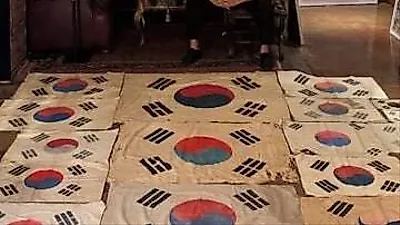
BTS Jimin brought the symbolism of the Taegukgi to the stage in the heart of the United States through his performance attire. The global star is receiving an enthusiastic response from fans for showcasing styling reminiscent of the Taeguk pattern, timed with the historical Korean commemoration of Liberation Day. Beyond mere fashion, this move draws significant attention as a natural way to evoke the history of his birth country on the world stage.
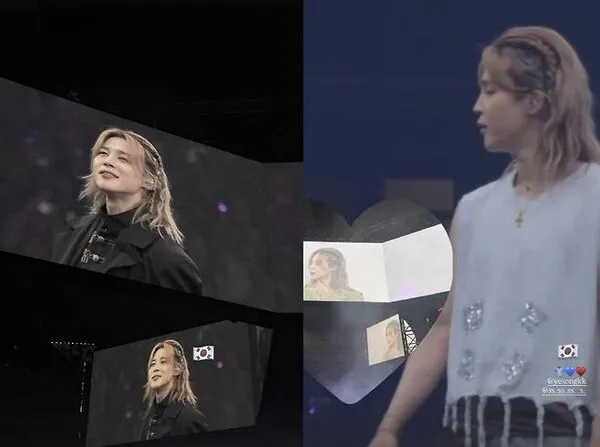
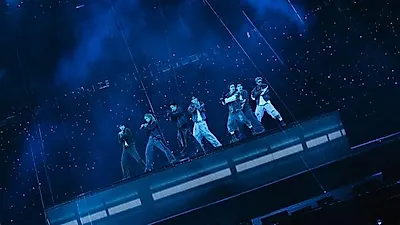
On the 15th (local time), Jimin took the stage for the BTS World Tour 'Arirang' held in Arlington, Texas. On this day, Jimin used red and blue hairpieces to create points reminiscent of the Taeguk pattern, while wearing an outfit designed to evoke the Geon-gon-gam-ri (trigrams) of the Taegukgi.
Coincidentally, this day was Korea's Liberation Day. It is a day that commemorates the liberation from Japanese colonial rule on August 15, 1945, and serves as a symbolic national holiday to reflect on independence and national identity in the history of the Republic of Korea.
This scene feels even more special given that Jimin's performance took place in the United States. While he did not directly wave the Taegukgi in front of the numerous local spectators, he visually revealed Korean symbols through his body and stage costume.
A staff member accompanying the BTS world tour also released photos and videos of Jimin along with the Taegukgi emoji. In particular, by emphasizing that his hairstyle and outfit carried the meaning of commemorating the national holiday of the Republic of Korea, Jimin's intention for the stage became even more clearly known.
This is not the first time Jimin has showcased 'Taegukgi fashion.'
Last year, Jimin also revealed himself wearing a hat with a Taegukgi patch to commemorate the 80th anniversary of Liberation. It shows that the global star, who engages in frequent overseas activities, has been expressing his way of not forgetting Korea's historical commemorations.
The reason this move carries such significance is that BTS is no longer a group consumed only within Korea. Their stages are delivered to audiences around the world, and every element—from their clothing and language to their performance—is interpreted as being connected to the nation of Korea.
In particular, it is noteworthy that the name of the world tour itself, 'Arirang,' carries Korean sentiment. 'Arirang' is a folk song that has contained the emotions and lives of Koreans for a long time and is a representative cultural code symbolizing Korean culture. The fact that BTS, who put 'Arirang' as their world tour title, chose an outfit reminiscent of the Taegukgi imagery on Liberation Day naturally evokes interest in Korean identity.
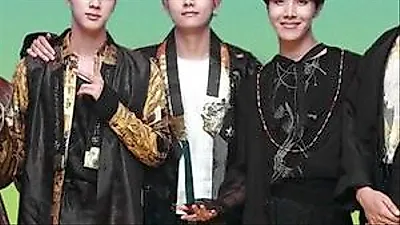
Since their debut, BTS has been melting Korean elements into their music and performances. They have utilized outfits that modernly reinterpret *hanbok* on stage and continued attempts to break the boundaries between traditional music and modern popular music. The very process of building a global fandom while singing in Korean was a path different from the existing formulas of the global pop market.
Such moves also hold symbolic meaning in the process of K-pop's globalization. While it was common in the past for Asian singers to adapt themselves to local languages and cultures to enter the global market, BTS instead drew empathy from global fans by putting the Korean language and Korean identity at the forefront.
Therefore, it is difficult to explain Jimin's choice of styling reminiscent of the Taegukgi at a US concert venue on Liberation Day simply as 'patriotic fashion.' This is because it is an act of naturally revealing his cultural roots rather than hiding them in the United States, one of the centers of global culture.
Furthermore, as recent controversies surrounding historical awareness and pro-Japanese sentiments have surfaced in the entertainment industry, Jimin's recent move is garnering even more attention. As debates surrounding the historical views of celebrities grow, even a small action by a famous person takes on significant symbolism for the public.
Of course, there is no need to excessively overinterpret the historical meaning based on a single outfit. However, given that the date of Liberation Day, the location of the US, and the styling reminiscent of the Taegukgi's symbolism all coincided, it is natural for fans to perceive this as something special.
Beyond Jimin's individual popularity, the global influence of BTS also expands the meaning of this scene.
BTS continues to achieve steady success in the global music market with their 5th studio album 'Arirang.' They have shown a long-term presence, such as recording 21 consecutive weeks on the UK Official Albums Chart 'Official Albums Top 100.'
BTS's influence is also substantial in the United States. In a survey conducted by the global music data company Luminate on US music consumers, BTS's local recognition was recorded at 42%. This is a significantly high figure compared to the average recognition of 24% for all artists.
As a member of BTS has already become a familiar name to the American public, Jimin bringing Korean symbols to the stage on Liberation Day can itself become a cultural message.
Historical memory is not always delivered through grand speeches or official declarations. Sometimes, it spreads more widely through everyday cultural expressions, such as a single photograph, a piece of clothing, or a song.
Jimin's recent performance is exactly such an example.
A Korean singer standing before numerous spectators at a large concert venue in Texas, Texas, appeared on stage with a look reminiscent of the colors and patterns of the Taegukgi. While these symbols are familiar to Korean fans, they may be unfamiliar images to local audiences. That very difference serves as an opportunity to introduce Korean history and culture.
Furthermore, the BTS world tour 'Arirang' will continue. As BTS's performances, based on Korean language, music, and sentiment, continue at concert venues around the world, the small cultural choices made by members including Jimin are likely to garner international attention.
Ultimately, the reason Jimin's Taegukgi fashion is special is not because it is grandiose. Rather, it is because a global star has not forgotten where he came from and has revealed that fact in the most natural way.
On Liberation Day, on a stage in Arlington, Texas, Jimin carried the colors and patterns of the Taegukgi. The way he showcases Korean history and identity on the world stage is no longer possible only through grand slogans, but through music, fashion, and the choices of a single individual.
While BTS sings 'Arirang' to the world, Jimin quietly etched the memory of the Taegukgi onto his stage. This scene remains a symbolic moment showing how a K-pop star operating across borders can share their cultural roots with the world.
Related articles