Roo'ra's Chae Ri Na opens up about side effects of surgery from 20 years ago
Singer Chae Ri Na shares her struggle with facial asymmetry and the psychological toll caused by complications from a double eyelid surgery performed two decades ago.
Chae Ri Na, a singer from the group Roo'ra, has candidly shared the long-term stress she has endured due to facial asymmetry and side effects following a double eyelid surgery performed over 20 years ago. For someone who has spent decades on stage and in front of cameras, the facial asymmetry was more than just a cosmetic concern; it was an issue that shook her professional confidence.

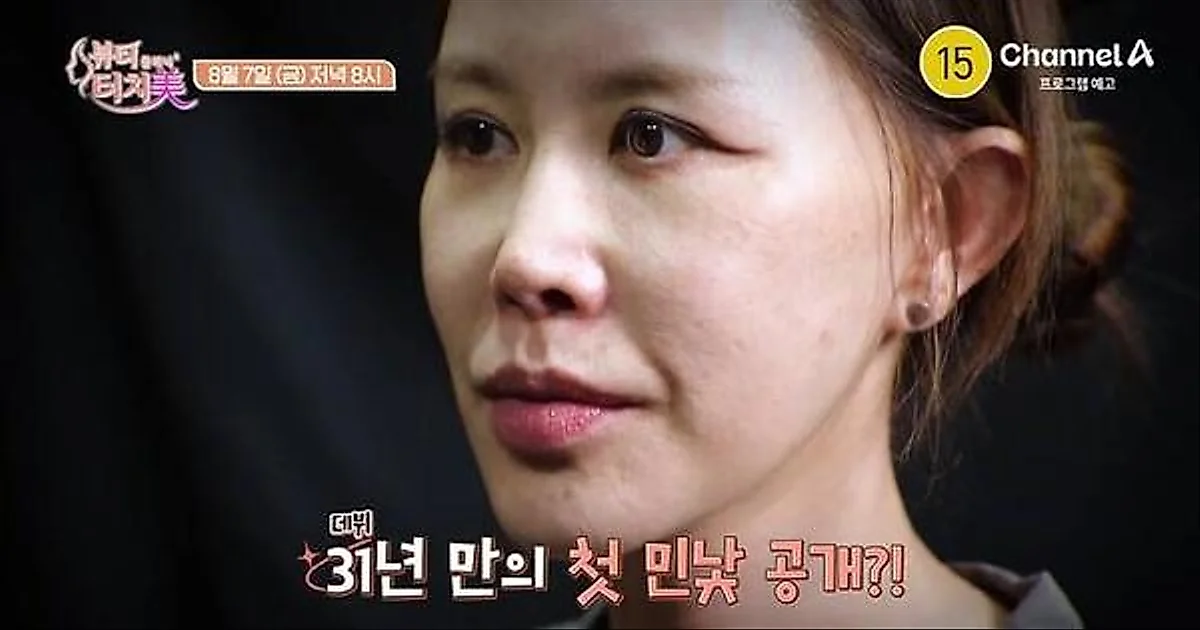
On the July 7 broadcast of Channel A's 'Beauty Clinic Touch Me,' Chae sought expert help to resolve her concerns regarding her skin and facial asymmetry.
During the episode, Chae revealed her daily skincare habits, disclosing somewhat aggressive methods such as rubbing her skin so hard after cleansing that her nose turns red, and using an extractor whenever she notices sebum.
There was also a unique story behind her habit of plucking her eyebrows.
“After the double eyelid surgery went wrong, I started plucking my lower eyebrows because I wanted my eyes to sag quickly,” Chae explained. “Since then, if I see even a single hair, I have to pluck it.”
For her, the double eyelid surgery was not merely a distant cosmetic procedure. It was an experience that influenced her perception of her face and her confidence for over 20 years.
As a result of clinical tests, Chae's skin age, though she is 48 years old, was measured at 52. Pigmentation had appeared due to frequent sebum extraction, and her pores were also enlarged.
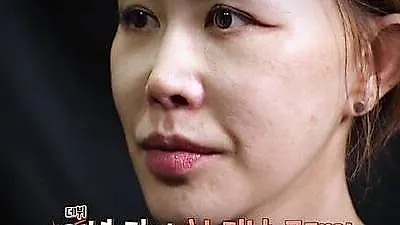
However, the part Chae was most seriously concerned about was not her skin, but the asymmetry of her eyes and face.
“I had double eyelid surgery more than 20 years ago, and the side effects affected one eye,” Chae confessed. “A sensation of muscles pulling inside the eye occurred. I think contracture has set in.”
She continued, “My eyes look asymmetrical. I hate looking straight into the camera. It is a huge stress.”
For Chae, who was more confident than anyone on stage, facing the camera head-on was actually a space she wanted to avoid.
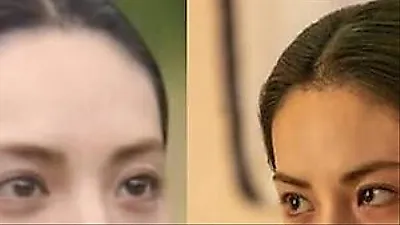
An expert's analysis also confirmed the asymmetry. Discrepancies were observed throughout her face, such as different distances between the eyebrows and eyelids, varying heights of the double eyelids, and a left cheek that sagged more than the right.
For celebrities who must face the camera for long periods, minute facial differences can be perceived much more sensitively than by the general public. This is because numerous lenses capture their faces at every moment, forcing them to repeatedly view their own appearance on screen.
Ultimately, instead of surgical correction, Chae received a customized solution using collagen injections and lifting fillers.
After completing four weeks of treatment, Chae reappeared in the studio, receiving applause for her transformed appearance. Above all, what was most noticeable in her expression was her psychological ease rather than just the change in her looks.
“I am not afraid of the camera anymore,” Chae expressed.
The person who once avoided the camera due to the traces of a surgery from two decades ago has finally regained the ability to look straight into the lens.
Chae's confession also demonstrates that concerns about appearance cannot be explained simply by a desire to 'become pretty.' For celebrities who must constantly expose their faces to the public, appearance is a complex issue that connects to self-esteem and professional identity.
Furthermore, plastic surgery is not something where the experience disappears as time passes. A procedure chosen with the expectation of a better appearance can remain as a physical and psychological trace even after many years.
This is why it is particularly meaningful that Chae spoke publicly about the asymmetry that has tormented her for so long. It serves as a message that the goal is not necessarily to create a 'perfect' face, but to regain the ability to look at one's own face comfortably.
Perhaps the biggest change for Chae, who has shown intense energy and charisma on stage since the 1990s, is not the physical balance of her face.
The true significance of this change lies in the fact that she has escaped the fear of the camera that tormented her for over 20 years and can now look straight ahead again.
Born in 1978, Chae married former baseball player Park Yong-geun, who is six years her junior, in 2016.
 Up next
Chae Ri Na reveals bare face, opens up about malicious comments
Related articles