Wife's social addiction revealed as coping mechanism for traumatic loss
A wife's frequent social gatherings were revealed to be an emotional refuge following the sudden death of her first husband and a funeral she was excluded from.
The story of a wife who spent more time at social gatherings than with her family, attending meetings up to 16 times a month, has been revealed. Behind her behavior, which appeared to be a "social gathering addiction" on the surface, lay a deep sense of loss surrounding the sudden death of her ex-husband—the biological father of her eldest son—and a funeral conducted without her consent.
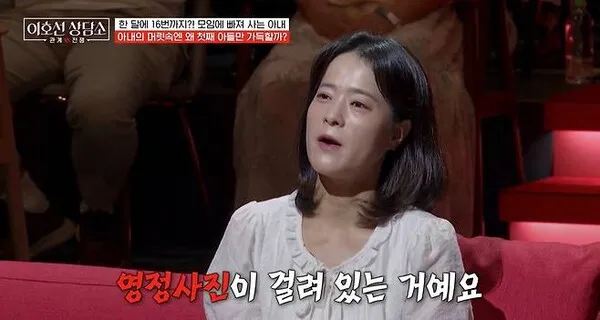
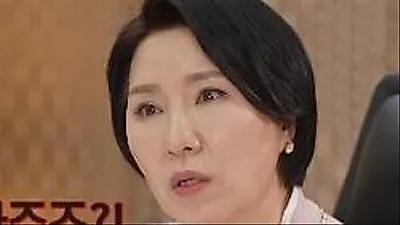
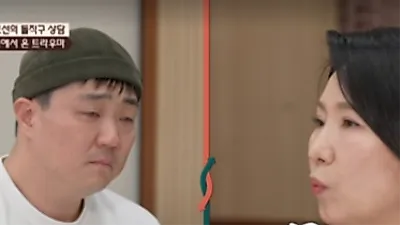
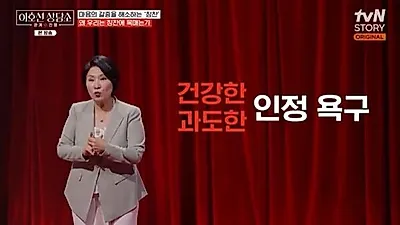
On the 15th, the tvN STORY program 'Lee Ho-seon Counseling Center' introduced the story of a remarried family experiencing conflict due to the wife's frequent outings and social activities.
The current husband shared his concerns, stating that his wife is excessively immersed in specific social groups. He said, "There is a group my wife goes to, and she seems addicted to it. She goes out up to 16 times a month."
He explained that he repeatedly had to stay home to care for their three children while waiting for her.
The problem was not limited to the frequency of her outings. While the husband bore the burden of daily family life and childcare alone, the wife spoke about her social gatherings with a very bright expression. Observing this, Lee Ho-seon mentioned that during the counseling process, she thought, "Why on earth is this woman acting this way?"
However, as the counseling progressed, it was revealed that the wife's behavior was rooted in past wounds that were difficult to explain easily to her family.
Based on the results of the wife's Sentence Completion Test, Lee Ho-seon examined the background of her particularly strong attachment to her eldest son. In response, the wife revealed an incident that occurred during the birth of her first son.
According to the wife, at the time of giving birth to her first son, her ex-husband, the biological father, collapsed and was rushed to the hospital via 119. Subsequently, the ex-husband was admitted to the intensive care unit and passed away shortly thereafter.
The greater shock came after that. The wife revealed that her ex-husband's family held the funeral without informing her of his death. She only learned of the situation after contacting the hospital, and by the time she belatedly visited her in-laws, the funeral proceedings were already underway. What she faced there was her husband's funeral portrait.
"When I called the hospital, they told me the in-laws had asked to keep it a secret from me," the wife confessed, sharing her feelings at the time. "I couldn't believe at that moment that my husband had died."
In a situation where even the death of a loved one is difficult to handle, the experience of being effectively excluded from the funeral and mourning process may have left another form of loss. This is because the standard mourning process—accepting death, expressing grief, and organizing relationships with those around her—could not be fully completed.
The reason the wife subsequently began actively seeking social gatherings was also connected to this. The acquaintances she met at these gatherings knew the story of her ex-husband, and she had been receiving comfort by spending time with them.
In other words, what appeared to the husband as "excessive social activity" involving leaving the family several times a month was, for the wife, an emotional refuge to endure a long-buried sense of loss. However, the fact that her relationship with her family became neglected and her current husband and children had to shoulder the emotional burden remains a separate issue.
The process of her remarriage to her current husband was also revealed. The wife explained that her current husband actively courted her, leading to their remarriage.
However, forming a new family does not automatically make past losses disappear. Especially since memories of the ex-husband can be continuously triggered through the existence of the eldest son, it shows that even after remarriage, past mourning and current family life can be complexly intertwined.
Lee Ho-seon pointed out that one must distinguish between the wife's feelings of missing her ex-husband and her behavior of becoming indifferent to her current family due to those emotions.
She noted that the second and third children are also aware of their mother's indifference, and she offered advice suggesting that repeatedly transferring the emotional burden to her current family, including her husband, could be problematic. In particular, she pointed out that if the wife's behavior is linked to unresolved mourning for her ex-husband, it would be difficult to reach the core of the problem by approaching it simply as a habit of going out or a personality difference between spouses.
Ultimately, Lee Ho-seon advised that to protect the family, one should not erase the memories of the ex-husband but rather "mourn healthily."
The core message of this story does not lie solely in "how many times one goes to gatherings." It demonstrates how a space that serves as comfort for one person can be perceived as a space of neglect and alienation by another family, highlighting the complex emotional structures within remarried families.
In remarried families, factors such as bereavement or divorce from a previous spouse, the relationship between children and biological parents, trust with a new spouse, and the emotional distance between stepparents and children all operate simultaneously. Focusing solely on one person's emotions can lead to missing the root cause of conflict.
While the grief of losing an ex-husband must be respected, if that grief is expressed in a way that infringes upon the emotional rights of the current family, separate solutions are required. Conversely, the current husband should also seek to understand the underlying loss and mourning rather than simply labeling his wife's behavior as "social addiction."
Ultimately, what this family needs is not to forget the past, but to re-establish the boundary between the past and the present. The most important message from this counseling is that one must undergo a process of sufficient mourning for the ex-husband while simultaneously returning emotionally to the current spouse and three children.
Related articles