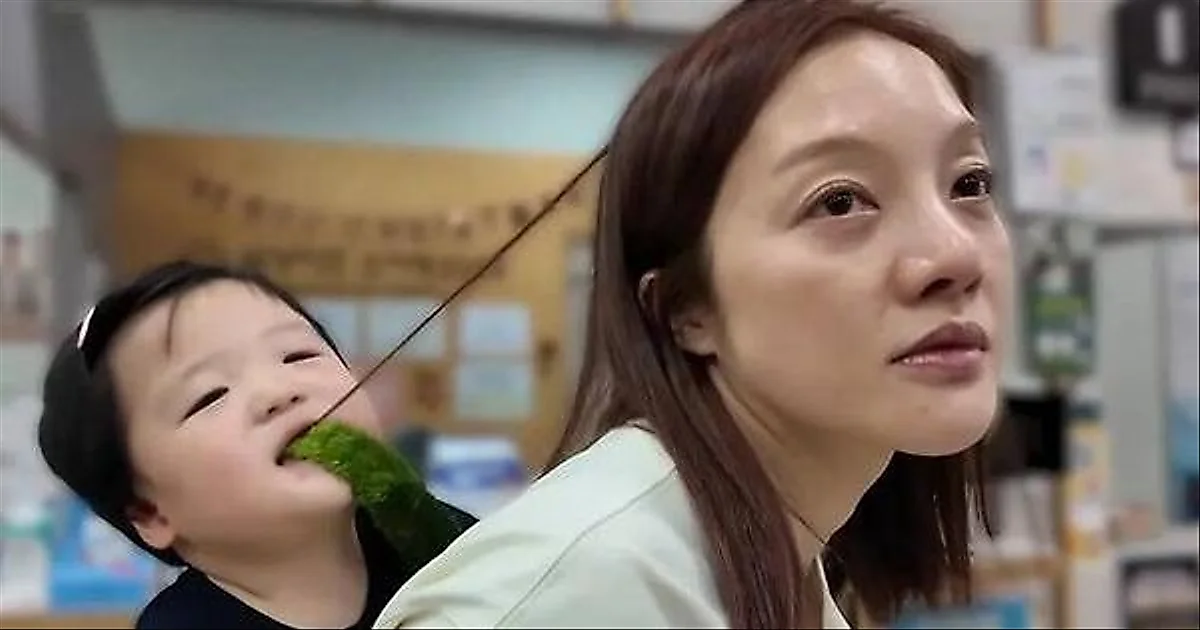
Lee Ho-Seon rebukes daughter-in-law for profanity-laced texts to in-laws
Psychological counselor Lee Ho-Seon delivers a sharp reality check to the 'Coin Couple' wife on JTBC's Divorce Camp regarding her abusive messages.
Psychological counselor Lee Ho-Seon delivered a sharp rebuke to the wife of the 'Coin Couple,' who expressed intense resentment toward her in-laws and even sent profanity-laced text messages to her parents-in-law and sister-in-law.
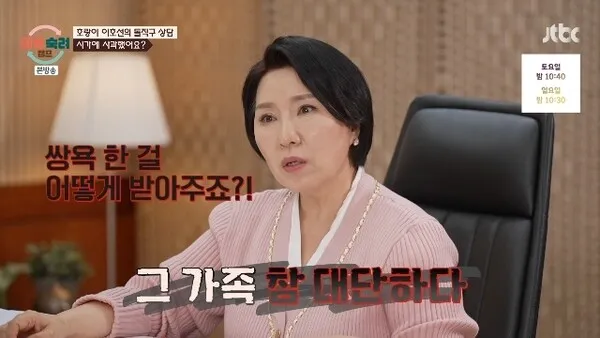
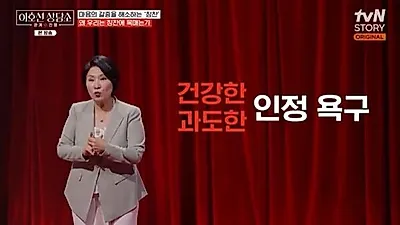
In the 94th episode of JTBC's 'Divorce Camp' aired on the 6th, the 'Coin Couple'—one of the couples from the 23rd group visiting the camp to re-examine their marriage—was shown meeting marriage counseling expert Lee Ho-Seon.
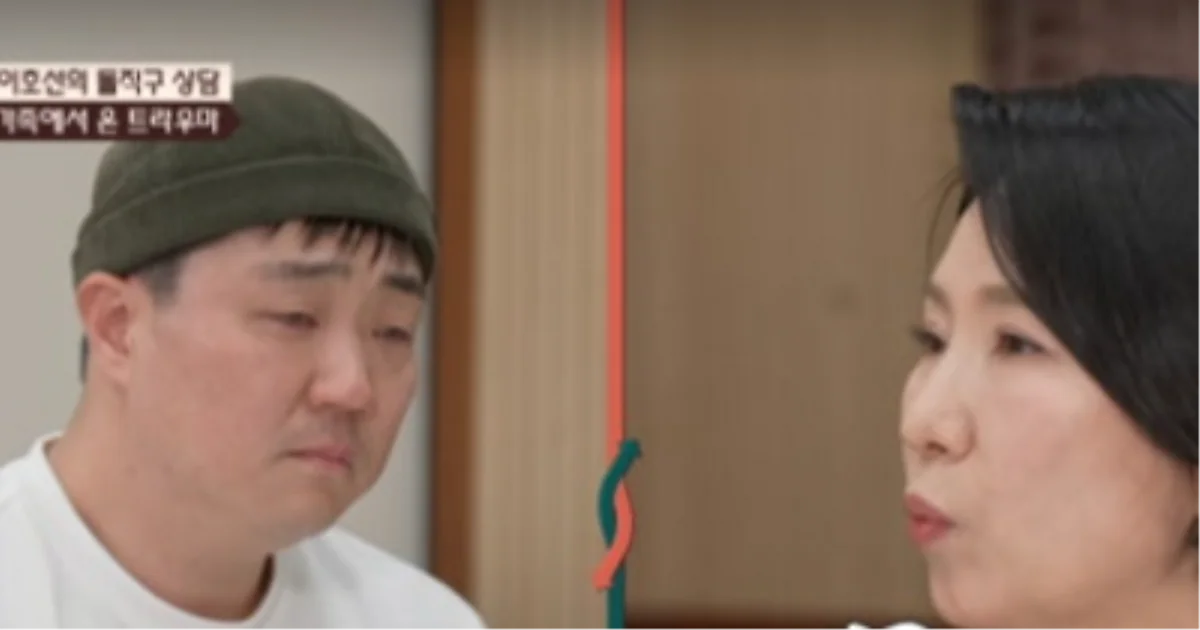
During the session, Lee met Minji, the wife, who was expressing strong animosity not only toward her husband but also toward her in-laws, to pinpoint the fundamental cause of the marital conflict.
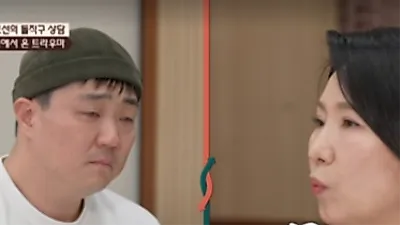
Lee first evaluated the husband as "immature," yet noted, "He is still better than Minji." Regarding the wife, she described her as "like a young child filled with resentment."
In contrast, comparing the husband to a "cute young child," Lee pointed out the decisive difference between the two. She evaluated the husband's family as a "generous household," stating, "The husband grew up happily."
She then added, "Minji is also very lucky."
Previously, during an in-depth investigation, the wife of the 'Coin Couple' poured out intense dissatisfaction toward her in-laws, claiming they had promised to provide a house but failed to keep that promise. However, as the conflict deepened, the wife went as far as sending long, profanity-filled text messages to her parents-in-law and sister-in-law.
Lee addressed this issue head-on.
"You hate this family? Which family would love Minji? It is not easy to accept a daughter-in-law who uses profanity," she pointed out.
Rather than unconditionally denying the wife's grievances, Lee emphasized that the way she expresses her emotions could destroy the relationship.
She even remarked, "I think Minji actually made a good choice marrying this man." She continued with advice, "I see many strengths in him, and his greatest strength is living with Minji. Therefore, you must not let this man go."
Another point of contention was the sister-in-law's wedding.
The wife was even opposing her husband's attendance at the wedding. Lee asked, "Why are you telling him whether to go to that wedding or not? What did that person do wrong?"
When the wife replied, "Because I hate that family. I hate that they are my husband's family. There is no reason," Lee once again brought up the incident of the profanity sent to the sister-in-law.
When asked, "Did you apologize for swearing at your sister-in-law?" the wife replied that she had apologized via text and that the sister-in-law had accepted it.
Upon hearing this, Lee could not hide her astonishment.
"That family is truly amazing. How could they accept that?" she said, before sternly rebuking her, "Do not act like a young spoiled brat. The rest of the family will not tolerate it."
Lee's counseling did not end with simply taking the in-laws' side. Rather, she emphasized that one must take responsibility for their own actions even within a family relationship.
She repeatedly urged the wife, "Do not forget and remember this. You must hold onto this man. You must never let this family go."
She then advised her to view her relationship with her in-laws in a new way, asking, "Minji, why is there no adult by your side to tell you that you shouldn't act this way?"
In particular, she presented the sister-in-law's wedding not as a source of repeated conflict, but as an opportunity to restore the relationship.
"The in-laws' house will be a good place for education," she advised. "I believe the sister-in-law's wedding will be a golden opportunity. Start your social relationships with your family."
Ultimately, the reconciliation Lee spoke of did not simply mean accepting the demands of the in-laws. It was a message that relationship recovery must begin by controlling one's own emotions and actions within the closest family ties and by recognizing others as individuals.
The in-laws' failure to keep a promise regarding a house and the daughter-in-law's profanity-laced texts are separate issues. Since one party's wrongdoing cannot justify the other's, this counseling prompted a reconsideration of the boundaries of responsibility in marital conflict.
The moment the relationship between husband and wife, or daughter-in-law and in-laws, turns into an emotional war, the family can no longer be a sanctuary. Behind Lee's harsh expressions lay practical advice: to reconnect rather than sever the relationship, one must first look back at one's own actions.
 Up next
Lee Ho Seon Impressed by Wife's Empathy on JTBC 'Divorce Camp': "Be My Daughter-in-Law in the Next Life"
Related articles