Grammys snubbed, but the world responds: BTS US tour hits $340M
The BTS US tour is driving a massive economic impact of approximately $340 million, transforming entire cities into cultural hubs through the 'BTS Effect.'
BTS has proven it once again.
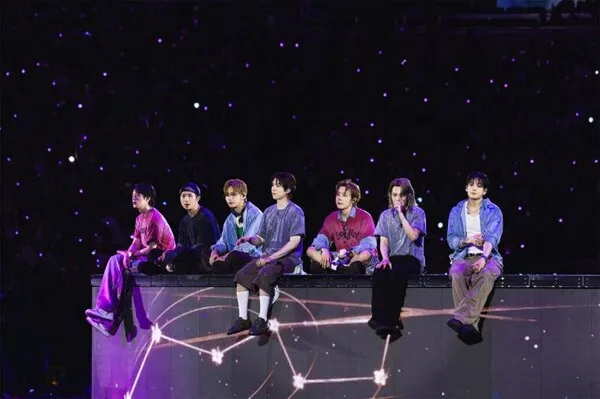
Their stage is no longer just a K-pop performance. It has become a massive cultural phenomenon that moves entire cities, generates massive consumption, and expands national branding.
As their world tour, resuming after four years, hits North America, analysis suggests the economic ripple effect created by BTS will reach approximately 450 billion won. The 'BTS Effect,' which moves beyond the music industry to drive tourism, dining, distribution, and overall cultural content, is once again receiving global attention.
The prominent British publication The Guardian recently highlighted the massive impact of BTS's US tour on the local economy.
The Guardian noted BTS's performance schedule, consisting of a total of 16 shows across seven North American cities through this September, specifically mentioning how the four consecutive sold-out shows held in Las Vegas last May turned the entire city into a festival atmosphere.
The movement of fans visiting the venues did not end with simple ticket consumption. It created a chain of economic effects in various sectors, including hotel accommodations, air travel, food and beverage purchases, tourism, and shopping, with the scale estimated to reach approximately 340 million dollars (about 450 billion won).
This demonstrates that the influence held by BTS has now established itself as a 'global economic phenomenon' beyond the music charts.
In particular, the city-type concert project 'THE CITY' promoted by HYBE has expanded the concept of a performance.
While traditional concerts were events that ended at a specific venue, BTS's 'THE CITY' project turns an entire city into one giant stage. Fans visit local landmarks while attending the concert, experience Korean cultural content, and connect with local commercial districts.
At the concert held at MetLife Stadium in New Jersey on the 1st and 2nd (local time), approximately 157,000 spectators gathered. During the performance period, the Manhattan Koreatown area was also vibrant with 'ARMY' arriving from all over the world.
Michael Mariano, a lead at Tourism Economics, evaluated through The Guardian that "the scale of linked consumption created by BTS fans could be comparable to or even exceed that of the FIFA World Cup."
This means that BTS has become a cultural brand capable of competing with global sporting events, rather than just being popular singers.
- BTS Effect Proven by HYBE's Performance
The influence created by BTS is also confirmed in corporate performance.
HYBE, the parent company of BTS's agency Big Hit Music, recorded 1.45 trillion won in revenue in the second quarter of this year, opening the era of single-quarter revenue exceeding 1 trillion won for the first time for an entertainment company.
This is a result that cannot be explained simply by album sales and concert revenue. It is an achievement created by a new entertainment industry model that combines music IP with performances, platforms, goods, global collaborations, and cultural projects.
While the music industry in the past moved around 'songs' and 'albums,' the era after BTS is shifting toward a direction where the artist themselves becomes a massive cultural platform.
Beyond selling songs, BTS is performing the role of connecting the image and culture of the Republic of Korea to the global market.
- A New Form of Cultural Diplomacy Connecting K-Culture to the World
Another element highlighted in this tour is the combination with Korean culture.
Through the 'BTS THE CITY ARIRANG' project, involving the Korean Cultural Center in New York, Arte Museum, and local Korean restaurants, K-pop naturally expanded into various Korean cultural contents such as K-beauty, Korean cuisine, and media art.
Bora Yoon, an officer at the Korean Cultural Center in New York, evaluated that "K-pop is serving as a massive gateway that leads people to explore not only the Korean language but Korean culture as a whole."
In fact, the global fandom of BTS does not stop at listening to music. They learn Korean to understand the lyrics, experience Korean food, and take an interest in Korean history and traditional culture.
This can be seen as a new era of cultural diplomacy where artists perform the role of cultural dissemination that was previously carried out by nations through diplomats and policies.
- "Who Does the Grammy Need?" The Question Posed by BTS
This US tour was also a venue for raising questions about the structure of the global music industry, not just musical success.
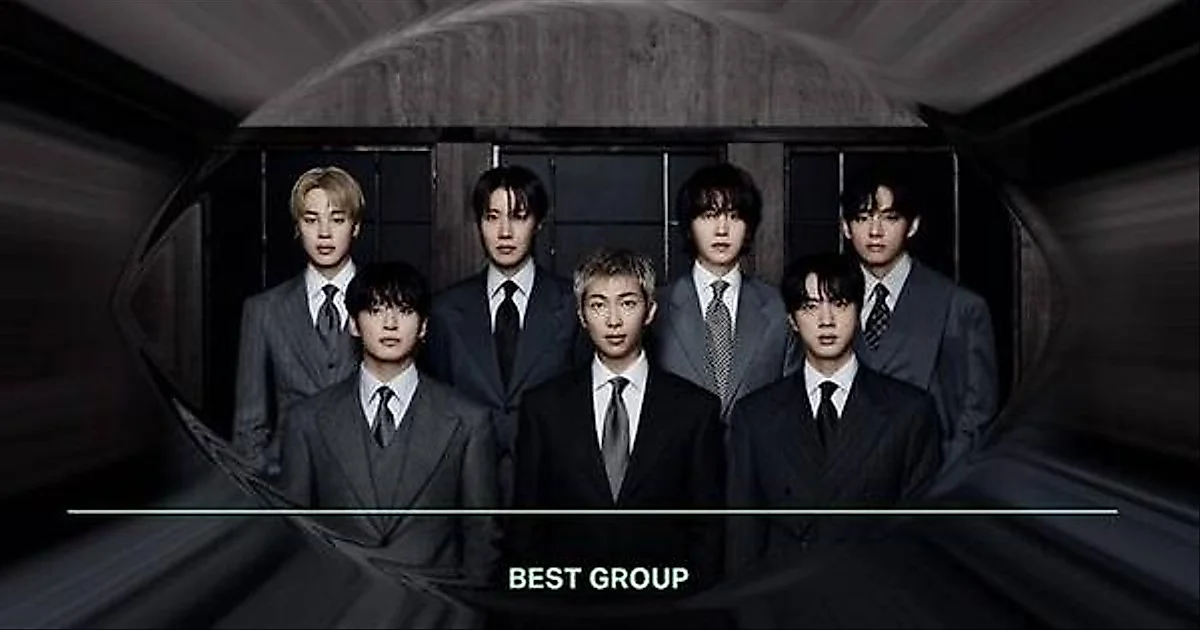
Recently, BTS expressed their intention to boycott, taking a critical stance that the newly established 'Best Asian Pop Music Performance' category at the Grammy Awards is effectively separating Asian music into a separate domain.
Fans also supported this at the concert venue with placards reading "FXXX GRAMMYS", "WHO REALLY NEEDS WHO?", and "Proud Alien".
This was more than a simple expression of dissatisfaction; it was a question regarding the position of Asian artists in the global music market.
Leader RM also modified some English lyrics for the hit song 'MIC Drop' during the MetLife Stadium performance.
"Those who hate us will keep hating, and our players will keep enjoying. Since we were born in Korea, it's only natural they don't know us well."
This lyrical modification sounded like a declaration against the prejudices and boundaries BTS has faced over the years.
- BTS Creates a New Standard, Not Just Records
The history of BTS has always been accompanied by the word 'first.'
From being the first Korean artist to top the Billboard charts to US stadium performances, Grammy nominations, and building a global fandom, BTS is now doing more than just setting records.
They are changing the way the music industry operates. While the center of pop music was once the US and Europe, the global music market is no longer a monopoly of specific regions following BTS.
In an era where culture moves across language, borders, and genres, BTS stands at the forefront of that change.
Whether the Grammys recognize BTS may no longer be the core question. Instead, the question the world is asking is: "It is not whether the world needs BTS, but whether the Grammys are ready to keep up with a changing world."
BTS's US tour is posing that question on the world's largest stages.
 Up next
BTS eyes third VMA win, aiming to extend record-breaking streak
More on BTS